
24/7 Customer Support

Free returns

Same-day & Next-day Delivery

Quality Guaranteed

Unlock Your Welcome Offers: FREE Delivery | Up to 80% OFF | Free 30-day JoyPlus trial
Download the APP
Running out of storage during a family celebration, losing a burst of action shots or discovering that a card cannot sustain 4K recording can turn a good day into a frustrating one. Choosing an SDXC memory card is not simply about buying the largest capacity or the highest number printed on the packaging. The right option must match your camera, recording format and shooting habits.
This guide explains the specifications that matter, highlights common buying traps and matches selected cards to different UK users.
A card may advertise a read speed of 180MB/s or 205MB/s, but that figure mainly relates to transferring files to a computer. For photography and video, the write speed is more important because it determines how quickly the card can save new data.
A high read speed may also require a specific card reader. For example, selected Lexar SD card models state that their maximum transfer speed requires the Lexar RW310X reader, sold separately. Without the compatible reader, actual transfer performance may be lower.
A 128GB SD card, 256GB SD card or 512GB SD card can provide substantial space, but your camera, drone or action camera must support SDXC and the chosen capacity. Older devices may support only SD or SDHC cards.
Check the device manual before purchasing. Also confirm whether the camera supports UHS-I. A UHS-I memory card may work in a compatible slot, but the device can limit the card’s actual speed.
4K UHD video creates a continuous stream of data. Look for the U3 and V30 ratings when your camera manufacturer recommends them. These classifications indicate a sustained minimum write-speed category, rather than simply a headline maximum speed.
A standard everyday card designed mainly for Full HD recording may not be the right choice for long 4K sessions, high-frame-rate footage or demanding burst photography.
Capacity requirements depend on file size and shooting time:
Large capacity is convenient, but keeping all important footage on one card is not a substitute for regular backups. For weddings, holidays and professional assignments, carrying two or more cards can reduce the impact of card loss or damage.
UHS-I describes the card interface. It is widely supported by cameras, drones and other consumer devices.
U3 indicates a higher sustained write-speed class than U1, while V30 is a Video Speed Class designation associated with a minimum sustained write speed of 30MB/s under the relevant testing conditions. These ratings are particularly useful when selecting a 4K UHD video memory card.
Do not judge a card solely by its maximum read speed. For rapid sequential shooting, compare the listed write speed and confirm that your camera can make use of the card’s interface.
A waterproof SD card can be useful for travel and outdoor photography, but “waterproof” does not mean it should be deliberately submerged or left exposed to moisture. Check the manufacturer’s usage guidance and keep cards in a protective case.
Other useful durability descriptions include shockproof, temperature-proof and x-ray-proof construction. These features may be helpful for travel photographers, action-camera users and families carrying equipment between locations. They do not remove the need to eject the card safely or back up important files.
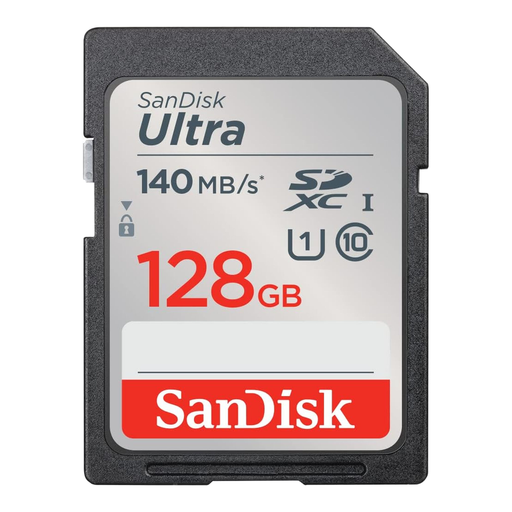
Why This Fits Their Persona: Its 128GB capacity and UHS-I format suit casual photographers, families and compact to mid-range cameras used for Full HD video and everyday images.
It is positioned for Full HD rather than suggesting that every high-capacity card is automatically a 4K solution.
Up to 140MB/s sequential write speed; waterproof, shockproof, x-ray-proof and temperature-proof design.
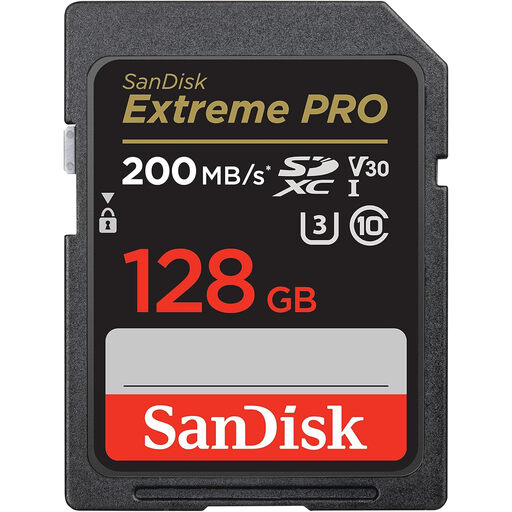
Why This Fits Their Persona: A compact option for photographers and videographers who need fast file transfers, burst photography support and 4K UHD recording in compatible equipment.
Its U3 and V30 ratings provide clearer video guidance than relying on an unspecified “high-speed” label.
Up to 200MB/s read and 90MB/s write speeds; U3/V30 classification and rugged protection features.
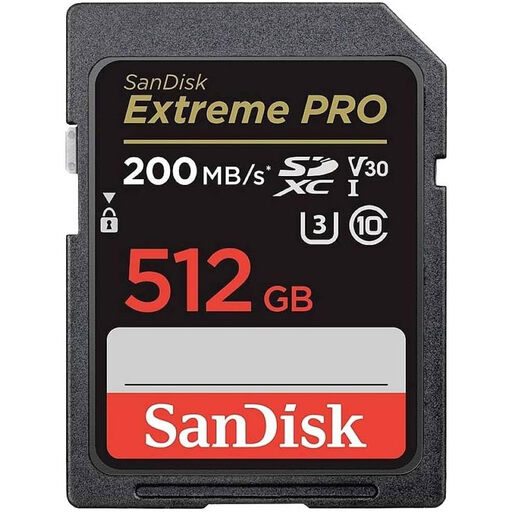
Why This Fits Their Persona: Suitable for extended 4K projects, travel assignments and creators storing large RAW photo libraries who want fewer card changes.
The stated U3/V30 ratings and write-speed specification make it easier to compare with sustained video requirements.
512GB capacity; up to 200MB/s read and 140MB/s write speeds, with a one-year RescuePRO Deluxe licence offer.
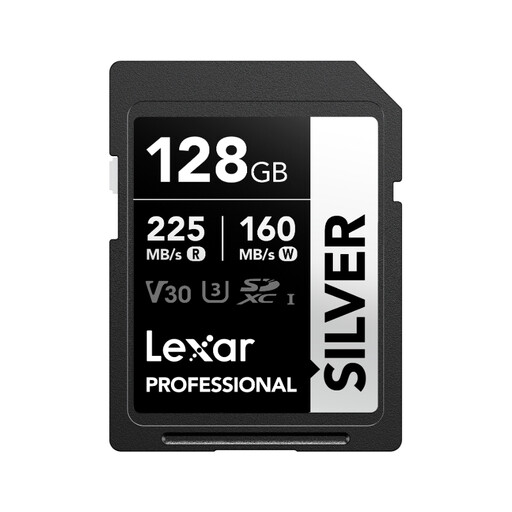
Why This Fits Their Persona: Its combination of 128GB storage, burst-photo support and 4K 60fps specification suits compatible cameras used by enthusiasts and working creators.
The listing separates maximum reader performance from camera use, helping buyers avoid assuming 205MB/s applies in every setup.
Up to 140MB/s write speed; Class 10, U3 and V30 ratings, plus stated drop-proof and vibration-resistant construction.
We have compiled a complete, real-time list of products that fully satisfy these strict selection criteria and UK safety regulations.
It can be, provided the camera supports SDXC and the card meets the device’s required speed class. For many compatible cameras, a U3 V30 SD card is a practical starting point for 4K UHD recording. Always follow the camera manufacturer’s specification.
Not automatically. A 512GB card stores more data, while a 128GB card may be easier to rotate, back up and replace if necessary. Choose capacity according to recording length, file size and your backup routine.
Lifespan varies with usage, recording volume, storage conditions and product construction. Regularly back up important files, format the card in the camera and replace it if the device reports errors, files become corrupted or recording performance becomes unreliable.