
24/7 Customer Support

Free returns

Same-day & Next-day Delivery

Quality Guaranteed

Unlock Your Welcome Offers: FREE Delivery | Up to 80% OFF | Free 30-day JoyPlus trial
Download the APP
Categories
The thrill of a sea bass hitting your lure is a feeling many UK anglers live for. But getting that powerful, silver predator to the shore often comes down to the gear in your hands. Choosing the right sea bass fishing rod can feel overwhelming, with countless options on the market. You need a rod with the backbone to handle a fight, the sensitivity to work a lure effectively and the durability to withstand the harsh saltwater environment.
As a Joybuy Product Recommendation Officer, my role is to help you navigate these choices. This guide offers practical advice and highlights a few noteworthy options to help you find a rod that matches your angling style, without the marketing noise.
Before looking at specific models, it's useful to understand the key features that make a great lure fishing rod for sea bass. Keeping these points in mind will help you make a more informed decision.
The material of the rod blank is fundamental to its performance. Most modern rods designed for lure fishing are made from carbon fibre. A high-quality carbon sea bass rod offers an excellent combination of lightness and sensitivity. This means you can cast all day with less fatigue and, more importantly, feel every subtle tap and movement of your lure, which is critical for detecting bites. The construction also determines the rod's strength and how it handles the pressure of a fighting fish.
Fishing in the sea means battling corrosion. A true saltwater fishing rod will feature components like stainless steel or titanium alloy guide frames and high-quality ceramic inserts (like SiC or Alconite) that resist rust. The reel seat should also be made from corrosion-resistant materials. For convenience, a 2 piece spinning rod is often the most practical choice. It offers a good balance between performance and ease of transport, fitting comfortably in a car boot without the compromises of a multi-section travel rod.
Based on their features and suitability for UK angling, here are a few models worth your consideration.
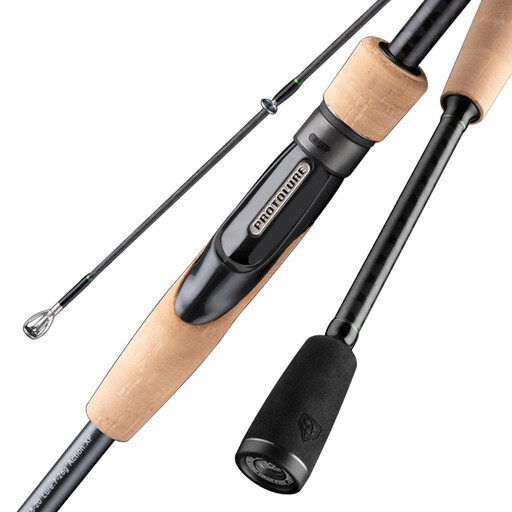
Why It Stands Out: The Protolure CC is designed as a versatile workhorse. Its main appeal is the explicit design for both freshwater and saltwater environments, making it a superb all-rounder for the angler who targets bass in estuaries one week and trout in a reservoir the next.
Pros:
Who is it for? This is an excellent choice for the intermediate angler who needs one reliable bass fishing rod to cover a variety of fishing scenarios across the UK, from coastal rock marks to inland lakes.
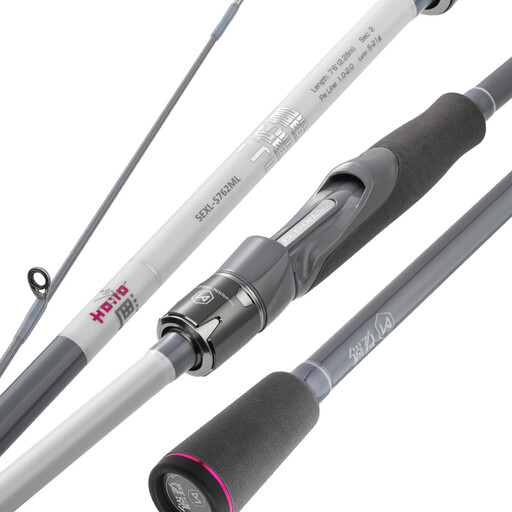
Why It Stands Out: The SEXL model is all about power and premium components. The inclusion of Fuji SiC guides is a significant feature, as they are known for their hardness, heat dissipation and smoothness, which translates to longer casts and reduced line wear. Its multi-species rating suggests a robust build.
Pros:
Who is it for? This rod is suited for the experienced angler who demands higher performance and durability from their gear or for those specifically targeting larger fish in challenging conditions where extra power is a necessity.
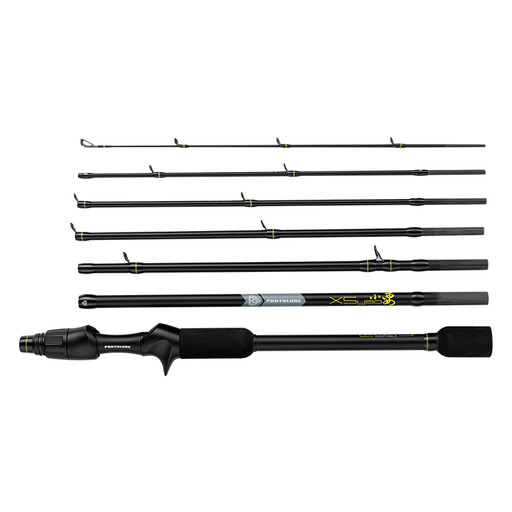
Why It Stands Out: This rod is a specialist. As a dedicated carbon sea bass rod, its design is focused on the specific requirements of this type of fishing. The lightweight carbon blank is engineered for sensitivity, allowing you to feel exactly what your lure is doing beneath the surface.
Pros:
Who is it for? This is a great option for the angler who primarily focuses on lure fishing for sea bass and values a lightweight, sensitive rod for maximum feel and enjoyment.
The models above represent a solid starting point, but every angler has unique preferences. If these aren't quite the right fit, or if you're looking for reels, lines and lures to complete your setup, there are many other choices available.
Browse our full range of fishing equipment to find the perfect gear for your next trip.
For shore-based lure fishing, a rod between 8ft and 9ft 6in is generally considered ideal. This length provides excellent casting distance to reach feeding fish while remaining manageable enough to handle comfortably on rocks and beaches. A shorter rod (around 7ft to 8ft) can be better for boat or kayak fishing.
While you can, it is not recommended for long-term use. A standard freshwater bass fishing rod often lacks corrosion-resistant components. Saltwater will quickly degrade the guides and reel seat, leading to equipment failure. It is always better to invest in a proper saltwater fishing rod for coastal angling.
A versatile casting weight range for UK sea bass is typically 10-30g or 15-40g. This covers the most common lure types, from smaller soft plastics to larger hard-bodied plugs and metal jigs. A rod with this rating will have enough power to cast effectively and handle the average-sized bass you are likely to encounter.