
24/7 Customer Support

Free returns

Same-day & Next-day Delivery

Quality Guaranteed

Unlock Your Welcome Offers: FREE Delivery | Up to 80% OFF | Free 30-day JoyPlus trial
Download the APP
As a seasoned angler, you know that the right lure can make the difference between a memorable day on the water and a frustrating one. Yet, the market for sea fishing lures is flooded with options that promise much but deliver little. Many are designed with flaws that become apparent only after you've parted with your money and are miles offshore. This guide cuts through the marketing clutter, focusing on the critical factors that define a reliable and effective lure for UK waters, helping you avoid the common purchasing traps.
Before adding another lure to your tackle box, be aware of these frequent design failures that can compromise your fishing.
To ensure your next purchase is an asset, not a liability, focus on these non-negotiable technical specifications.
The two primary methods for targeting large UK saltwater species from a boat are trolling and jigging, each requiring a specific lure design.
Always inspect the hooks and split rings. Look for lures fitted with components from reputable manufacturers or those specified as being corrosion-resistant and high-strength (e.g., 3X or 5X rated). This small detail is a strong indicator of overall build quality and shows the lure is intended for serious saltwater use.
For jigging, the lure's weight is paramount. It must be heavy enough to reach the seabed quickly in the prevailing tide and depth, while still being light enough for your rod to impart the correct action. A range of weights from 60g to 200g will cover most UK scenarios. For both trolling and jigging, colour choice can be important. Natural baitfish patterns (silver, blue, mackerel) are reliable starting points, while bright, high-visibility colours (pink, orange, chartreuse) can excel in deep or murky water.
Here are several options that align with these quality principles, matched to specific angling profiles.
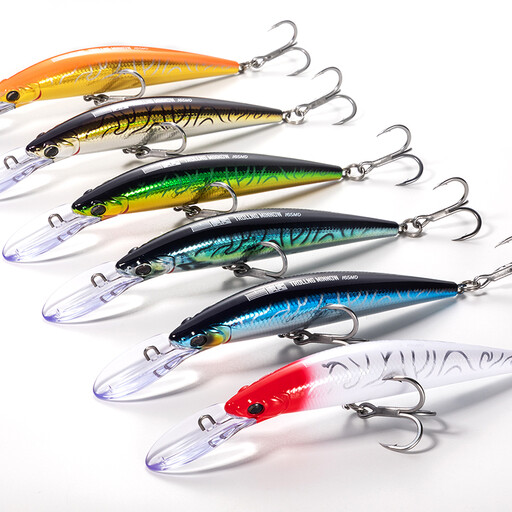
Why This Fits Their Persona: This angler targets large predatory fish in deeper water from a boat. They need a lure that can reliably reach depths of 10m and withstand the force of a big fish, making trolling efficiency paramount.
It directly counters the weak hardware trap with its specified SIKE 3509 5X #2 strong hooks. The large, robust bib is engineered for a stable swimming action down to a 10-metre depth, avoiding the inconsistent action flaw.
The primary advantage is its verifiable deep-diving capability combined with heavy-duty terminal tackle straight out of the packet, requiring no costly upgrades.
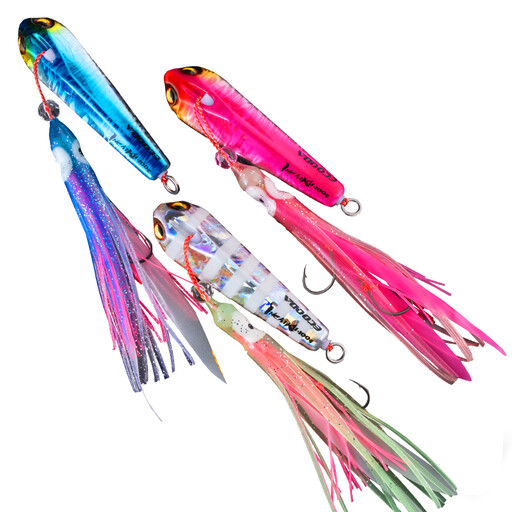
Why This Fits Their Persona: This angler focuses on vertical jigging for pollock, cod and ling over underwater structures. They need a lure with a proven action and a versatile weight for moderate depths and tides around the UK.
The specific inchiku jig design provides a reliable, fluttering fall that avoids the "inconsistent action" of poorly balanced jigs. The separate assist hooks are less prone to being leveraged out by a fish than a fixed treble hook.
Its two-part construction (jig and octopus skirt) creates two distinct points of movement, making it highly effective on the drop. The 120g weight is a solid all-rounder for many UK offshore marks.
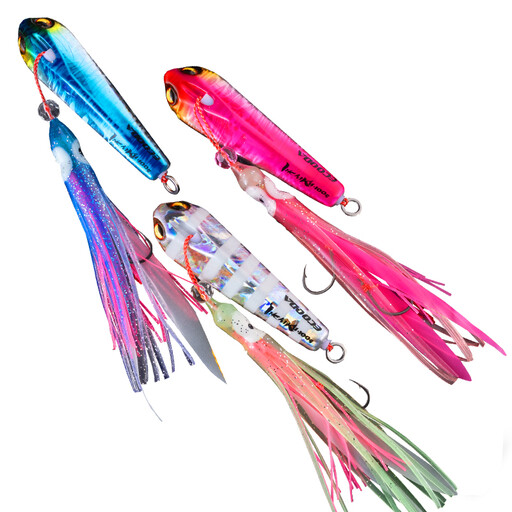
Why This Fits Their Persona: This angler fishes in shallower inshore waters, perhaps for bass over reefs or on days with little tide. They use lighter tackle and require a more subtle presentation to avoid spooking fish.
It avoids the trap of using oversized, heavy lures in shallow water where they are ineffective. While lighter, it is still a purpose-built saltwater lure, sidestepping the fragile finish and weak hardware of freshwater-grade equivalents.
The 60g weight allows for a delicate, fluttering presentation on lighter gear, perfect for calm conditions or shallower depths. It retains the proven action of the inchiku design in a smaller profile.
We have compiled a complete, real-time list of products that fully satisfy these strict selection criteria and UK safety regulations.
The general rule is to use the lightest weight that allows you to comfortably reach and stay in contact with the seabed. For a slack tide in 30 metres of water, a 100g-120g jig might be ideal. For a fast-running tide in 70 metres, you may need to go up to 200g or more. Always match the lure weight to the casting/jigging weight range of your rod for optimal performance.
The single most important step is to rinse your lures thoroughly with fresh water after every single trip. Pay close attention to the hook points and split rings. After rinsing, dry them completely before returning them to a dry, well-ventilated tackle box. This simple habit can dramatically extend the life of your lures and their hardware.
The main difference is in the intended action. A standard speed jig is typically long and slender, designed to be retrieved very quickly with an erratic, darting action that mimics a fleeing baitfish. An inchiku jig is designed for a slower presentation. Its weight-forward, often asymmetrical body creates a pronounced flutter as it falls, and the separate, lightweight octopus skirt continues to move enticingly even when the jig is paused, making it highly effective on the drop.