
24/7 Customer Support

Free returns

Same-day & Next-day Delivery

Quality Guaranteed

Unlock Your Welcome Offers: FREE Delivery | Up to 80% OFF | Free 30-day JoyPlus trial
Download the APP
Choosing the right sea fishing rod can feel like navigating a minefield of marketing claims and technical jargon. For UK anglers, the challenge is finding equipment that stands up to the harsh saltwater environment and performs precisely for our target species, whether that's a hard-fighting sea bass from a rocky shoreline or a cod from a charter boat. Many rods look the part but fail to deliver where it counts, leading to frustration and wasted money.
As a Joybuy Product Recommendation Officer, my role is to help you sidestep these issues. We will look at the common pitfalls that catch out even experienced anglers and focus on the essential features that truly matter for performance and longevity.
Before you add any rod to your basket, be aware of these frequent purchasing traps:
To ensure your next rod is an asset rather than a liability, focus your attention on these three non-negotiable areas.
The heart of any rod is its blank. Most modern rods are made from carbon fibre, but the quality varies immensely. A blank made from high-modulus carbon will be lighter, stiffer and more sensitive than a standard carbon or composite equivalent. This translates to a lightweight fishing rod that you can hold all day, with the sensitivity to feel every tap and contour of the seabed. For portability and storage, a two-piece fishing rod is the standard for most UK lure and boat fishing applications, but ensure the joint (ferrule) is snug and well-made to avoid weak spots.
These two terms define how a rod behaves under load. Getting them right is crucial for your intended fishing style.
A rod is only as strong as its weakest link. For any saltwater fishing rod, the guides and reel seat must be built to resist corrosion. Look for materials like stainless steel or titanium for the guide frames. High-quality ceramic inserts, such as those from Fuji (e.g., Alconite or SiC), reduce friction, protect your line and improve casting distance. A securely fitting, corrosion-resistant reel seat is equally important to prevent your reel from working loose at a critical moment.
Based on these practical criteria, we have matched several rods to specific UK angling profiles.
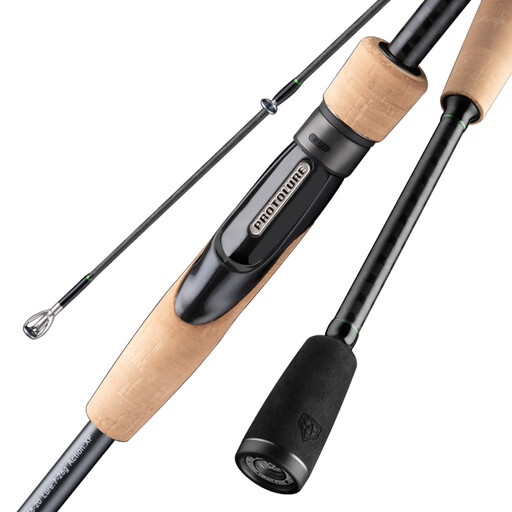
Why This Fits Their Persona: This angler targets sea bass from the shore but also enjoys freshwater lure fishing for perch and trout. They need a sensitive, lightweight rod that is easy to transport and performs well in both environments.
It avoids the "all-rounder" myth by being a specialised lure rod. Its design is focused on casting performance and sensitivity, making it a precision tool rather than a clumsy generalist rod.
Specifically balanced for sea bass lure fishing, offering the right action for the job. The two-piece construction makes it highly practical for the travelling angler.
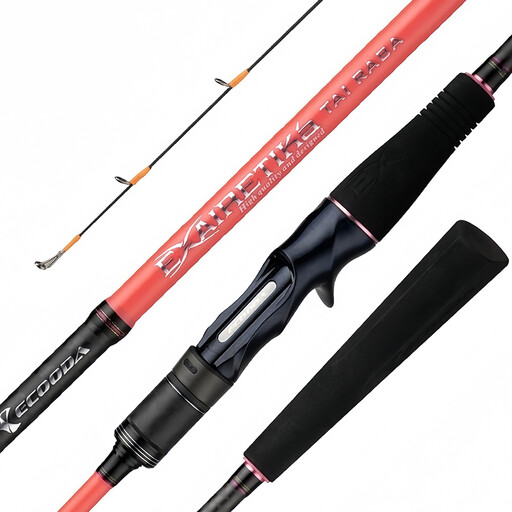
Why This Fits Their Persona: This angler spends their time on a boat, using modern vertical techniques like slow jigging or Tenya to target species like sea bream, cod and pollack. They need a rod with exceptional tip sensitivity and a powerful butt section.
This is a purpose-built boat fishing rod. It sidesteps inconsistent ratings by being designed for specific techniques (Rubber Jig, Tenya), ensuring its action is perfectly suited for vertical lure work.
Its specialised blank provides the sensitivity to detect bites on the drop and the backbone to fight fish directly below the boat, a key feature for any effective jigging rod.
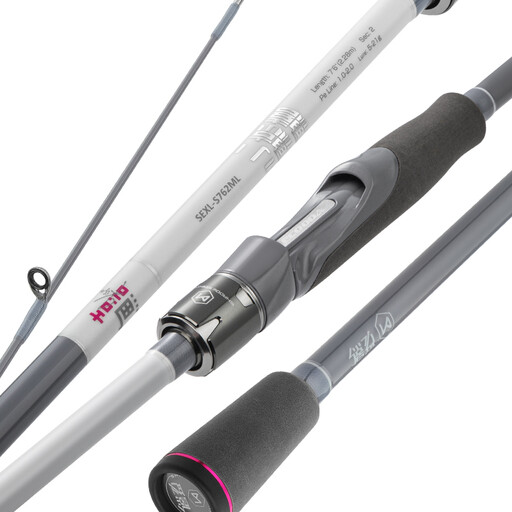
Why This Fits Their Persona: This experienced angler understands that components matter. They want maximum casting performance, durability and sensitivity, and are willing to choose a rod based on the quality of its fittings.
It directly counters the component corrosion trap by featuring genuine Fuji SIC guides. This is a clear indicator of quality, ensuring longevity and smooth performance in a saltwater environment.
The combination of a high-performance carbon blank and premium Fuji guides delivers superior casting distance, line management and long-term reliability for the serious angler.
We have compiled a complete, real-time list of products that fully satisfy these strict selection criteria and UK safety regulations.
The lifespan of a sea fishing rod depends heavily on its components and your maintenance routine. A rod with high-quality stainless steel or titanium guide frames, like those from ECOODA fishing rods, can last for many years of regular use. The most important habit to develop is rinsing your rod thoroughly with fresh water after every single trip to remove salt deposits. This simple step can dramatically extend its life.
This is determined by the ground you fish over. For casting lures from an open beach where maximum distance is needed, a longer rod of 9ft to 10ft is advantageous. However, if you are fishing from rock marks, climbing over boulders, or on a cramped pier, a shorter rod between 7ft and 8ft 6in provides far better control, accuracy and manoeuvrability.
Absolutely. A quality sea bass rod is one of the most versatile tools an angler can own. Because they are typically lightweight, fast-action lure rods, they are also excellent for freshwater predator fishing for pike, perch and zander. Their sensitivity also makes them suitable for float fishing or light ledgering, making them a valuable addition to any angler's collection.