
24/7 Customer Support

Free returns

Same-day & Next-day Delivery

Quality Guaranteed

Unlock Your Welcome Offers: FREE Delivery | Up to 80% OFF | Free 30-day JoyPlus trial
Download the APP
Choosing between sealants and adhesives is not simply a question of picking the largest tube or the strongest-sounding label. A decorators' caulk is designed to finish joints, while a grab adhesive bonds materials together. A sanitary silicone sealant has different requirements again, particularly in damp rooms.
The wrong choice can lead to peeling paint, cracked joints, weak bonds or wasted product. This guide from the Joybuy Product Recommendation Officer explains the practical specifications to check before buying, with product options matched to common UK household, decorating, outdoor and vehicle-maintenance needs.
Sealants fill gaps and create a flexible or waterproof barrier. Adhesives are formulated to hold two surfaces together. Although some products appear versatile, a paintable caulk should not normally replace a grab adhesive when fixing a shelf or skirting board. Likewise, a construction adhesive is not a suitable substitute for sanitary silicone around a bath.
Start by identifying whether the job involves filling a joint, preventing moisture ingress or bonding materials.
A product described as waterproof may resist light moisture, yet still be intended mainly for interior decorating. Damp rooms, showers and sinks require a sealant designed for repeated water exposure. Check whether the product is labelled for bathrooms, kitchens or sanitary applications and follow the stated curing time before exposing it to water.
A cartridge usually requires a caulking gun but offers controlled application over longer joints. A squeeze tube may be more practical for a small interior repair adhesive job. Surface preparation is equally important: dust, grease, loose material and moisture can reduce adhesion, even when the product is suitable for the materials involved.
For interior finishing, decorators' caulk or Polyfilla caulk is commonly used around skirting boards, architraves, door frames and wall-to-ceiling joints. Acrylic-based caulk is generally chosen where the joint needs a neat, paintable finish and may experience slight movement.
A grab adhesive, including No More Nails adhesive, is intended to bond materials such as wood, plaster, brick, stone, ceramic, metal and some plastics. Always check the packaging for the exact surface list, especially when bonding non-porous materials.
For bathrooms and kitchens, look for sanitary silicone sealant with mould-resistant properties. Silicone normally remains flexible and is suited to joints around baths, basins, showers, worktops and tiles. A clear or translucent option can be less noticeable on contrasting surfaces.
If the joint will be painted, choose a paintable caulk and check the stated overpaint time. The surface may be touch-dry before it is ready to accept paint, so avoid rushing the next stage.
Silicone sealants are generally selected for water resistance rather than painting. If a decorative finish is required, consider the available colour or translucent finish before application.
Drying and curing are not always the same. A product can form a skin quickly but need longer before it reaches its stated working performance. For example, the Polycell Trade Polyfilla White Caulk Cartridge 380ml lists an approximate 60-minute overpaint time, while the Unibond grab adhesive cartridge states that complete drying can take 24–48 hours.
For exterior projects, coverage matters. Thompson’s One Coat Patio & Block Paving Seal lists approximately 6m² per litre and an approximate drying time of one hour, subject to conditions and application. Measure the area first, then allow for the surface’s porosity and texture.
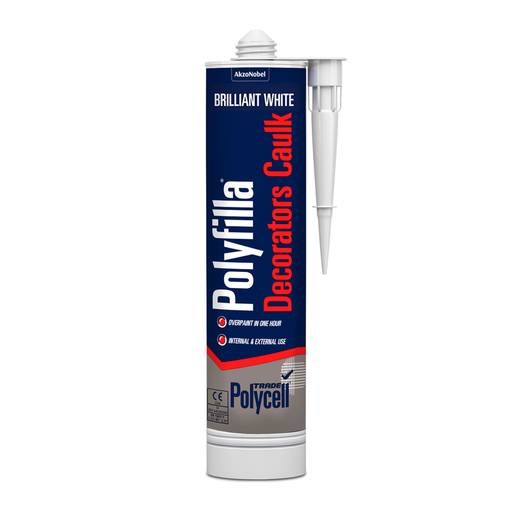
Why This Fits Their Persona: A practical cartridge for UK homeowners and DIY decorators dealing with fine interior gaps before painting.
It is specified for interior decorating, rather than being presented as a universal bonding or bathroom product. Its approximate one-hour overpaint time is clearly stated.
380ml cartridge; smooth application; brilliant white finish; listed as waterproof and suitable for overpainting.
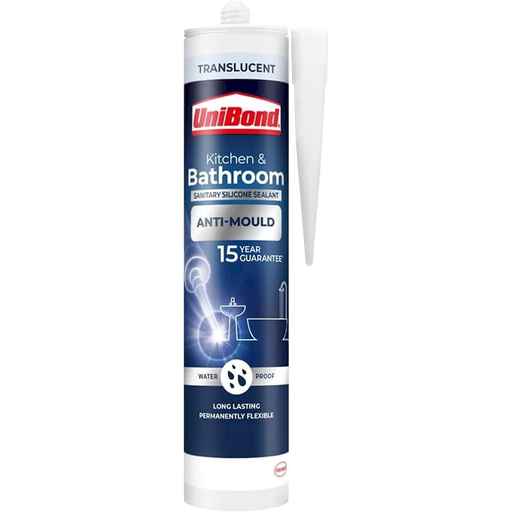
Why This Fits Their Persona: Suits homeowners, landlords and maintenance teams wanting a discreet finish for frequently exposed bathroom and kitchen joints.
Its listed use is specifically for wet-room, bathroom and kitchen applications, avoiding the mistake of using decorating caulk in a repeatedly wet joint.
Translucent finish; mould-resistant formulation; touch-dry in approximately 20 minutes; full cure listed at 24 hours.
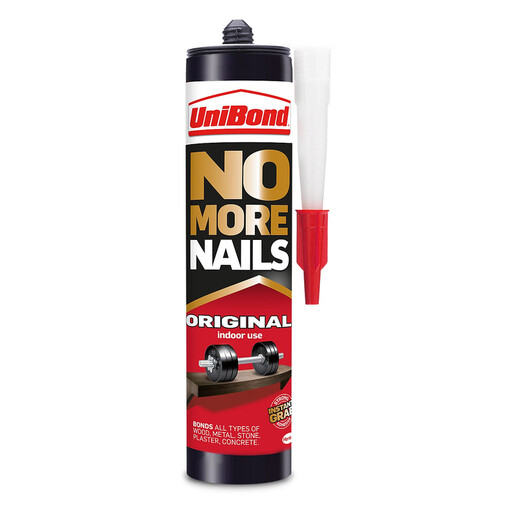
Why This Fits Their Persona: A cartridge format for tradespeople and regular DIY users fixing interior trim, hooks, coves, shelves and similar items.
It is positioned for interior bonding rather than gap filling. The stated 24–48-hour drying period also makes it clear that heavy or warped items may need temporary support.
Solvent-free, water-based formulation; repositionable bond; suitable for several common building materials; water clean-up for excess adhesive.
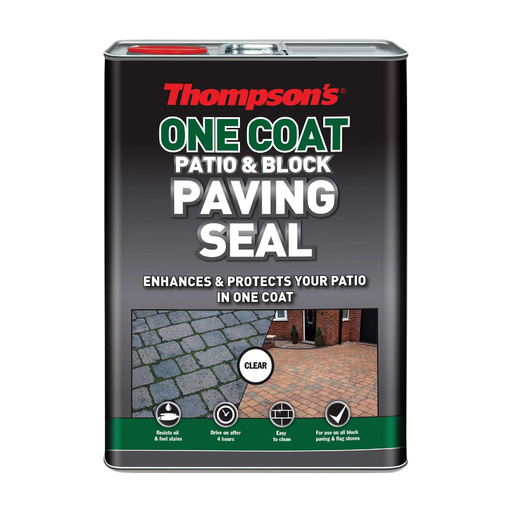
Why This Fits Their Persona: Designed for property maintenance tasks involving patios, block paving and flagstones across changing UK weather conditions.
The stated coverage helps buyers estimate quantity before ordering, while the listed compatible surfaces reduce the risk of applying a patio coating to an unsuitable material.
5-litre format; clear finish; listed for block paving, granite, limestone, sandstone and flagstones; approximately 6m² coverage per litre.
For small fixes, the Unibond No More Nails Original Grab Adhesive Tube 235g provides a squeeze-tube format for controlled interior application. For refreshing an existing bathroom bead, Unibond Renew Sealant Mould Resistant 80ml is listed for applying over old sealant, with an integrated smoothing nozzle and coverage of up to approximately 5 metres.
A smaller 290ml Polycell Trade Polyfilla White Caulk Cartridge may suit decorators who need a flexible, paintable caulk for interior or exterior finishing. Vehicle owners looking for a car wax sealant can compare Turtle Wax Seal N Shine Car Wax Sealant Spray 500ml, which is applied to a freshly washed, wet vehicle and rinsed before drying.
We have compiled a complete, real-time list of products that fully satisfy these strict selection criteria and UK safety regulations.
It may be suitable for dry interior finishing around trim, but it is not automatically suitable for joints exposed to regular water. For baths, showers, sinks and worktops, choose a bathroom and kitchen sealant labelled for sanitary use, such as a mould-resistant silicone product.
Follow the product instructions. The Unibond cartridge listed above specifies complete drying within 24–48 hours, while heavy or warped objects may need additional support. Temperature, humidity, surface type and bead size can affect the result.
Measure the area in square metres and compare it with the stated coverage. Thompson’s patio sealant lists approximately 6m² per litre, so a 5-litre container indicates around 30m² under the stated conditions. Porous paving may absorb more, so treat the figure as a planning guide rather than a guarantee.