
24/7 Customer Support

Free returns

Same-day & Next-day Delivery

Quality Guaranteed

Unlock Your Welcome Offers: FREE Delivery | Up to 80% OFF | Free 30-day JoyPlus trial
Download the APP
As a Joybuy Product Recommendation Officer, I see how certain foods capture the nation's interest. Seasoned seaweed is a perfect example. Once found only in speciality Asian grocers, these savoury, crispy sheets are now a mainstream snack. However, their rapid rise in popularity has led to a crowded market, making it difficult to distinguish a quality product from a disappointing one.
Many shoppers find themselves let down by snacks that are either too salty, surprisingly high in calories or lose their signature crispness the moment the packet is opened. Before you add a pack to your basket, let’s look at the common pitfalls to avoid.
To ensure you get a product that meets your expectations, focus on these three core parameters.
The format of the seaweed dictates its primary use. Understanding the different types will help you choose correctly for your needs.
The flavour profile of seasoned seaweed comes from its oil and seasonings.
To avoid the "crispness catastrophe," packaging is paramount. The best defence against moisture is portion control. Look for products sold in multi-packs containing smaller, individually sealed packets. This ensures that every portion you open is as fresh and crispy as the first. For larger, single-pack products like nori sheets for sushi, a sturdy resealable zip-lock is essential.
Based on these practical criteria, here are a few recommendations matched to different needs and preferences.

Why This Fits Their Persona: This is an excellent choice for those seeking a simple, low-calorie snack. The ingredient list is minimal and each 5g pack is very low in calories, making it a light and satisfying option for a mid-afternoon pick-me-up without the guilt.
It directly counters the "healthy halo" trap by having a genuinely simple ingredient list (seaweed, olive oil and sea salt). The multi-pack format with individual 5g servings ensures every portion is perfectly crispy.
Uses olive oil instead of other common vegetable oils. The individual packs are ideal for portion control and maintaining freshness.
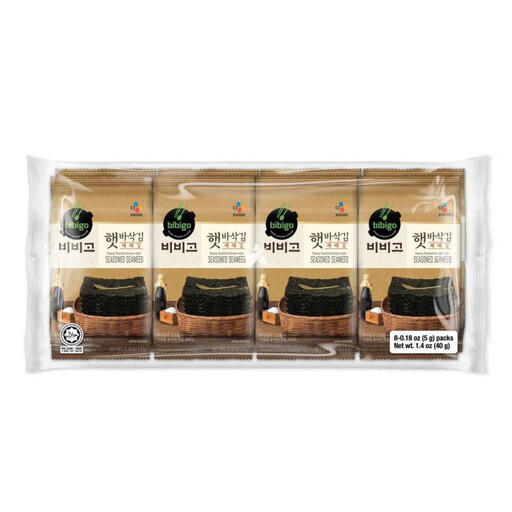
Why This Fits Their Persona: For those who want the classic, savoury taste of a Korean gim snack, this is a benchmark product. The seasoning blend of soy sauce and sesame oil is traditional and pairs perfectly with a simple bowl of steamed rice or can be enjoyed on its own.
This product delivers the authentic flavour profile expected from a traditional Korean seaweed snack. The 8-pack of individually wrapped servings is the ideal solution to the crispness problem.
Classic, savoury Korean seasoning. The multi-pack format is convenient for families, lunchboxes and ensuring lasting freshness.
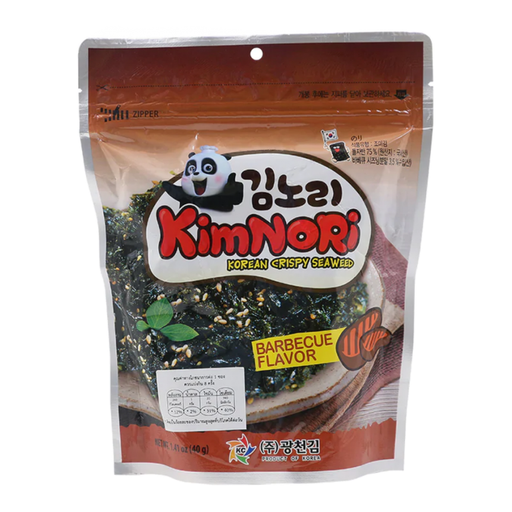
Why This Fits Their Persona: This is for the person who sees seaweed as a versatile ingredient, not just a snack. These seaweed flakes are designed to be sprinkled generously over rice, noodles, salads or even popcorn to add a savoury, smoky and crunchy element.
It avoids the "one-type-fits-all" trap by being a product specifically designed as a topping. This format is far more convenient and effective for cooking than crushing up delicate snack sheets by hand.
Extremely versatile for adding flavour and texture to a wide range of dishes. The smoky BBQ flavour offers a unique twist on traditional seaweed.

Why This Fits Their Persona: For anyone venturing into making their own sushi or onigiri at home, using the correct type of nori is non-negotiable. These are the large, sturdy sheets required for rolling. They have the right texture and strength to hold ingredients without tearing.
This product is specifically yaki nori, preventing the user from making the common mistake of trying to roll sushi with brittle, fragile snack thins. It is fit for its intended purpose.
These are full-sized, pliable sheets designed specifically for making sushi rolls and rice balls. They provide the authentic foundation for Japanese home cooking.
We have compiled a complete, real-time list of products that fully satisfy these strict selection criteria and UK safety regulations.
Generally, the popular Korean seaweed snacks (gim) are very thin, roasted to a high crisp and seasoned with sesame oil and salt. They are primarily for snacking. Japanese seaweed (nori) is a broader term, but the yaki nori used for sushi is typically a larger, thicker and less intensely seasoned sheet, roasted to be strong and pliable for rolling.
Moisture is the main cause of soft seaweed. The most effective method is to purchase products in individually sealed packets and only open them right before eating. If you buy a larger pack, transfer the contents to a completely dry, airtight container immediately after opening. Store it in a cool, dark cupboard, not the refrigerator.
Seasoned seaweed can be a flavourful snack for children, but it is best enjoyed in moderation. The main factor to consider is the salt (sodium) content, which can be high in some brands. Always check the nutrition label. Additionally, the very thin sheets can pose a potential choking hazard for toddlers and very young children, so supervision is recommended.