
24/7 Customer Support

Free returns

Same-day & Next-day Delivery

Quality Guaranteed

Unlock Your Welcome Offers: FREE Delivery | Up to 80% OFF | Free 30-day JoyPlus trial
Download the APP
As a Joybuy Product Recommendation Officer, my role is to help you navigate the crowded snack aisle. Seaweed snacks have surged in popularity across the UK, moving from speciality Asian food shops to mainstream supermarkets. They are often presented as a wholesome alternative to traditional crisps, but not all packs are created equal. This guide will help you understand the key differences and avoid common purchasing mistakes, ensuring you choose a product that genuinely suits your taste and lifestyle.
Many shoppers are drawn to seaweed for its low-calorie reputation, but it's easy to be misled. Here are three frequent traps to watch out for:
To make a confident choice, focus on these three practical parameters. They will help you decode the packaging and select the right type of seaweed for your needs.
The term "seaweed" covers a wide range of products, each with a specific purpose. Understanding the format is the first step to getting what you want.
The ingredients list reveals the true character of a seaweed snack.
To avoid the "healthy halo" trap, check the 'per 100g' column on the nutritional table for a fair comparison between products. Pay close attention to:
Based on these practical criteria, here are a few options tailored to different needs and preferences.

Why This Fits Their Persona: This is an excellent choice for someone seeking a simple, low-calorie snack. The minimalist ingredients and low sugar content make it a straightforward option for guilt-free snacking at the office or on the move.
It directly counters the "healthy halo" trap with its transparent, simple ingredient list (seaweed, olive oil, sea salt) and a genuinely low calorie count of 26 kcal per 5g pack. The multipack format also ensures each portion is fresh and crispy.
Uses olive oil for a lighter flavour profile. The salt content (0.17g per pack) is moderate and it contains less than 0.5g of sugar.
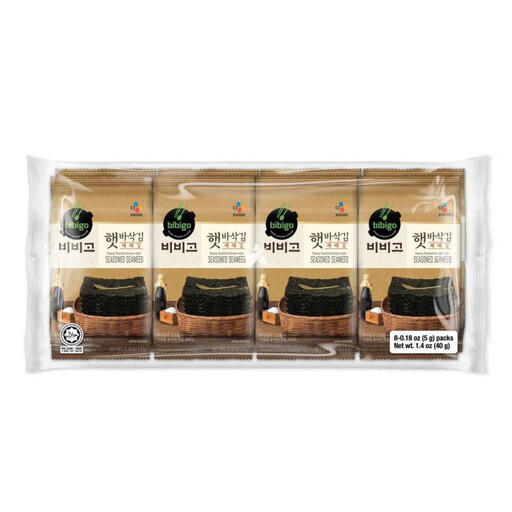
Why This Fits Their Persona: For those who enjoy the classic taste of a Korean seaweed snack, this product delivers. It's ideal for pairing with a bowl of rice or enjoying as a savoury side dish, offering the traditional umami-rich flavour profile popular in Korean cuisine.
This product avoids the flavour mismatch pitfall by using a traditional seasoning blend of soy sauce and sesame oil. It delivers the authentic, savoury taste expected from seasoned laver, without being overly sweet or artificial.
Features a classic Korean seasoning for an authentic taste. The 8-pack of individually wrapped portions maintains freshness and prevents the crispness catastrophe.

Why This Fits Their Persona: This is a pantry essential for anyone making their own sushi, onigiri or other Japanese dishes at home. Its primary purpose is as a culinary ingredient, providing the structure and flavour base for homemade creations.
By being clearly marketed as yaki nori for sushi, it avoids the trap of being mistaken for a ready-to-eat snack. The large sheet format is a clear indicator of its intended use, ensuring home cooks get the right product for their recipes.
These are full-sized, consistent sheets designed for rolling without tearing. They are lightly seasoned to complement, not overpower, sushi fillings.
We have compiled a complete, real-time list of products that fully satisfy these strict selection criteria and UK safety regulations.
1. How do I keep my seaweed snacks crispy after opening a pack? Once a pack is opened, air and moisture are the enemies of crispness. If you have a larger bag, the best method is to transfer the remaining sheets to an airtight container immediately. Storing them in a cool, dry cupboard is better than the fridge, as condensation can make them soggy. For multipacks with individual servings, this is less of an issue.
2. Are seaweed snacks a healthy choice for children's lunchboxes? They can be a good addition to a balanced lunchbox. They are one of the few plant-based sources of iodine, which is important for development. However, it is crucial to check the salt content. Opt for low-salt versions and treat them as you would any other savoury snack—in moderation. The small, thin sheets can also be a choking hazard for very young children, so supervision is advised.
3. What is the difference between nori, laver, and wakame? Nori is the Japanese name for edible seaweed species, most often used to describe the familiar roasted sheets for sushi. Laver is the Welsh and English term for the same type of seaweed, and you'll often see Korean seaweed snacks referred to as seasoned laver. Wakame, on the other hand, is a different type of seaweed (a kelp). It is typically sold dried and is rehydrated for use in soups and salads, where it has a soft, silky texture, not a crispy one.