
24/7 Customer Support

Free returns

Same-day & Next-day Delivery

Quality Guaranteed

Unlock Your Welcome Offers: FREE Delivery | Up to 80% OFF | Free 30-day JoyPlus trial
Download the APP
Seaweed snacks are now easy to find in UK lunchboxes, office drawers and Asian food cupboards. From Korean seaweed snacks and roasted laver to rice toppings and seaweed crisps, the choice is broad. However, attractive packaging does not always tell you how a product will taste, how long it will stay crisp or whether it suits your dietary needs.
As the Joybuy Product Recommendation Officer, I focus on the details that make a practical difference at the point of purchase. Here are the key pitfalls to avoid, followed by our top recommendations for different shopping needs.
Seaweed sheets are thin and light, so even a sizeable-looking packet may contain only 15g or 20g. Compare the net quantity, number of individual portions and price per 100g rather than relying on the outer bag size.
A seaweed snack multipack may cost more initially but can be useful for packed lunches and portioned office snacks. Conversely, a larger bag of seaweed flakes may offer more food overall but needs careful resealing after opening.
“Roasted”, “crispy” and “original” describe the format or flavour direction, not necessarily the salt or oil content. Seasoned products can include vegetable oil, sesame oil, sugar, soy sauce powder, flavour enhancers or chilli seasoning.
Read the ingredients and nutrition panel before buying. Salt values can vary considerably between products, and flavour profiles range from simple sea salt to bulgogi, wasabi, BBQ and sweet sesame. If you prefer the taste of laver itself, choose a shorter ingredient list.
Crispy seaweed absorbs moisture quickly. A product may become soft if the packet has been opened, stored near steam or left loosely folded in a cupboard. Individual 5g packets are useful for maintaining texture because only one portion is exposed at a time.
Also check the allergen statement. Soy, wheat, sesame and, in some flavoured products, crustaceans or molluscs may be present. Always use the packaging as the final source of information, particularly if you have an allergy or are buying for children.
Choose the format according to how you plan to eat it:
A 5g packet may be enough as a small snack or topping, while a 40g or 60g pack is more appropriate for repeated use or sharing.
Look for the main ingredient first. Some products are primarily seaweed, while others combine laver with rice flour, tapioca starch, sesame, sugar or seasoning blends.
For a straightforward roasted seaweed snack, products seasoned mainly with salt and oil usually provide a more direct oceanic flavour. Korean-style seasoned seaweed often adds sesame oil, soy sauce or sugar. Nori snacks with chilli, wasabi or BBQ seasoning offer more pronounced flavour but may include additional allergens and flavour enhancers.
Because portions are small, nutrition per 100g can appear high even when the actual serving is only 3g–5g. Compare both figures where available. Pay particular attention to salt, saturated fat and added sugar, especially when choosing seasoned seaweed crisps for frequent snacking.
Seaweed naturally contains iodine, but levels vary by product and portion. If you have a medical condition affected by iodine or have been advised to monitor iodine intake, check the label and seek appropriate professional advice rather than assuming a seaweed snack is suitable.
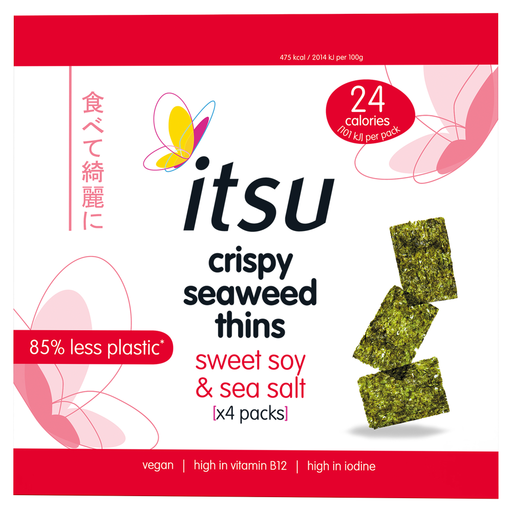
Why This Fits Their Persona: Four individually packed 5g portions make this a manageable introduction to crispy seaweed for office snacks, lunchboxes or first-time buyers.
The total 20g quantity is clearly divided into four portions, reducing uncertainty about how much is included.
Sweet soy and sea salt seasoning; individual 5g packs; made with nori and listed as originating from South Korea.

Why This Fits Their Persona: A simple sea-salt profile suits shoppers who want a delicate, thin texture without sweet soy or heavier seasoning.
The ingredient list is short: nori, olive oil and sea salt, making the seasoning easier to assess.
Four 5g servings; per-serving energy is listed as 24 kcal on the supplied product information.
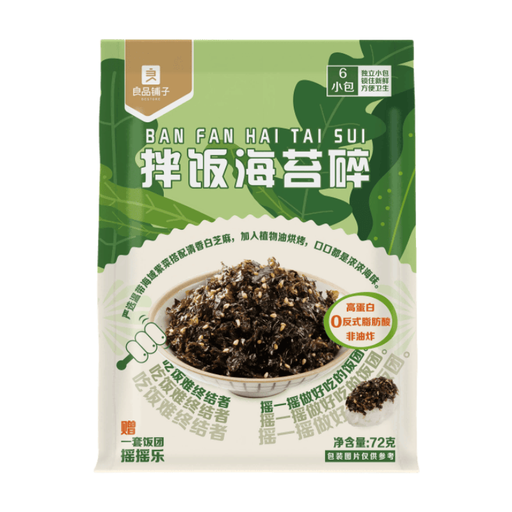
Why This Fits Their Persona: The 72g format is suited to regular topping use over rice, noodles, soups and salads, rather than occasional single-serve snacking.
Its flakes format is clearly intended for mixing with meals, so buyers are less likely to mistake it for individually wrapped sheets.
Contains dried seaweed and white sesame; ready to eat; supplied in a 72g pack.
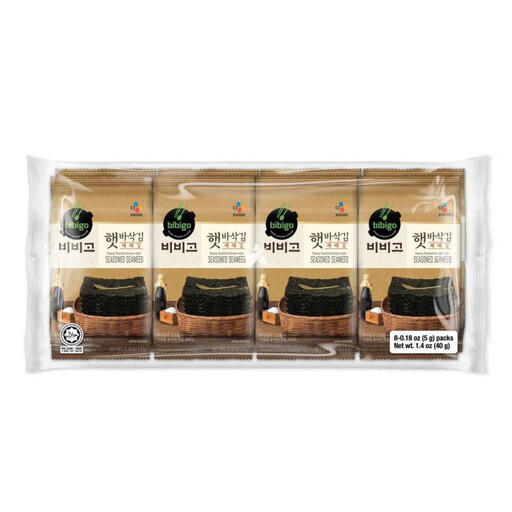
Why This Fits Their Persona: Eight individual 5g packs work well for family lunchboxes, shared cupboards and adding laver to rice or noodle dishes.
Portion packaging limits air exposure, while the listed soy, wheat and sesame allergens make the buying decision clearer.
Eight 5g portions; ready to eat; suitable as a snack, rice wrap or topping.
We have compiled a complete, real-time list of products that fully satisfy these strict selection criteria and UK safety regulations.
Store unopened packets in a cool, dry place away from direct sunlight. Once opened, consume promptly or transfer larger packs to an airtight container. Avoid leaving seaweed near kettles, hobs or dishwashers, where steam can soften the sheets.
For children, consider the thin, brittle texture and supervise younger eaters. Check every packet for damage, unusual odour or visible moisture before serving.
Yes, individually wrapped portions are convenient for lunchboxes because they are ready to eat and help protect the texture until opening. Check the allergen label and storage instructions, particularly during warm weather.
The exact time depends on humidity and packaging. Thin sheets can soften quickly once exposed to air, while flakes may last longer when tightly sealed. Follow the pack instructions and consume promptly for the intended crunch.
Some products provide small serving sizes and may contain fewer calories per portion, but this varies by recipe. Seaweed chips made with rice flour, starch or added oil can have a different nutritional profile from plain roasted laver. Compare the per-serving and per-100g figures rather than relying on the product name.