What should you check before buying?
Choose the connection route after checking the laptop’s exact specification. Then compare the workspace and positioning you need at your desk.
Direct monitor connection
Choose it when: Your laptop supports a matching video connection and you need one additional screen.
Allow for: A suitable cable or adapter; this connection does not necessarily charge the laptop or add peripheral ports.
USB-C hub monitor
Choose it when: Your laptop supports video through the relevant USB-C port and you want compatible charging or peripherals through the monitor.
Allow for: Separate checks of video support, cable capability and whether the monitor’s power delivery meets the laptop’s requirement.
Laptop dock
Choose it when: One laptop connection also needs to serve several peripherals, wired networking or a supported multi-display setup.
Allow for: The laptop’s own external-display limits, which a dock cannot override.
| Concern |
What to check |
Who this matters to |
| Laptop compatibility |
Match the laptop’s video-capable output to the monitor input and cable. For a dock or multiple external screens, check the laptop’s supported display count and modes. |
I need the extra screen to connect without discovering that my laptop port or dock cannot carry the intended video signal. Around 36% of consumers put compatibility first. |
| Usable workspace |
Compare screen size, resolution and aspect ratio for your documents and research windows, alongside the display modes your laptop supports. |
When I read and write with reference material open, I want enough legible space to arrange the windows I use. Workspace is the main concern for around 29% of consumers. |
| Desk fit and positioning |
Check the stand’s stated adjustments and footprint, or the requirements of a compatible arm or clamp. Consider screen position and glare. |
For long sessions at a fixed desk, I need to place the screen sensibly beside my laptop without crowding the work area. Around 21% of consumers prioritise desk fit and positioning. |
| Setup simplicity |
Decide whether you need charging, peripherals, wired networking or more than one external display before adding a hub or dock. |
If one extra screen covers my work, I would rather use a supported direct connection than add equipment I do not need. Keeping the setup simple comes first for around 14% of consumers. |
Joybuy monitors for a home desk
These are external monitors for adding a screen to a home work or study desk. Choose among them by the screen space and desk arrangement you need, then confirm your laptop’s video connection; a monitor choice alone does not establish whether you need a separate cable, adapter or dock.
 No image available
ASUS ProArt PA278CV WQHD IPS monitor
Consider this display if WQHD workspace is a priority for documents and research. Check your laptop’s supported display mode and connection; if you intend to charge through USB-C, confirm the monitor’s power delivery against the laptop’s requirement.
View on Joybuy
 No image available
Samsung S40GD LS22D400GAUXXU 22-inch Full HD monitor
This 22-inch Full HD model is a candidate when you want an additional screen without choosing a larger panel. Check that its inputs match your laptop’s video output and that its screen size suits the windows you plan to use.
View on Joybuy
 No image available
AOC Q32V4 31.5-inch IPS monitor
The 31.5-inch screen is worth considering if your desk has room for a larger display. Check its stated resolution and stand arrangement for the exact variant, as well as your laptop’s supported display mode and the available desk depth.
View on Joybuy
 No image available
KOORUI E2412F 24-inch FHD monitor
This 24-inch FHD model is an option for a separate work or study screen. Match its inputs to your laptop’s output, and check the stand details if changing the screen height matters at your desk.
View on Joybuy
 No image available
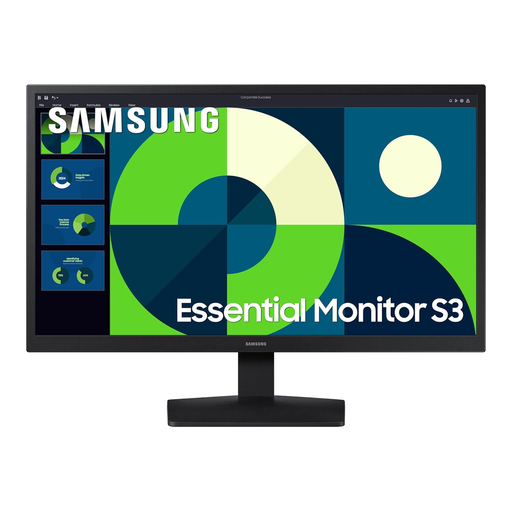
Samsung Essential S3 S31D (LS24D310EAUXXU) monitor
Consider this as an additional desk display for everyday work or study. Check the exact model’s resolution, inputs and stand arrangement against your laptop connection and intended screen position.
View on Joybuy
Common questions
How do I check whether my laptop can use a second monitor?
Find the exact laptop model and check its manufacturer specification for video-capable ports and external-display support. Match a supported output to the monitor input and cable or adapter; Microsoft Support and Apple Support both explain that capability depends on the device and connection.
Does a USB-C port mean a USB-C monitor will display video?
No. Check that the specific laptop port supports video and that the cable and monitor support the intended connection. The Video Electronics Standards Association describes DisplayPort Alt Mode as a way to carry DisplayPort over compatible USB-C connections.
Will a USB-C monitor charge my laptop?
Only if the connection supports charging and the monitor’s stated power delivery meets the laptop’s requirement for the intended use. Check both specifications rather than assuming that video support also establishes adequate charging.
Do I need a dock for one extra screen?
A dock is not necessary solely to add one screen if your laptop has a supported direct video connection to the monitor. Consider one if you also need peripherals, wired networking or a supported multi-display arrangement, and check the laptop’s external-display limits before choosing it.
What matters besides screen size at a home desk?
Check whether you can position the screen appropriately within the whole workstation. The Health and Safety Executive’s display-screen guidance addresses posture, desk arrangement, screen adjustment, lighting, glare and breaks rather than treating monitor size as the only consideration.


