
24/7 Customer Support

Free returns

Same-day & Next-day Delivery

Quality Guaranteed

Unlock Your Welcome Offers: FREE Delivery | Up to 80% OFF | Free 30-day JoyPlus trial
Download the APP
Buying security cameras and dash cams can feel straightforward until you compare resolution, storage, connectivity and installation requirements. Marketing often focuses on a single headline feature, but the details that determine everyday usefulness are easy to miss.
For UK drivers, a camera that records only when the engine is running may not protect a parked vehicle. For homeowners and renters, a camera with impressive image quality can still be inconvenient if it needs a paid cloud plan, weak Wi-Fi or permanent drilling.
This guide explains the main buying traps and the specifications worth checking before you choose a 4K dash cam, indoor security camera or outdoor security camera.
A 4K dash cam can capture a highly detailed image, but resolution is only one part of the result. Night-time glare, a dirty windscreen, poor positioning and compressed cloud footage can all reduce useful detail. A lower-resolution camera with suitable HDR, a wide dynamic range and good positioning may produce more practical evidence in difficult lighting.
For home use, check whether the advertised resolution applies to every lens. Some dual-lens products use different resolutions for the front and rear views. Also consider the camera’s viewing angle: a wide image can cover more space, but objects at the edges may appear smaller.
A 24-hour parking mode normally requires a separate hardwire kit or another continuous power source. A standard 12V socket may switch off when the vehicle is parked, meaning the camera cannot monitor the car after the ignition is turned off.
Hardwiring also requires careful installation. The kit must connect to the correct ACC, battery and ground circuits, and the vehicle battery protection setting should be configured where available. If you are not confident working with vehicle wiring, consider professional installation.
Local microSD recording avoids relying entirely on a cloud service, but cards have a finite working life and should be formatted according to the manufacturer’s instructions. Continuous recording also fills storage quickly, although loop recording replaces older unlocked files.
Cloud storage can provide off-site backup if a camera or memory card is damaged, but it may require a paid subscription. Check the retention period, subscription terms, supported card capacity and whether important clips can be downloaded to your phone.
For a dash cam, 2K can provide a useful balance between detail and storage, while a 4K dash cam may be suitable for drivers who prioritise additional image detail. A front and rear dash cam records incidents from both directions, which can be useful during rear-end collisions or disputes in car parks.
For home monitoring, a 2K security camera may capture more detail than a 1080P model, but placement and lighting remain important. If colour at night matters, look for stated colour night vision modes and check whether full-colour recording needs nearby lighting. Infrared night vision may instead produce a black-and-white image.
A 360-degree dash cam or multi-channel system can monitor more areas around a vehicle than a single forward-facing unit. However, additional cameras use more storage and may involve more cables.
For homes and small businesses, motion detection can reduce unnecessary notifications compared with constant alerts from every moving tree or passing car. Person or vehicle detection may help filter alerts, but settings should still be adjusted for your property, road position and privacy needs.
A Wi-Fi dash cam lets you view or download clips through a phone app without removing the memory card. Wi-Fi does not necessarily mean the camera can access the internet; remote access usually depends on a separate connected system.
For outdoor installation, an IP66 rating indicates protection against dust and powerful water jets, but it does not permit submersion. Keep power connections dry and use suitable mounting hardware. Indoor cameras generally use plug-in power, while battery models require charging and may record differently.
Check the UK installation position carefully. Avoid pointing a home CCTV camera into a neighbour’s private area, and consider signage and data protection responsibilities where people outside your household may be recorded.
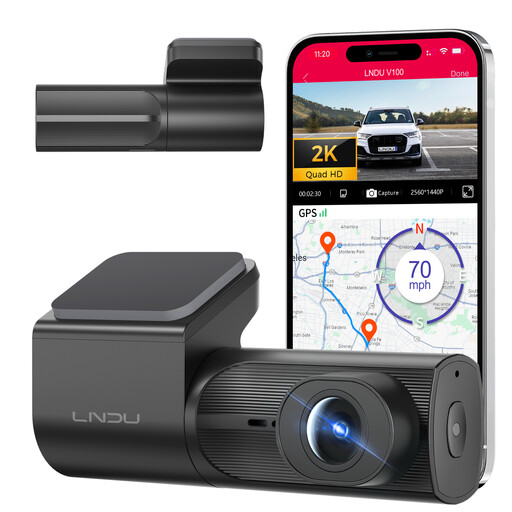
Why This Fits Their Persona: A practical front-facing option for UK drivers who want app access and parking monitoring without moving to a multi-camera setup.
Its listing clearly states that 24-hour parking mode needs a separately purchased hardwire kit, helping buyers plan the installation and cost.
2K recording, built-in Wi-Fi, LNDU app control, G-sensor emergency locking and loop recording.
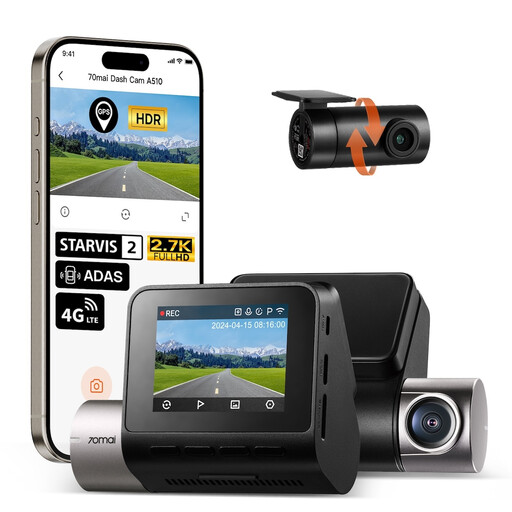
Why This Fits Their Persona: Suitable for drivers who want front and rear coverage, built-in GPS and structured app features for regular commuting or longer journeys.
The product information specifies that the hardwire kit is required for parking functions and that a microSD card is not included.
1944P front and 1080P rear recording, HDR, built-in GPS, app and voice control, plus loop recording.
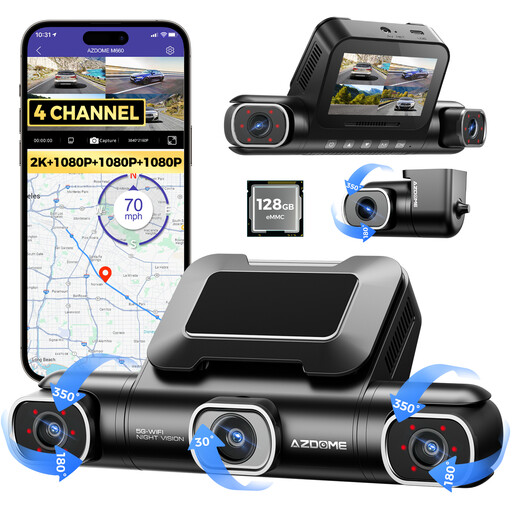
Why This Fits Their Persona: Designed for drivers who want broader vehicle coverage for frequent travel, commercial use or concerns about incidents around a parked car.
It uses four recording channels rather than relying on a single wide-angle lens, while its listing states that the parking hardwire kit is purchased separately.
Four-channel coverage, built-in GPS, 128GB eMMC storage, 5G Wi-Fi and selectable parking modes.
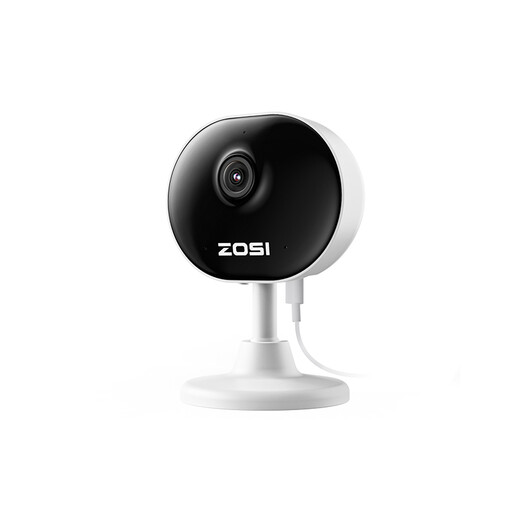
Why This Fits Their Persona: A compact indoor camera for monitoring pets, children, elderly relatives or a small shop without drilling into walls.
Its compact magnetic or adhesive mounting is suited to renters, while local microSD recording provides an alternative to relying only on cloud storage.
1080P video, 33ft night vision, motion and human detection, two-way audio and 2.4/5GHz Wi-Fi.
We have compiled a complete, real-time list of products that fully satisfy these strict selection criteria and UK safety regulations.
Before ordering, confirm:
A dash cam can create a time-stamped record of journeys and incidents, but it should not replace attentive driving. Choose a model with secure event locking, suitable storage and a mounting position that does not obstruct your view. GPS car camera features can add speed and location data where supported.
Recording time depends on resolution, frame rate, storage capacity and whether the camera records continuously or only after motion detection. A camera supporting 24/7 recording will use storage more quickly than one saving short event clips. Loop recording can overwrite older, unlocked footage when the card becomes full.
Many connected outdoor security cameras use Wi-Fi for app notifications and remote viewing, but performance depends on signal strength at the installation point. Dual-band models can offer more connection flexibility. If the signal is weak, expect delays, disconnections or missed alerts; improve coverage before permanently mounting the camera.