What matters when choosing?
Choose the lens and focus workflow for the detail you want, then plan the backdrop and light. If you also shoot outdoors, consider what you will carry and how you will handle moving subjects.
| Concern |
What to check |
Who this matters to |
| Sharpness across the pod |
Check the exact camera's bracketing and stacking workflow, and plan stable support for a stationary subject. |
If I want both the near and far parts of a small pod sharp, I need a workable way to combine different focus distances. Around 42% of consumers put depth-of-field control first. |
| Dark backdrop and lighting |
Allow room for a plain dark backdrop and an adjustable light; check compatibility if you intend to use a flash. |
When I arrange a pod indoors, I want to control how its texture is lit without lighting the backdrop in the same way. Roughly 33% of consumers prioritise that controlled setup. |
| Outdoor portability |
Compare body-plus-lens weight and the stated protection of both camera and lens; account for subject movement. |
If I find pods on walks, I need a kit I can carry and use in variable conditions. About 25% of consumers place portable outdoor use first. |
Joybuy camera choices
These Sony interchangeable-lens camera kits are choices for building a seed-pod still-life setup. For frame-filling close-ups, check a compatible macro lens separately; also confirm the exact camera's focus workflow and plan your backdrop and lighting.
 No image available
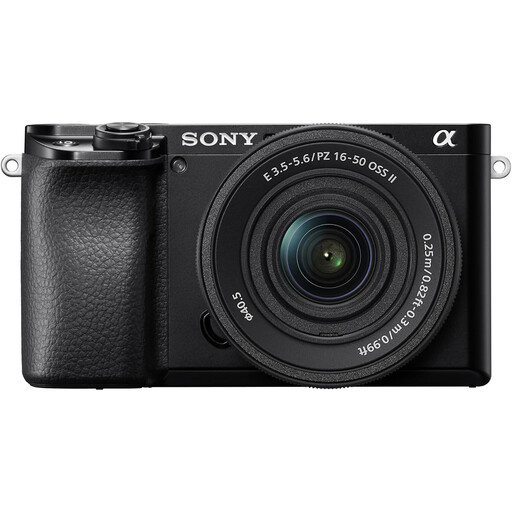
Sony A6400 APS-C with 16–50mm Power Zoom
Consider this interchangeable-lens kit if you want to assemble a stationary seed-pod setup around a separately chosen close-focus lens.
The listed kit includes a 16–50mm Power Zoom lens. Check a compatible macro lens's magnification and minimum focusing distance, and confirm the A6400's focus-bracketing workflow if stacking is important to you.
Joybuy
 No image available
Sony A6100 APS-C with zoom-lens kit
Consider this interchangeable-lens camera for a tabletop setup if you intend to check compatible close-focus lens options.
The kit-lens descriptions differ between 16–55mm and 16–50mm, so confirm the exact lens supplied. Check its close-focus specifications and the A6100's focus-bracketing workflow before relying on either for this subject.
Joybuy
 No image available
Sony Alpha ZV-E10 II K with 16–50 mm f/3.5–5.6 Power Zoom
Consider this interchangeable-lens kit if you want to build a controlled seed-pod still-life setup and select the close-focus lens separately.
The named kit lens is a 16–50 mm f/3.5–5.6 Power Zoom. Check a compatible macro lens's close-focus specifications and the ZV-E10 II's bracketing or stacking workflow if you need front-to-back detail.
Joybuy
Questions and answers
Do I need a macro lens for seed-pod photographs?
For small, frame-filling detail, choose by the lens's stated maximum magnification and minimum focusing distance rather than assuming a kit zoom will focus closely enough. OM SYSTEM specifies 1:1 magnification and a 0.19m minimum focusing distance for its 60mm macro lens; Canon specifies 1.4x maximum magnification for its RF 100mm macro lens. Check lens compatibility and leave working space for your light and backdrop.
Does focus stacking remove the need for stable support?
No: a steady camera and stationary seed pod help keep a sequence of differently focused frames aligned. Check whether your exact camera combines the frames internally or requires later processing; stabilisation cannot stop movement caused by wind.
How can I make the background look dark?
Use a plain dark backdrop and control where the light falls, rather than relying on the camera body alone. Nikon UK suggests a plain background and one adjustable lamp for indoor macro work, while Canon UK illustrates the use of black velvet for a deep black background. Review the image as you adjust the light and backdrop positions.
Can I change my mind after buying a camera online in the UK?
For an online order, GOV.UK says customers can notify the trader that they want to cancel within 14 days of receiving the item. Check the applicable cancellation and return instructions before sending it back; remedies for faulty or misdescribed goods are a separate matter from changing your mind.
Can a retailer take back my old camera when I buy a new one?
GOV.UK says retailers must offer take-back of waste electrical equipment of the same type as an item purchased, including for online orders. Check the retailer's arrangements for handing over or collecting the old camera.


