Parents making filled lunches
Sliced bread works for repeated sandwiches; individual rolls offer a different portion format. Check how many lunches the pack will cover and whether its freezing directions suit your plans.


Choose a seeded loaf for several filled sandwiches or seeded rolls for individual filled portions. A fruited teacake is a separate fruit-bread option, not necessarily a seeded sandwich bread. Compare the chosen product’s ingredients, allergens, fibre per 100g and portion size, then check whether its pack size and storage directions fit the lunches you plan to make.
Sliced bread works for repeated sandwiches; individual rolls offer a different portion format. Check how many lunches the pack will cover and whether its freezing directions suit your plans.
Compare the actual fibre figures and portion sizes rather than relying on the word “seeded”. NHS lunchbox guidance suggests choosing wholegrain where possible and mixing white and brown slices if a child dislikes wholegrain.
Check the current ingredients and allergen statements for the person eating the lunch. An ordinary wheat-based seeded loaf is not interchangeable with a specifically gluten-free loaf; NHS guidance also warns about contact with gluten-containing food during preparation.
Start with the lunch format: a loaf or roll can hold a filling, while NHS lunchbox guidance lists fruited teacakes as an alternative to cakes and biscuits.
| Priority | What to check | Your needs |
|---|---|---|
| Lunch format | Choose slices for sandwiches across several lunches or rolls for individual filled portions. Check whether a teacake is fruited rather than assuming it contains seeds. | I’m making a filled lunch, so I need bread or a roll that suits the filling. A fruited teacake would be a separate item. |
| Fibre and portions | Compare fibre per 100g on the same basis, then check the amount per slice or roll you plan to serve. Roberts Bakery lists 3.0g per 100g for its Seeded 800g; Waitrose lists 7.8g per 100g for its Multi-Seeded Farmhouse. | Will the child eat the portion I make? I want to compare the actual loaf labels, not assume that “seeded” means wholemeal or a particular fibre content. |
| Ingredients and allergens | Read the current ingredients, allergen statements and relevant precautionary wording. For coeliac disease, choose food specifically labelled gluten-free and prevent contact with gluten-containing food and utensils, as the NHS advises. | Someone eating this lunch has an allergy or coeliac disease, so the precise product and how I prepare it matter. |
| Pack and storage | Count the planned lunches, check the pack size and follow that product’s best-before and freezing directions. For a filled lunch on a hot day, follow NHS-backed lunchbox guidance on keeping it cool. | Lunches are spread across the holidays, so I need a pack I can use or freeze as directed without leaving bread unused. |
Warburtons’ Fruity Teacakes list dried fruit and sugar; a seeded loaf or roll serves a different filled-lunch purpose.
Decide whether you are making a filled main item or adding a separate fruit-bread item before choosing.
Seeded products can use different flours and have different fibre values. M&S also labels its Super Seeded Soft Rolls unsuitable for people with milk or sesame allergy.
Compare the particular pack’s flour, fibre figures and allergen wording for the person who will eat it.
Roll packs and loaves provide different numbers of portions, and freezing directions are product-specific.
Count the lunches you expect to make and check the selected pack’s best-before date and freezing instructions.
Bread left unused may be wasted.
Its Fruity Teacakes, Seeded Batch and gluten-free seeded loaf are distinct product lines.
Its four-pack of Super Seeded Soft Rolls offers individual portions for filled lunches.
Its 400g Multi-Seeded Farmhouse is a smaller sliced-loaf option.
Its Seeded 800g is a sliced loaf for conventional sandwiches.
Its Super Seeds White Farmhouse is a seeded sliced-white-bread option.
Its teacake and fruit-loaf category lists different formats, including teacakes and fruit-and-seed bread.
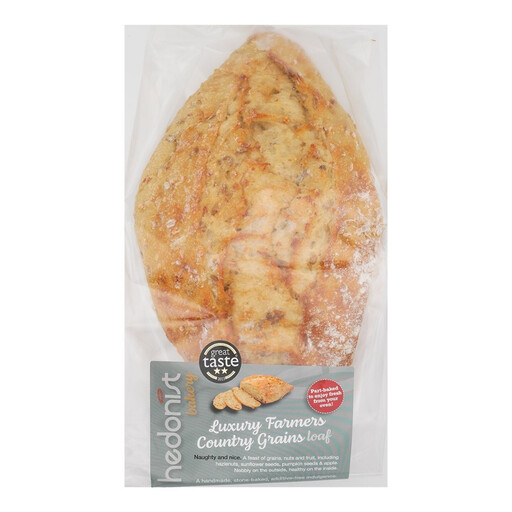
This grains loaf contains seeds and nuts and is described as suitable for filled sandwiches during the school holidays.
 No image available
For filled lunches, this loaf is described as suitable for sandwiches and freezing. Its listed ingredients include sunflower and pumpkin seeds, hazelnuts and wheat flour. It contains wheat and hazelnuts; check the pack’s fibre figure and flour description if those affect your choice.
Compare their nutrition figures per 100g first, then check each pack’s per-slice figures for the portion you intend to serve. NHS food-label guidance notes that stated portions can differ from the amount you eat.
Follow the directions on the particular pack. For its Multi-Seeded Farmhouse, Waitrose says to freeze within the best-before date, use within one month, defrost fully and not refreeze.
Consider the filling as well as the bread. Just One Norfolk, an NHS children and young people’s health service, advises keeping lunches cool and using an ice pack on hot days.
Check the current ingredients and allergen wording on the individual product. UK Food Standards Agency guidance identifies cereals containing gluten, eggs, milk, sesame and soybeans as allergens requiring declaration when used as ingredients. For coeliac disease, NHS guidance says to use gluten-free food and avoid contact with gluten-containing food during preparation.