Parents packing everyday school sandwiches
Look for a loaf that makes practical sandwiches, can be stored or frozen conveniently, and offers declared wholegrain or fibre information without assuming every child will enjoy the same texture.


Choose a seeded loaf with declared wholegrain or fibre information when your child will eat it and the current pack label suits their dietary needs. Softer batch loaves or finely milled-seed options can be more practical where crunch is a concern, while a gluten-free loaf is for a child who specifically needs gluten avoidance and still requires a full allergen check.
Look for a loaf that makes practical sandwiches, can be stored or frozen conveniently, and offers declared wholegrain or fibre information without assuming every child will enjoy the same texture.
Check the exact current pack label and the school's published allergy arrangements before choosing bread. Standard seeded loaves commonly contain wheat and may include sesame, soya, barley or precautionary statements; gluten-free seeded bread can still contain other allergens.
Distinguish between soft seeded loaves, visibly seeded loaves and finely milled-seed options rather than treating all seeded bread as interchangeable.
| Priority | What to check | Your needs |
|---|---|---|
| Wholegrain and fibre details | Compare fibre per 100g and per labelled slice. Check any declared wholegrain proportion and compare slice weights before treating per-slice figures as equivalent. | I want a sandwich loaf with clear wholegrain or fibre information, while recognising that a more substantial seeded texture may not suit every child. |
| Allergens and school arrangements | Read the current allergen declaration, seed ingredients and precautionary statements. Check the child's medical plan and the school's allergy policy. | I need the loaf to fit my child's dietary requirements and the arrangements used by their school. A gluten-free label does not rule out other allergens. |
| Seed texture | Check whether seeds are whole, visible or finely milled. Compare the loaf format and average slice size if sandwich handling matters. | A softer loaf or milled seeds may be easier to accept when crunch or visible seeds put my child off a sandwich. |
| Storage and freezing | Follow the named product's current storage and freezing instructions. Choose a pack size that suits the number of lunches you make each week. | I want bread that can be used across several lunch days without buying more than my household can use. |
Seeded wheat loaves commonly contain cereals containing gluten and may also list sesame, soya, barley or precautionary allergen statements. A gluten-free seeded loaf may still contain another allergen, such as egg.
Check the current physical pack label, the child's medical plan and the school's published allergy policy whenever you change loaf or recipe.
Seeded loaves vary in seed percentage, fibre amount and labelled slice weight. Fibre per slice can help with initial comparison, but different slice sizes mean it is not a complete comparison on its own.
Compare the current pack's fibre per 100g, fibre per slice, declared wholegrain proportion where stated, salt and ingredients, then choose a loaf your child will eat.
Visible and toasted seeds alter crunch and mouthfeel, so a child who dislikes them may leave the sandwich uneaten.
Consider a soft seeded batch loaf or a finely milled-seed product such as Kingsmill 50/50 No Bits Multi-Seed, then adjust according to the child's preferences.
Several relevant loaves come in larger packs, while some households only need a few school lunches each week.
Choose a pack size that matches your routine and freeze portions according to the product's current storage instructions.
Unused bread can lead to food waste if it is not eaten before its best-before date.
Offers conventional seeded batch and farmhouse loaves alongside a gluten-free super-seeded option for sandwiches.
Provides a Seeded Batch route for shoppers seeking a soft loaf with toasted seed texture.
Relevant for seeded sliced loaves including a lightly seeded white loaf and Signature Seeded wholemeal bread.
Offers mixed-seed loaves combining white and wholemeal flour, including a No Bits version for children who dislike whole seeds.
Offers an 800g seeded sliced loaf for households wanting a familiar loaf format with a modest seed blend.
Offers Multiseed and Super Seeded bloomer varieties, including options positioned around soft bloomers and freezing convenience.
Joybuy product options for seeded bread in school packed lunches.
 No image available
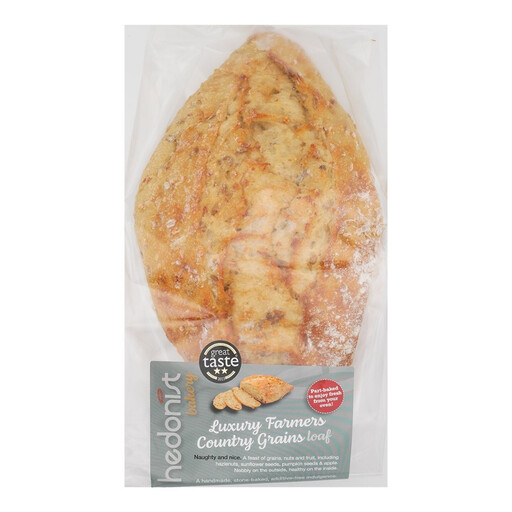
A country-style seeded wheat loaf described as suitable for sandwiches and freezing, for households happy to slice the loaf as needed.
Listed ingredients include sunflower seeds, pumpkin seeds and hazelnuts. It contains wheat/gluten and hazelnuts; check the current pack label, the child's dietary needs and the school's allergy policy before packing.
Do not assume ordinary seeded bread is suitable. Standard seeded loaves commonly contain wheat or other cereals containing gluten, and some also contain sesame, barley or soya. If gluten avoidance is medically required, choose a specifically labelled gluten-free product and still check its full allergen panel; Warburtons Super Seeded Farmhouse (GF), for example, contains egg white powder.
In England, schools must publish an allergy safety policy setting out arrangements to reduce contact with known allergens and emergency response plans, according to Department for Education guidance. Check your own school's policy and any class-specific instructions before packing a seeded sandwich, as packed-lunch arrangements can differ between schools.
No. Seed content, declared wholegrain proportion and fibre vary by loaf. Allinson's Signature Seeded, for example, lists 52% wholegrain and 3.8g fibre per slice. Compare the current nutrition panel and ingredients rather than relying on the word “seeded”.
Follow the product's storage directions. NHS lunchbox guidance suggests keeping varied bread options in the freezer. Allinson's Signature Seeded states that it is suitable for home freezing for up to one month when over-wrapped, while Kingsmill 50/50 Multi-Seed states that it can be frozen for three months; follow the individual pack because directions vary.