
24/7 Customer Support

Free returns

Same-day & Next-day Delivery

Quality Guaranteed

Unlock Your Welcome Offers: FREE Delivery | Up to 80% OFF | Free 30-day JoyPlus trial
Download the APP
Self-adhesive wall mirror tiles can turn a bedroom, hallway or wardrobe door into a useful reflective surface without drilling. They are also appealing to renters and students who want a flexible interior update rather than a permanent fixture.
However, the category includes substantial differences in material, adhesive performance and intended use. A low-cost decorative sticker may suit a feature wall, but it may not provide the clear, full-size reflection needed for dressing. Before buying, check these common pitfalls.
Many peel-and-stick mirror tiles are made from PVC or acrylic with a reflective finish. They are lightweight and useful for decorative patterns, but their reflection may not be as clear or stable as real glass mirror tiles.
If you need to check an outfit or view your full appearance, look for a stated size and a standard reflection specification. A product described as a decorative mirror sticker should not automatically be treated as a dressing mirror.
Self-adhesive backing is not a universal solution. Textured paint, dusty plaster, damp areas, peeling wallpaper and uneven tiles can reduce contact between the adhesive and the wall. This may lead to lifting edges or a fallen tile.
A no-drill wall mirror is more suitable for smooth, flat and dry indoor surfaces. Renters should also check their tenancy agreement and consider testing the adhesive on an inconspicuous area. “Removable” or “damage-free” should be treated as product guidance rather than a guarantee for every wall finish.
A collection of small pieces may look attractive online but create a fragmented reflection in practice. For a useful dressing area, rectangular tiles are generally easier to align than irregular shapes. You should also allow for gaps, skirting boards, sockets and door openings before ordering.
Glass also requires careful handling. Check whether the product includes polished edges, the approximate weight per tile and clear fitting instructions.
For a crisp, true-to-life reflection, consider frameless glass mirror tiles. The Harbour Housewares option uses 2mm-thick glass and has a stated 1x standard reflection, making it more appropriate for a practical mirror arrangement.
PVC and acrylic alternatives are lighter and can be easier to use for decorative compositions. They are suitable for motifs, borders and small visual accents, but product dimensions should be checked carefully before expecting a full reflective view.
A 30 x 40cm wall mirror gives a useful rectangular panel while remaining easier to arrange than a single large framed mirror. Several tiles can be positioned vertically to create an adhesive dressing mirror, horizontally to visually widen a narrow hall, or in a grid for a modular mirror wall.
Measure the available area first. Multiply the tile width and height by the quantity required, then allow for small spacing between pieces. This avoids ordering too few tiles for a wardrobe or feature wall.
Look for the included mounting method rather than assuming that adhesive is supplied. Heavy-duty foam pads can provide a raised, cushioned bond, while thin adhesive films may sit more closely to the wall.
Before installation:
Avoid placing adhesive tiles directly in areas exposed to persistent condensation, such as an unventilated shower zone. A bedroom, hallway, wardrobe or home gym wall is generally a more appropriate setting.
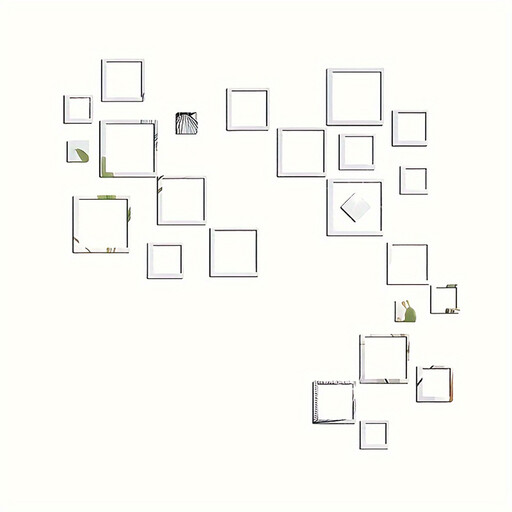
Why This Fits Their Persona: A multi-piece PVC option suits students or first-time renters who want to experiment with a small decorative arrangement without committing to a large glass installation.
Its PVC construction makes the intended decorative use clear, helping buyers distinguish a lightweight sticker set from a full-size glass dressing mirror.
24-piece format; self-adhesive rectangular design; silver finish; listed as removable and waterproof.
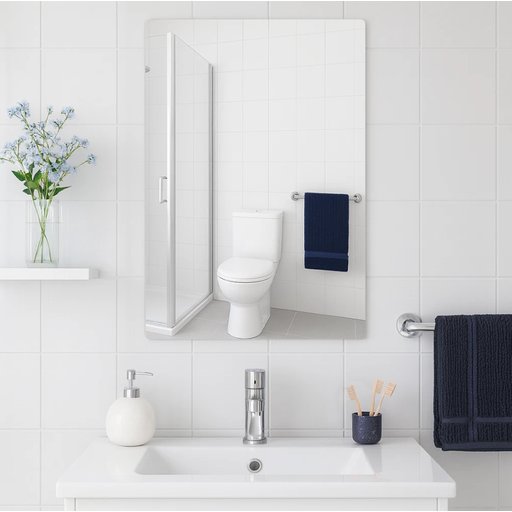
Why This Fits Their Persona: This option is suited to homeowners, renters and wardrobe users who want a clearer, more structured reflective surface with flexibility in placement.
The stated glass material, 30 x 40cm dimensions and supplied foam adhesive pads make it easier to assess reflection quality, coverage and installation requirements before purchase.
2mm-thick glass; frameless rectangular design; adhesive pads included; approximately 1kg per tile; two-year manufacturer’s warranty.

Why This Fits Their Persona: The vertical stripe format works for a gym corner, dressing area or narrow wall where a tall decorative arrangement is more practical than a wide panel.
The listed 3 x 35cm format lets you plan vertical coverage accurately instead of relying on a product photograph to estimate the final size.
10-piece pack; PVC construction; vertical stripe design; self-adhesive mounting for a modular arrangement.
We have compiled a complete, real-time list of products that fully satisfy these strict selection criteria and UK safety regulations.
For glass tiles, keep fingers away from adhesive pads after removing their protective film. Press the tile evenly rather than applying force to one corner. A microfibre cloth is suitable for fingerprints; apply glass cleaner to the cloth instead of spraying heavily onto the tile or wall joint.
Do not place tiles where they could be struck by doors, exercise equipment or furniture. If you are creating a large modular mirror wall, install one section at a time and recheck alignment regularly. The adhesive should not be treated as a substitute for specialist mounting in areas where impact or substantial vibration is likely.
They can be suitable on smooth, clean and dry surfaces, but removal results vary according to paint, plaster and adhesive strength. Check your tenancy conditions, follow the product instructions and test a small area where possible. Avoid assuming that every peel-and-stick mirror tile will leave a wall untouched.
Yes, rectangular tiles can be arranged vertically to increase height. Measure the wall and your preferred viewing distance first. A 30 x 40cm tile gives more usable coverage than small decorative shapes, while several tiles can be aligned into a taller adhesive dressing mirror.
No. Self-adhesive mirror tiles are passive products and do not require electricity. Their main upkeep is occasional cleaning and checking that edges remain firmly attached, particularly in rooms with temperature changes or condensation.