What to prioritise when choosing storage
Check whether MTD applies before choosing a record-keeping workflow. Then plan how to keep readable supporting documents and recoverable copies, whether you use local storage, cloud storage or both.
| Concern |
What to check when buying |
Who this matters to |
| Finding readable evidence |
Use a consistent tax-year and document-type structure. Open sample files and check that scans include the information you need. |
I want to locate statements and invoices behind a return without searching through an unstructured archive. Around 29% of consumers put finding evidence first. |
| Recovering files |
Plan a separately stored copy, decide how it will be updated, disconnect removable backups when idle and test a restore. |
If my computer or working drive fails, I want another copy I can restore rather than a backup that is only connected to the same device. Around 29% of consumers prioritise recovery. |
| Protecting sensitive files |
Check the exact device or service’s encryption and unlocking method, where recovery information is kept, and whether online accounts offer two-step verification. |
I want to limit access to financial documents if a drive is lost or someone gets into my account. Around 21% of consumers focus first on confidentiality. |
| Supporting an applicable MTD workflow |
Check whether MTD applies and, if it does, compare software for your income sources, digital record creation, submissions and links between products. |
If MTD applies to me, I need software that fits the required record-keeping and submission workflow, as well as a way to retain supporting documents. Around 21% of consumers prioritise MTD compatibility. |
Joybuy storage options for local copies
These Joybuy options are external drives for local copies of supporting records. They can help with storage and backup planning, but do not replace compatible MTD software where that is required.
 No image available
Samsung Portable SSD T7, 2 TB, Grey
A portable local-storage option for keeping a copy of supporting documents.
2 TB; USB Type-C 3.2 Gen 2 (3.1 Gen 2). The listing describes optional AES 256-bit hardware encryption; check the exact configuration and unlocking arrangements.
Joybuy
 No image available
Samsung T7 Shield MU-PE1T0S/EU, 1TB, Black
A portable SSD option for keeping a local copy; check that its connection suits the computer you will use.
1TB; USB Type-C 3.2 Gen 2 (3.1 Gen 2). Samsung specifies password protection for the MU-PE1T0S/EU; keep access credentials and another recoverable copy separate from the drive.
Joybuy
 No image available
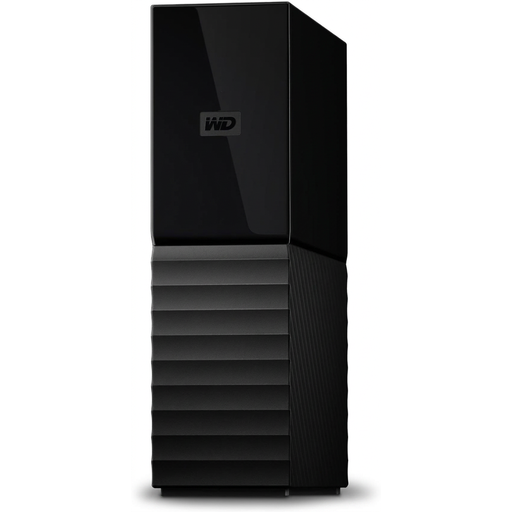
Western Digital My Book, 22TB, Black
A desktop hard drive for a larger local archive; consider where it will be kept and how a separate copy will be maintained.
22TB; USB 3.0; password protection and hardware encryption; listed as compatible with PC and Mac.
Joybuy
 No image available
SanDisk Portable SSD, 2TB
A portable local-storage option for carrying or keeping a copy of digital records.
2TB. Check that the drive’s connection is suitable for your computer and test that you can open and restore saved files.
Joybuy
 No image available
Western Digital My Passport, 2TB, Black
A portable hard drive option for keeping a local copy of supporting files.
2TB. The listing describes 256-bit AES hardware encryption and scheduled local backup software; check that the software fits your computer and backup routine.
Joybuy
Questions and answers
Does filing Self Assessment mean I must use MTD for Income Tax software?
No. HMRC says the requirement depends on whether you are a qualifying sole trader or landlord, your qualifying income and any exemption. As of 23 October 2026, HMRC’s published thresholds are more than £50,000 for 2024–25, with a 6 April 2026 start; more than £30,000 for 2025–26, with a 6 April 2027 start; and more than £20,000 for 2026–27, with a 6 April 2028 start. Check how the rules apply to your circumstances rather than assuming they cover every Self Assessment filer.
Can I discard statements and invoices after entering totals into MTD software?
No. HMRC says MTD users must keep the original records or supporting documents—or copies of them—used to prepare the return, including relevant bank statements and invoices. The digital-record requirement concerns specified self-employment and property income and expenses; it does not mean that every supporting document must exist only inside the software.
How long should I keep Self Assessment records?
The period depends on the type of record and your circumstances. HMRC says personal Self Assessment records supporting a return sent on time should be kept for at least 22 months after the end of the relevant tax year; for a late return, it gives a period of at least 15 months after sending it. For self-employed business records, HMRC says to keep them for at least five years after the relevant 31 January submission deadline, with a different rule for returns sent more than four years late. Check which rule applies before setting deletion dates.
What documents should I save, and how can I check a backup works?
Keep records that support the income and claims in your return. HMRC lists savings-interest statements and, for self-employed people, examples such as receipts, bank statements and sales invoices. Open a sample saved document and restore a file from a separate backup; the National Cyber Security Centre advises keeping removable backup devices disconnected when they are not in use.
Will an external drive or cloud account by itself meet MTD requirements?
No, not where MTD for Income Tax applies to you. HMRC requires compatible software to create or connect digital records, send quarterly updates and submit the tax return. If you use more than one software product, check the required digital links between them. A drive or cloud account can still hold supporting copies and backups.


