
24/7 Customer Support

Free returns

Same-day & Next-day Delivery

Quality Guaranteed
Download the APP
Categories
Keeping a home clean can feel like a never-ending task. Between work, family and finding time for yourself, the daily build-up of dust, crumbs and pet hair can be overwhelming. If you're looking for a more efficient way to manage your floors, a self-emptying robot vacuum and mop could be the solution. These advanced appliances offer a hands-off approach to cleaning, handling both vacuuming and mopping before returning to their dock to automatically empty their dustbins.
As a Joybuy Product Recommendation Officer, my role is to help you understand the features that matter. This guide cuts through the marketing clutter to provide practical advice, helping you choose a device that genuinely fits your home and lifestyle.
Navigating the specifications of modern cleaning robots can be confusing. Here are a few key considerations to help you make an informed decision.
How a robot vacuum finds its way around your home directly impacts its cleaning efficiency. Models equipped with smart robot vacuum with LiDAR (Light Detection and Ranging) technology use lasers to create a precise, 360-degree map of your rooms. This allows for methodical, straight-line cleaning paths, avoiding random bumping and missed spots. It also enables advanced features like setting no-go zones (to protect pet bowls or delicate furniture) and cleaning specific rooms on demand via an app.
Suction power, measured in Pascals (Pa), indicates how effectively a vacuum can lift debris. A high suction robot vacuum (typically 5,000 Pa or more) is particularly important for homes with carpets or pets, as it can pull embedded dirt and robot vacuum for pet hair from deep within the fibres. For mopping, look for models with an electronic water tank and app control. This allows you to adjust the water flow for different floor types, ensuring a thorough clean on tiles and laminate without oversaturating hardwood floors.
The standout feature of these devices is the automatic self-emptying vacuum station. After each cleaning cycle, the robot docks and transfers the contents of its internal dustbin into a larger, sealed bag or container within the base station. Depending on the model and your home's environment, this station may only need emptying every 30 to 60 days, significantly reducing your day-to-day interaction with the machine and minimising your exposure to dust.
Here are a few models that stand out for their combination of performance, navigation and convenience features.
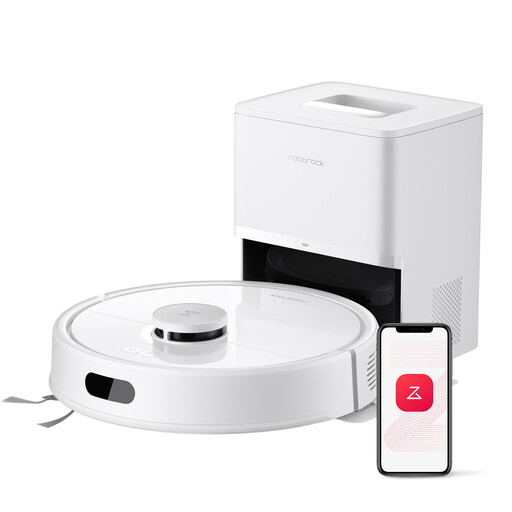
Why It Stands Out: The Roborock Q7 L5+ is a strong contender for homes with pets. Its combination of high suction and a dual anti-tangle system is designed specifically to handle pet hair and prevent clogs, while its precise LiDAR navigation ensures comprehensive coverage.
Pros:
Who is it for?: Pet owners and those with a mix of carpet and hard floors who need powerful, reliable hair and debris collection.
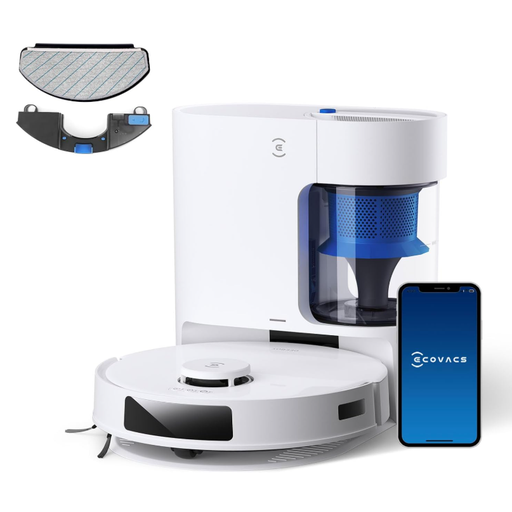
Why It Stands Out: The DEEBOT N20 PLUS focuses on endurance and efficiency. With a very long runtime and a bagless self-empty station, it offers a low-maintenance solution for larger homes. Its ZeroTangle technology is another feature aimed at reducing hands-on maintenance.
Pros:
Who is it for?: Those with large, open-plan homes who prioritise long cleaning cycles and a bagless system to minimise ongoing consumable costs.
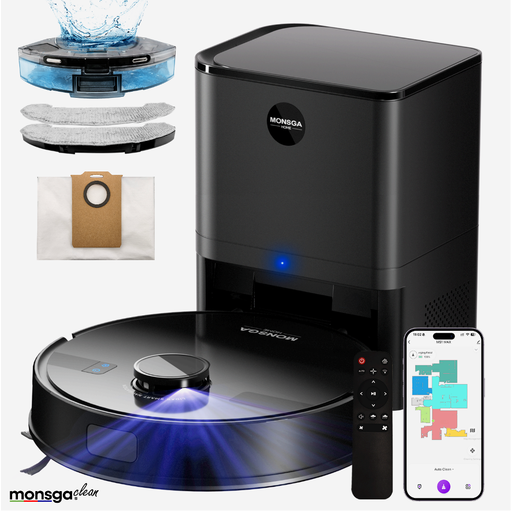
Why It Stands Out: The MonsgaClean MS1 MAX offers a very high suction rating and a large-capacity dust bag, promising up to 60 days of hands-free cleaning. Its versatility in control methods—app, voice and a physical remote—makes it accessible for all members of the household.
Pros:
Who is it for?: Tech-savvy users in multi-storey homes who want maximum suction power and the convenience of a large-capacity, long-lasting self-empty station.
The models highlighted here represent a fraction of the available options. If you're looking for different features, a specific price point or simply want to compare more devices, our full collection has a solution for every home.
Explore the Full Robot Cleaner Mop Range
How often do you have to empty a self-emptying robot vacuum? This depends on the size of the station's dust bag and your home environment. For most models, you can expect to empty the station every 30 to 60 days. Homes with pets or high foot traffic may require more frequent changes.
Can a robot vacuum and mop combo truly replace manual cleaning? A robot vacuum and mop combo is excellent for daily maintenance. It keeps dust, hair and light grime under control, significantly reducing the frequency of manual cleaning. However, for deep-seated stains, sticky spills or cleaning tight corners, you will likely still need to perform occasional manual mopping and spot-cleaning.
Is LiDAR navigation a necessary feature? While not strictly necessary, LiDAR is a highly recommended feature. It transforms the robot from a random bumper into an intelligent navigator. This results in faster, more efficient and more complete cleaning cycles. It also unlocks powerful app-controlled vacuum and mop features like virtual walls and room-specific cleaning, giving you far more control.
By Joybuy Product Recommendation Officer