
24/7 Customer Support

Free returns

Same-day & Next-day Delivery

Quality Guaranteed

Unlock Your Welcome Offers: FREE Delivery | Up to 80% OFF | Free 30-day JoyPlus trial
Download the APP
Keeping a home spotless can feel like a never-ending task, especially in busy households with pets and children. The promise of a self-emptying robot vacuum and mop is alluring: a device that not only cleans your floors but also manages its own dust disposal for weeks at a time. However, the market is flooded with models and not all deliver on this hands-free promise.
As the Joybuy Product Recommendation Officer, my role is to help you navigate the options and understand the key features that truly matter. Before you invest, it's crucial to be aware of common pitfalls that can lead to disappointment and wasted money.
Many shoppers are swayed by impressive-sounding specifications that don't translate to real-world performance. Here are three marketing traps to watch out for:
high suction robot vacuum with a poorly designed brush roll will simply get tangled with pet hair or fail to lift debris from carpet fibres. Effective cleaning is a combination of suction, brush design and intelligent navigation.To ensure you get a machine that genuinely makes your life easier, focus on these three non-negotiable parameters.
The single most important feature for efficient cleaning is the navigation technology.
LiDAR navigation robot vacuum uses a spinning laser to create a precise, 360-degree map of your home. This allows it to plan the most efficient cleaning path, navigate seamlessly around furniture and operate effectively even in low light. It's the key to avoiding missed spots and repeated cleaning.Once navigation is sorted, you can assess cleaning power.
robot vacuum for pet hair.robot vacuum for carpets and hard floors.A truly smart vacuum with app control offers more than just a start/stop button. Key features to look for include:
Based on these critical criteria, here are some models that match different household needs and priorities.
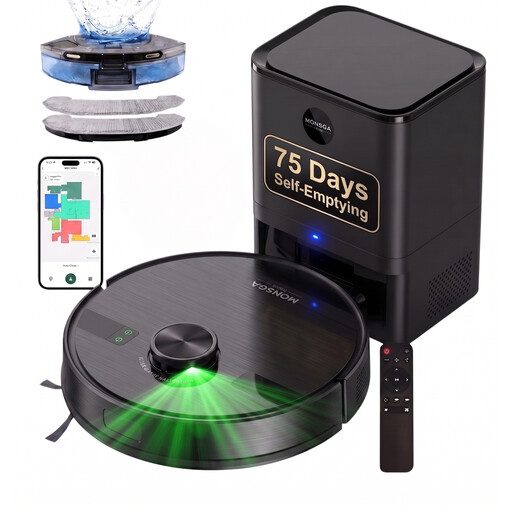
Why This Fits Their Persona: With its very high suction, long 180-minute runtime and large 4.0L dust bag, this model is built for large, multi-storey homes. It can handle extensive cleaning sessions on a single charge and requires emptying far less frequently (up to 60 days), which is ideal for a busy family schedule.
It combines 9000Pa suction with advanced LiDAR navigation and multi-floor mapping, avoiding the pitfalls of inefficient cleaning and reliance on a single metric.
The large 4.0L self-emptying station significantly reduces maintenance. Its ability to store up to 5 maps makes it highly practical for multi-level UK houses.
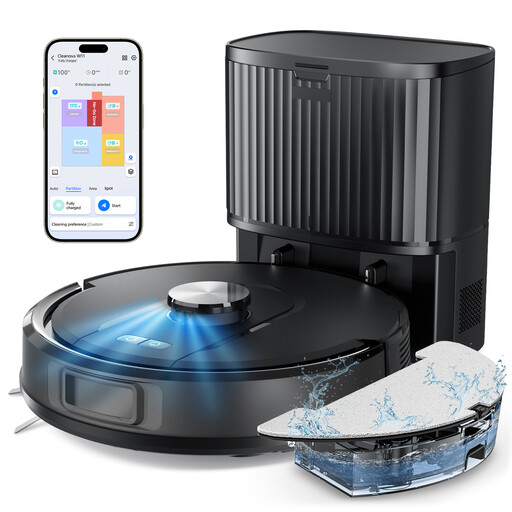
Why This Fits Their Persona: Pet owners need serious power to tackle fur. The W11's strong 8000Pa suction and brushless motor are designed for this. Its advanced LDS laser navigation ensures it maps the home quickly and accurately, allowing for the creation of no-go zones around pet beds or water bowls.
It avoids the "dumb navigation" trap with its precise LDS laser system, which creates detailed maps for systematic cleaning, essential for homes cluttered with pet toys.
The combination of high suction and a rubber-bristle roller brush is highly effective against pet hair. It also supports up to 5 maps, making it versatile.
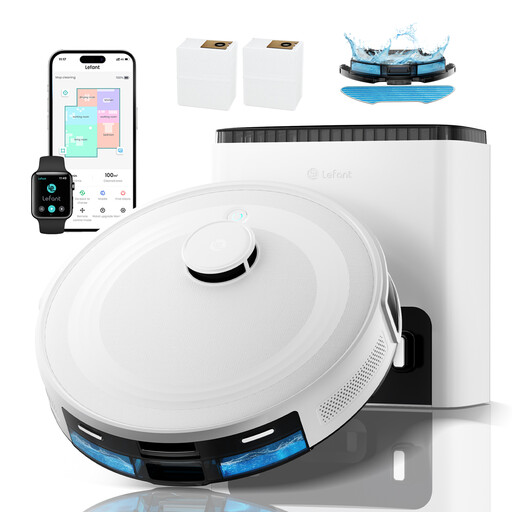
Why This Fits Their Persona: For those new to automated cleaning, this model provides the core benefits of a self-emptying system and laser navigation without the premium price tag. Its 6000Pa suction is more than adequate for hard floors and low-pile carpets, offering a significant upgrade from manual vacuuming.
It includes dTOF Laser Navigation, a form of precise mapping technology, ensuring it doesn't fall into the "dumb robot" trap. This provides efficient, structured cleaning that is a huge step up from random-path models.
It delivers the essential hands-free experience of an automatic dust-draining station and intelligent navigation at a more accessible price point.
We have compiled a complete, real-time list of products that fully satisfy these strict selection criteria and UK safety regulations.
This depends on the size of your home, how often you clean and whether you have pets. For an average-sized home with one pet, a station with a 2.5L to 4L dust bag can typically hold between 30 to 60 days' worth of debris. You will need to factor in the recurring cost of replacement bags.
Models with advanced LiDAR navigation are very effective at identifying and navigating around furniture. During the initial mapping run, the robot learns the layout of your home. You can also set "no-go zones" in the app to prevent it from attempting to go under low-clearance furniture where it might get wedged. It's always a good idea to check the robot's height (usually 9-10 cm) against your furniture clearance.
While robot vacuums have improved significantly, their performance on very thick, high-pile carpets or shaggy rugs can be limited. They are highly effective on hard floors, low-pile and medium-pile carpets. For thicker carpets, look for a model with very high suction power (8000Pa+) and a carpet-boost feature, but be aware that it may not provide as deep a clean as a powerful upright vacuum.