
24/7 Customer Support

Free returns

Same-day & Next-day Delivery

Quality Guaranteed

Unlock Your Welcome Offers: FREE Delivery | Up to 80% OFF | Free 30-day JoyPlus trial
Download the APP
A self-heating hot pot can turn a cupboard-stored meal into a hot lunch in around 15 minutes, using cold water rather than a hob, microwave or cookware. That makes it useful for office lunches, student accommodation, camping, travel and busy evenings.
However, convenience packaging can hide important differences. A large-looking box may contain a modest serving, a “spicy” soup base may be unsuitable for sensitive palates, and heating instructions are not interchangeable between products. This guide explains the key checks to make before buying an instant hot pot or ready-to-eat hot pot meal in the UK.
Net weight includes sauces, water, vegetables, noodles, rice and sometimes the heating components. Compare the food contents and serving size, not just the headline gram weight. A 195g vegetarian self-heating hot pot will provide a different meal from a 370g hot pot containing beef and vegetables.
For a more filling option, look for rice-based meals or packs with a higher quantity of noodles, vegetables or protein ingredients. A self-heating rice bowl can also be more suitable when you want a straightforward office lunch rather than a soup-based meal.
Most products use a water-activated heating pouch, but the water placement varies. Some require cold water on the heating pouch only, while others also require drinking water in the inner food tray. Using hot water, overfilling the container or blocking the steam vent can create a scalding risk.
Check whether the instructions specify cold water, a marked fill line and a heating time of approximately 12–15 minutes. Keep the sealed outer container on a stable, heat-resistant surface while it operates.
Chinese and Asian instant meals commonly contain ingredients such as soybeans, wheat, sesame or sulphites. Read the product label every time, particularly if you are buying a vegetarian self-heating hot pot: vegetarian does not automatically mean free from wheat, soya or other allergens.
Spice level also varies. A Sichuan mala hot pot may contain chilli, Sichuan peppercorn, fermented bean paste and oil. If you prefer a milder meal, choose a tomato or Cantonese-style rice option, or use only part of the seasoning pouch where the instructions allow it.
A practical self-heating hot pot should clearly state how to position the heating pouch, where to add water and how long to wait. The products featured here generally heat in approximately 15 minutes, while some instructions give an 8–15-minute range.
Do not pierce, open or consume the heating pouch. It is designed for heating use only. Steam may escape through a vent, so never cover the vent or open the lid suddenly. The container can become extremely hot, so use care when stirring and eating.
Use the net quantity as a starting point, then inspect the ingredient breakdown. Rice bowls usually offer a denser carbohydrate-based meal, while hot pots may contain more broth, vegetables and noodles.
Salt can be significant in concentrated soup bases and sauces. For example, the listed nutrition for Shoo Loong Kan’s 245g spicy mini hot pot gives 3.98g salt per 100g, while the Haidilao spicy vegetarian hot pot lists 2.8g salt per 100g. These figures are product-specific; always check the current packaging because formulations and labels may change.
Look for clearly stated allergens and storage instructions. Most of these products are ambient-stable before opening and should be kept in a cool, dry place away from direct sunlight. Once heated and opened, consume promptly and follow the individual label rather than reheating leftovers.
For camping food or a travel meal, also consider whether you will have enough drinking water, a stable surface and a safe way to dispose of the used heating pouch and packaging.
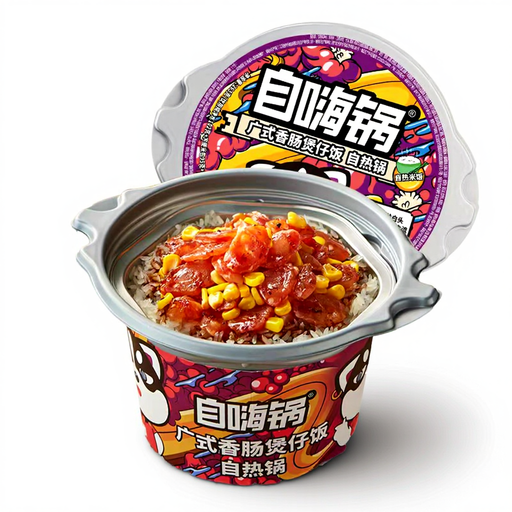
Why This Fits Their Persona: A rice-based single serving with sweet corn, sauce and Cantonese-style sausage flavour suits shoppers trying their first self-heating meal or wanting a familiar alternative to a spicy hot pot.
The 263g net weight is stated clearly, and the instructions specify cold water, a 15-minute heating period and a steam-vent warning.
Rice accounts for 95g in the rice pouch; corn and multiple seasoning packets allow the flavour to be mixed during preparation.

Why This Fits Their Persona: The larger 370g format is suitable for an adult seeking a more substantial spicy meal for a late shift, home lunch or travel stop.
The pack identifies beef at 17% and lists wheat, soybeans and sulphites, helping shoppers check suitability before purchase.
Includes cured beef, pickled vegetables and vermicelli, with preparation instructions covering both water stages.
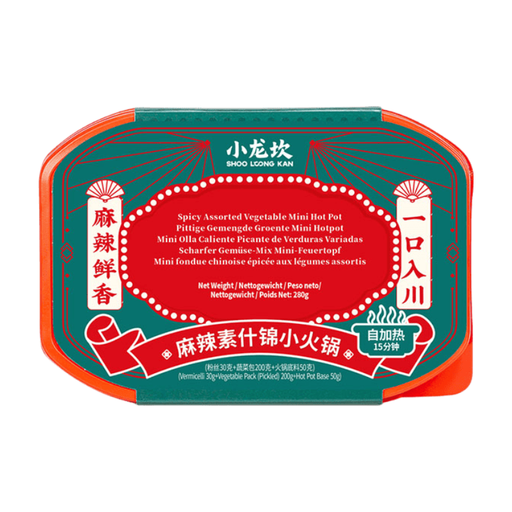
Why This Fits Their Persona: A 280g vegetarian-friendly pack with assorted vegetables and shirataki suits repeat buyers who want a portable hot pot for camping, commuting or office lunches.
The base quantity can be adjusted according to taste, helping users manage spice intensity rather than committing to the full seasoning pouch.
Contains potato, mushroom, lotus root, wood ear mushroom, kelp and bamboo shoot, plus shirataki noodles.
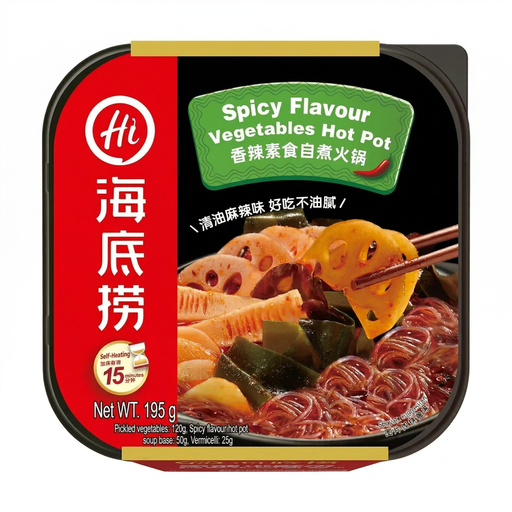
Why This Fits Their Persona: The plant-based ingredient list makes this a practical option for shoppers seeking a spicy self-heating hot pot without meat.
The product description identifies wheat and soybeans, so vegetarian shoppers are reminded to check allergens rather than relying on the dietary label alone.
Includes noodles, mushrooms, lotus root, kelp, corn and tofu, with a water-activated heating pack for use without external heat.
We have compiled a complete, real-time list of products that fully satisfy these strict selection criteria and UK safety regulations.
Yes. These meals use a water-activated heating pouch, so they do not require a microwave, hob, electricity or cookware. You still need cold water and a safe, stable place to prepare the meal.
Most products listed here require approximately 15 minutes. Some instructions specify a range of 8–15 minutes or 12–15 minutes. Follow the instructions on the individual pack rather than relying on a general cooking time.
It can be suitable where the workplace permits hot food and provides a safe preparation area. Check that you have access to drinking water, ventilation and a heat-resistant surface. Because the container becomes very hot and may release steam, it should not be prepared beside paperwork, electronic equipment or crowded communal areas.