
24/7 Customer Support

Free returns

Same-day & Next-day Delivery

Quality Guaranteed

Unlock Your Welcome Offers: FREE Delivery | Up to 80% OFF | Free 30-day JoyPlus trial
Download the APP
There are few kitchen disappointments as sharp as pulling a cake from the oven only to find it flat, dense and heavy. You followed the recipe to the letter, but the culprit is often hiding in plain sight: the self-raising flour. For UK home bakers, navigating the choices can be surprisingly tricky. A simple pantry staple shouldn't be a gamble, yet many of us have been let down.
The main issue isn't a lack of options, but a lack of clarity. Many bakers fall into two common traps:
This guide will help you understand the key factors that separate a reliable baking flour from a risky one, ensuring your efforts are rewarded with perfectly risen, delicious results every time.
Before you buy flour online, it pays to look beyond the packaging. Three core factors determine the performance of any self-raising flour and are crucial for achieving that perfect light and fluffy sponge recipe.
The secret to tender cakes and scones lies in the type of wheat used. UK self-raising flour is typically milled from soft wheat, which has a lower protein content (usually around 8-10%). This is important because protein develops into gluten when mixed with liquid. Less protein means less gluten, resulting in a finer, softer crumb structure that is ideal for cakes. In contrast, 'strong' or 'bread' flours have a higher protein content, which is necessary for the chewy, elastic structure of a loaf of bread but will make your cakes tough.
Self-raising flour is simply plain flour with raising agents pre-mixed into it. These are typically a combination of bicarbonate of soda (an alkali) and a powdered acid like calcium phosphate. When liquid is added, they react to produce carbon dioxide bubbles, which make your bake rise. The key to success is twofold: the freshness of these agents and their even distribution. A well-milled flour ensures the raising agents are perfectly blended, providing a consistent and reliable lift throughout the entire bag. An old bag of flour, however, may have lost its leavening power.
The fineness of the flour contributes significantly to the final texture. Many quality brands, like McDougalls flour, offer a pre-sifted product. This not only saves you a step in the kitchen but also results in a lighter, more aerated flour that combines more easily into a smooth batter. This fine milling is particularly important when making flour for cakes, as it helps prevent lumps and creates a more uniform, delicate crumb.
Based on these principles, we've identified several options from our catalogue that are well-suited to different types of UK home bakers.
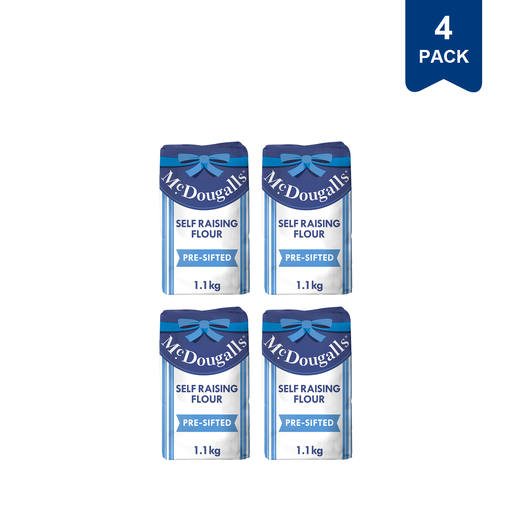
Why This Fits Their Persona: For those who bake regularly for family treats, school bake sales or weekend scones, this multi-pack offers excellent value and consistency. It's a trusted, no-fuss staple from a brand that has been a fixture in British kitchens for generations.
This flour is known for its reliable performance, directly countering the "Rise Roulette" pitfall. Its long-standing reputation is built on providing a consistent lift bake after bake.
Pre-sifted for convenience and a lighter texture. The multi-pack format is economical for frequent bakers and ensures you always have a fresh bag on hand.
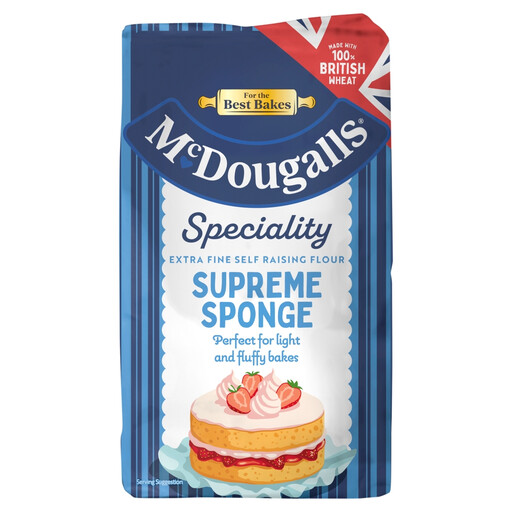
Why This Fits Their Persona: For the baker who obsesses over achieving the most delicate, airy and perfectly structured sponge for a show-stopping Victoria sandwich or celebration cake. This is for someone who values precision over all-purpose convenience.
It decisively avoids the "one-size-fits-all" myth by being a specialist product. It is not trying to be a scone flour; its sole purpose is to create superior sponges, and it is formulated accordingly.
Features an exceptionally fine texture due to extra sifting. This leads to higher moisture absorption, resulting in a noticeably softer, lighter cake with a more even crumb.
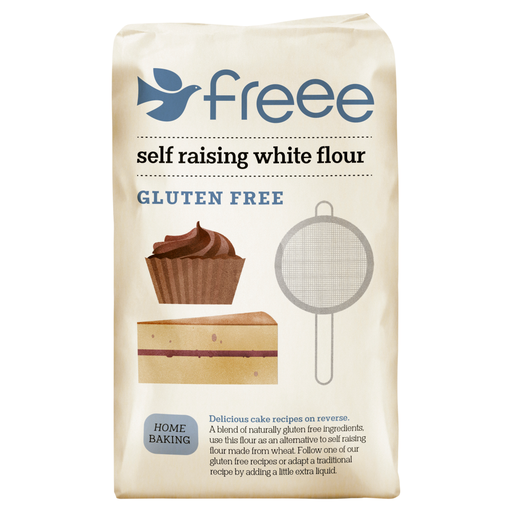
Why This Fits Their Persona: Perfect for anyone with coeliac disease, a gluten intolerance or who is simply baking for guests with dietary restrictions. This flour removes the guesswork from gluten-free baking, providing a reliable base for all classic recipes.
It tackles the biggest pitfall of gluten-free baking—poor texture—by using a carefully balanced blend of rice, potato, tapioca, maize and buckwheat flours, plus a thickener (xanthan gum) to mimic the structure of gluten.
This is a true 1-to-1 replacement for conventional self-raising flour, meaning no complicated recipe conversions are needed. It is certified by Coeliac UK for complete peace of mind.
We have compiled a complete, real-time list of products that fully satisfy these strict selection criteria and UK safety regulations.
Yes, you can easily make your own in a pinch. The standard ratio is to add 2 teaspoons of baking powder for every 150g of plain flour. Sift them together thoroughly two or three times to ensure the baking powder is evenly distributed, otherwise you may get a patchy rise.
The raising agents in the flour are sensitive to moisture and air. Once opened, it is important to store your flour in a cool, dry place away from direct sunlight. Roll the top of the bag down tightly or, even better, transfer the flour to a clean, airtight container. This will protect its leavening power and help it last until the 'best before' date.
The only difference is that self-raising flour is a pre-mixed product containing plain flour and chemical raising agents (like baking powder). Plain flour contains no raising agents, giving the baker complete control over the amount and type of leavening used in a recipe. You cannot substitute one for the other directly without adjusting the recipe.