
24/7 Customer Support

Free returns

Same-day & Next-day Delivery

Quality Guaranteed

Unlock Your Welcome Offers: FREE Delivery | Up to 80% OFF | Free 30-day JoyPlus trial
Download the APP
Self-watering plant pots can make indoor plant care easier, particularly if you regularly forget to water herbs, pothos or small houseplants. However, a water reservoir is not automatically a sign of a well-designed pot. The wrong size, poor drainage or an awkward tray can create more work rather than less.
Before buying, look beyond phrases such as “low maintenance” and check how the pot actually stores and delivers water. These are the common pitfalls worth avoiding.
A reservoir only helps when the growing medium can draw up water effectively. Some designs use a wick or perforated insert, while others rely on a raised base. If the reservoir is difficult to access or there is no clear guidance on filling it, it may be hard to judge when water is running low.
Self-watering pots should reduce watering frequency, not eliminate plant care. You still need to check the soil, empty excess water where necessary and consider the requirements of each plant.
Product photos can make beige plant pots and other neutral designs look larger than they are. Check the stated diameter and internal planting space rather than relying on appearance. A pot with a diameter of around 16.5cm is generally more suited to small or medium plants than established specimens with large root systems.
A plant that is cramped may need repotting sooner, while a pot that is too large can retain moisture for longer than the roots can use.
Plastic plant pots with trays can be lightweight and convenient, but material thickness and construction vary. Look for a stable base, a properly fitting tray and a finish that is easy to wipe clean. For outdoor use, also consider exposure to strong sunlight, wind and frost.
A self-watering system can become less effective if soil, roots or debris block the wick, openings or water channel. Easy access for cleaning is therefore more useful than a long list of promotional features.
A deep reservoir may be useful for busy houseplant owners, but capacity alone does not tell you how well the system works. Look for:
Succulents and drought-tolerant plants usually need a different watering routine from herbs or leafy tropical plants. A reservoir can be convenient, but it should not be treated as a replacement for checking soil moisture.
Measure the existing root ball and compare it with the internal dimensions, not just the outside diameter. For windowsill plant pots, check the available depth and width, especially if the sill is narrow.
A 16.5cm pot may suit:
Large plants may require a heavier container to prevent tipping. For outdoor placement, check whether the pot and tray can remain stable during windy conditions.
Durable plastic is often practical for indoor plant pots because it is lighter than ceramic and easier to move when filled with compost. A matt finish can also make fingerprints and light marks less noticeable.
The matching tray should sit securely beneath the pot and provide enough space to catch drips without making the arrangement unstable. If you are placing pots on painted wood, laminate or a windowsill, use a dry, level surface and check for standing water regularly.
The relevant option supplied for this guide is a three-pot set. The three cards below show how the same configuration may suit different buying priorities, without treating a self-watering pot as suitable for every plant or location.
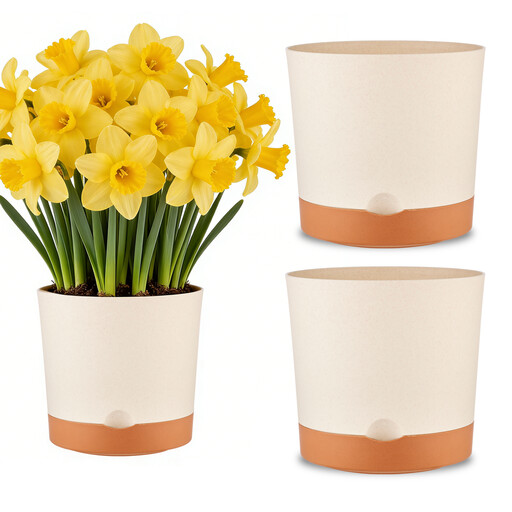
Why This Fits Their Persona: Three coordinated pots allow a beginner to create a small herb, succulent or windowsill display without buying separate containers and trays.
The listed 16.5cm diameter and included trays make the size and set contents clear before purchase.
Three pots, three matching trays, beige plastic construction and no assembly required.
Why This Fits Their Persona: Shoppers focused on presentation may appreciate the minimalist matt beige colour and matching saucers across a shelf, conservatory or patio.
The product details specify the colour, material, diameter and matching tray arrangement rather than relying only on lifestyle photography.
Neutral beige finish, durable plastic and a consistent three-pot presentation.
Why This Fits Their Persona: Regular plant owners can use the set for separate plants in a kitchen, home office, balcony or garden display, while keeping the containers visually consistent.
The reservoir design is paired with an accessible tray and clear maintenance advice: keep the self-priming function free from soil and roots.
Suitable for indoor and outdoor placement, with three pots and three matching bottom trays supplied.
For herbs, place the pot where it receives suitable natural light and harvest regularly. For pothos and other foliage plants, avoid assuming that a constantly wet root zone is desirable. Succulents generally need particularly careful watering intervals.
We have compiled a complete, real-time list of products that fully satisfy these strict selection criteria and UK safety regulations.
No. They can suit plants that prefer more consistent moisture, but drought-tolerant plants may need a more cautious approach. Always check the plant’s watering needs and allow the compost to dry as appropriate.
There is no universal schedule. Indoor temperature, sunlight, plant size, compost and season all affect water use. Check the reservoir and soil regularly, especially after moving a pot or introducing a new plant.
They may help regulate access to water, but they do not guarantee protection from overwatering. Blocked channels, unsuitable compost or filling the reservoir too often can still leave roots excessively wet. Use the reservoir as a support system alongside sensible plant care.