
24/7 Customer Support

Free returns

Same-day & Next-day Delivery

Quality Guaranteed

Unlock Your Welcome Offers: FREE Delivery | Up to 80% OFF | Free 30-day JoyPlus trial
Download the APP
A semi-automatic espresso coffee machine can offer more control than a capsule appliance while taking up less space than some fully integrated systems. You can choose the coffee, adjust the dose and practise milk steaming for cappuccinos, lattes and flat whites.
However, product pages often focus on pump pressure, styling and phrases such as “professional” without explaining how the machine will fit your routine. Before buying a home espresso machine, check the details that affect everyday use—not just the headline specification.
A 15 bar espresso machine or 20 bar espresso machine may sound more powerful, but the pump’s maximum rating is not the same as the pressure used throughout extraction. Coffee quality also depends on the grind, dose, tamping, water temperature and filter design.
Treat the pressure figure as one specification rather than a guarantee of flavour. A machine with a pressure gauge, such as the IAGREEA model below, can make it easier to observe the extraction process, but it still requires suitable ground coffee and consistent preparation.
A coffee machine with milk frother may use either an automatic milk system or a manual steam wand. Automatic frothing is convenient, but a steam wand gives you more control over foam texture and milk temperature.
The trade-off is cleaning. Milk residue should be wiped from the wand and purged after use. If you want café-style milk drinks but rarely have time for daily maintenance, compare this process with a fully automatic bean-to-cup coffee machine.
Photographs can make a machine look smaller than it is. Check the stated width, depth and height, and leave room above or beside the appliance for the water tank, portafilter and steam wand.
A compact coffee machine with a 1-litre tank may suit one or two daily users, while a 1.5- or 1.7-litre tank can be more practical for a family, shared kitchen or small office. Remember that a larger tank may also mean a larger overall footprint.
A ground coffee machine requires a separate grinder unless you buy pre-ground coffee. This can keep the initial purchase price and footprint lower, but ground coffee can lose freshness more quickly once opened.
A manual bean-to-cup coffee machine combines a grinder with a portafilter. The De’Longhi La Specialista Arte, for example, includes an integrated burr grinder with eight grind settings, allowing users to adjust the grind for different beans.
Some manual machines also accept ESE pods. The De’Longhi Stilosa models listed below support ground espresso and ESE pods, offering a simpler option for occasional users.
Look for clearly stated pressure, heating and temperature features. The supplied models include 15 bar and 20 bar pump systems, but the numbers should not be compared in isolation.
Temperature stability matters because espresso and steam require different operating conditions. Adjustable temperature, pre-soak time or separate controls can help users adapt the machine to different roasts. The HiBREW H10B, for instance, lists adjustable extraction temperature, steam temperature, water volume and pre-soak time.
If you regularly prepare cappuccinos, lattes or flat whites, check whether the machine includes:
A steam wand can produce fine microfoam, but technique affects the result. Beginners may prefer straightforward controls, while experienced home coffee enthusiasts may value adjustable steam intensity.
Check that the appliance is suitable for a 220–240V earthed mains socket and follow the supplied instructions. Do not handle the portafilter, brew head or steam wand immediately after use, as these parts can remain hot. Steam can cause scalding, and the portafilter should not be opened while pressure remains.
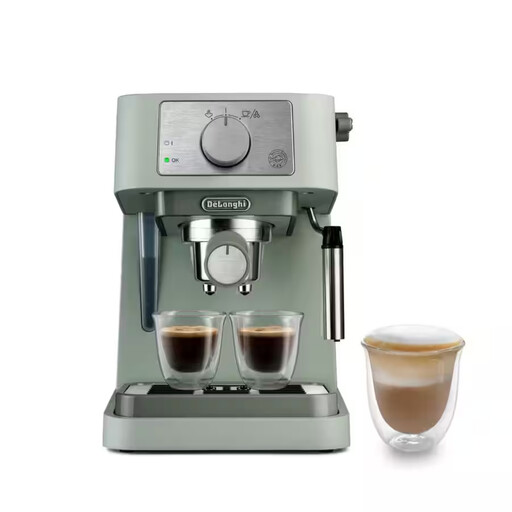
Why This Fits Their Persona: Its compact format and manual controls suit beginners in flats or smaller kitchens who want espresso and milk drinks without an integrated grinder.
The stated 15 bar system is paired with simple operation, and the machine accepts both ground espresso and ESE pods, giving starters an easier alternative to grinding beans.
15 bar pump; manual stainless steel steam wand; two-tier removable drip tray; approximately 150 × 280 × 310 mm.
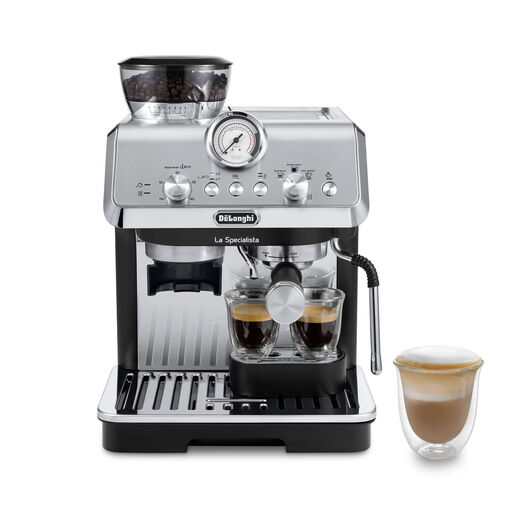
Why This Fits Their Persona: Suitable for users who want a more complete home barista setup with freshly ground beans, manual tamping and controlled milk steaming.
Its feature list explains the grinder, temperature options and included dosing accessories rather than relying on pump pressure alone.
15 bar pump; integrated burr grinder with eight settings; 1.7 litre removable water tank; professional steam wand.

Why This Fits Their Persona: A good match for households or office users making several drinks and wanting integrated grinding with detailed manual control.
The 30 grind settings, dose control and shot options provide more measurable adjustment than a machine marketed only by its bar rating.
Integrated burr grinder with 30 settings; 54 mm portafilter; professional steam wand; stated 15 bar Italian pump.
We have compiled a complete, real-time list of products that fully satisfy these strict selection criteria and UK safety regulations.
It has a learning curve, but the basic process is manageable: fill the portafilter, tamp the coffee, lock it into place, brew and clean the equipment. Milk steaming requires additional practice. Beginners can start with pre-ground coffee or ESE pods, then move to freshly ground beans later.
Lifespan depends on build quality, water hardness, frequency of use and maintenance. Empty the drip tray, rinse removable parts and clean the steam wand after each use. Follow the manual for descaling, and avoid operating the machine without sufficient water. A product warranty and access to replacement parts are also useful points to check before purchase.
Running costs depend mainly on coffee and milk prices, usage and electricity consumption. A ground coffee machine can reduce packaging waste and lets you choose different coffee prices, while a built-in grinder avoids the need to buy a separate appliance. Regular descaling and cleaning products should also be included in your household budget.