
24/7 Customer Support

Free returns

Same-day & Next-day Delivery

Quality Guaranteed

Unlock Your Welcome Offers: FREE Delivery | Up to 80% OFF | Free 30-day JoyPlus trial
Download the APP
Tired of the limitations of coffee pods and looking to bring the authentic café experience into your kitchen? If you dream of crafting your own rich espressos, velvety cappuccinos and perfectly layered lattes, a semi-automatic espresso machine is your ideal next step. It offers the perfect balance of hands-on control and user-friendly assistance, empowering you to pull shots like a barista.
This guide is designed to help you understand the key features to look for in a modern home espresso machine. We will explore what makes a great machine and present a few of our top recommendations to help you make an informed choice.
Navigating the specifications can feel overwhelming. Here are a few practical points to consider when selecting a barista coffee machine for your home.
The quality of your espresso shot is heavily influenced by two mechanical factors: pump pressure and the portafilter. Most quality machines will be advertised as a 15 bar coffee machine or higher. While the pump can generate this much force, the ideal pressure for extracting espresso is around 9 bars. A 15-bar pump ensures the machine has ample power to consistently reach this sweet spot.
Pay attention to the portafilter size. Many domestic machines use smaller, pressurised baskets. However, for a true café-style experience, look for a 58mm portafilter espresso machine. This professional-standard size allows for a wider, more even bed of coffee, leading to a more balanced extraction and richer flavour.
If you enjoy milk-based drinks, the steam wand is a critical component. A quality espresso machine with steam wand will be powerful enough to create "microfoam"—a silky, smooth texture of milk with tiny, incorporated bubbles, essential for creating latte art. This is a significant step up from basic frothers that simply create stiff foam.
Modern machines are also expanding their capabilities. For those who enjoy a variety of coffee styles, an espresso machine with cold brew functionality is an innovative feature that allows you to create smooth, low-acidity cold coffee at home in minutes, not hours. This makes it a versatile cappuccino and latte machine that can also cater to summer refreshment.
Here are a few standout models that cater to different needs, from compact kitchens to the aspiring home barista's setup.

Why It Stands Out The De'longhi Dedica Duo masterfully combines a slim, space-saving design with impressive versatility. At just 15cm wide, it fits into almost any kitchen, yet it packs in features for both hot and cold coffee. Its standout feature is the Cold Extraction Technology, which prepares a genuine cold brew in under five minutes using low-pressure pulses.
Pros
Who is it for? This machine is perfect for the coffee lover in a modern flat or home with a smaller kitchen. It’s an excellent choice for someone upgrading to their first serious home espresso machine who wants the flexibility to make everything from a morning espresso to an afternoon iced coffee without sacrificing style or space.
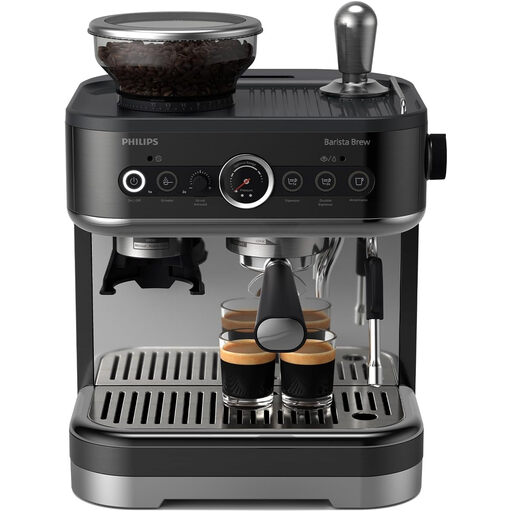
Why It Stands Out The Philips Barista Brew offers a guided, all-in-one experience for the aspiring barista. It integrates a conical burr grinder, a pressure gauge and a professional-grade 58mm portafilter into one cohesive unit. This setup simplifies the workflow from bean to cup while still providing the hands-on control and feedback needed to hone your skills.
Pros
Who is it for? This is an ideal barista coffee machine for enthusiasts who want to learn the art of espresso without the hassle of buying and matching a separate grinder. The combination of an integrated grinder and pressure gauge makes it a fantastic learning tool for perfecting your technique.
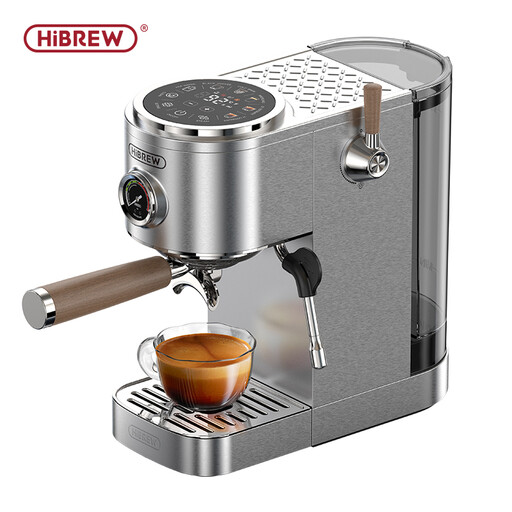
Why It Stands Out The HiBREW H13 brings commercial-grade features into the home kitchen. Its core strength is the dual-boiler system, which allows you to brew espresso and steam milk simultaneously—a function typically reserved for expensive café machines. This, combined with a 20-bar pump, PID temperature control and a large touchscreen, offers a high-performance brewing experience.
Pros
Who is it for? This machine is for the serious coffee enthusiast who wants to replicate a professional workflow at home. If you frequently make milk-based drinks for yourself or for guests and hate waiting for the machine to switch between brewing and steaming, the dual-boiler functionality is a game-changer.
View the HiBREW H13 Dual-Boiler Machine
These recommendations represent some of the excellent choices available, but the world of coffee is vast. If you're still exploring or have different requirements in mind, you can browse our full range of coffee makers. Discover everything from simple filter machines to advanced bean-to-cup models in our complete brewing coffee machine collection.
A semi-automatic espresso machine requires you to grind and tamp the coffee yourself, as well as start and stop the extraction. This gives you full control over the final taste. A fully automatic (or bean-to-cup) machine handles the entire process at the touch of a button. The semi-automatic route is for those who enjoy the craft and ritual of making coffee.
Yes. While manufacturers often advertise high pump pressures like 15 or 20 bars, the ideal pressure for espresso extraction is scientifically accepted to be around 9 bars. A 15 bar coffee machine has more than enough power to achieve this optimal pressure consistently at the group head, ensuring a rich extraction and a good layer of crema.
You can, and most machines come with filter baskets designed for it. However, for the best possible flavour, using freshly ground beans is highly recommended. Coffee begins to lose its volatile aromas and oils very quickly after grinding. Using a machine with a built-in grinder or a separate burr grinder will produce a noticeably more vibrant and flavourful cup.