
24/7 Customer Support

Free returns

Same-day & Next-day Delivery

Quality Guaranteed

Unlock Your Welcome Offers: FREE Delivery | Up to 80% OFF | Free 30-day JoyPlus trial
Download the APP
A semi-automatic espresso machine can give you more control than a capsule system without requiring the full complexity of a café set-up. You choose the coffee, dose the portafilter, tamp the grounds and control the milk texture yourself. However, specifications can be misleading, particularly when comparing pump pressure, heating systems and “professional” features.
Before buying a home espresso machine, check the details that affect everyday use rather than relying on large numbers or appearance alone.
A 15 bar espresso machine and a 20 bar espresso machine may both display impressive pressure figures. In practice, the pump’s maximum rating does not tell you the exact pressure used during extraction. Coffee grind size, dose, tamping and temperature also affect the result.
Treat 15 or 20 bar as a specification to compare alongside temperature control, pre-infusion and the type of portafilter. A pressure gauge or real-time temperature display can provide more useful feedback than a headline number alone.
An espresso coffee machine with milk frother is not automatically a one-touch cappuccino maker. A manual steam wand requires a suitable jug, cold milk and a short learning period. You will also need to wipe and purge the wand after use to prevent milk residue from hardening inside the nozzle.
If you want control over foam texture for lattes and flat whites, a coffee machine with steam wand is useful. If convenience is more important, a capsule or fully automatic machine may require fewer steps.
Compact appliances can still need room above and around them for filling the tank, locking in the portafilter and steaming milk. Check the product dimensions, cup clearance and water-tank access before purchase.
For a small flat or office kitchenette, a compact espresso machine with a removable tank and drip tray may be more practical than a larger machine with features you rarely use.
Look for details such as:
A manual espresso machine works best when you are willing to adjust the grind, tamp evenly and learn how extraction speed changes the flavour.
A tank between 0.9 and 1.7 litres may suit a household, depending on how many drinks you prepare and how often you steam milk. Remember that water is also used for rinsing and steam production.
A 1.1-litre to 1.5-litre removable tank is generally convenient for several drinks without taking up excessive worktop space. For a small office or larger household, a 1.7-litre tank can reduce refilling.
A stainless steel espresso machine is usually easy to wipe clean, but the exterior material does not remove the need for regular maintenance. Check whether the drip tray, filter baskets and water tank are removable.
For UK use, confirm that the appliance is designed for a 220–240V earthed mains socket and follow the supplied safety instructions. Steam wands, portafilters and brew heads become hot, so allow the machine to cool before cleaning and never open a pressurised portafilter immediately after brewing.
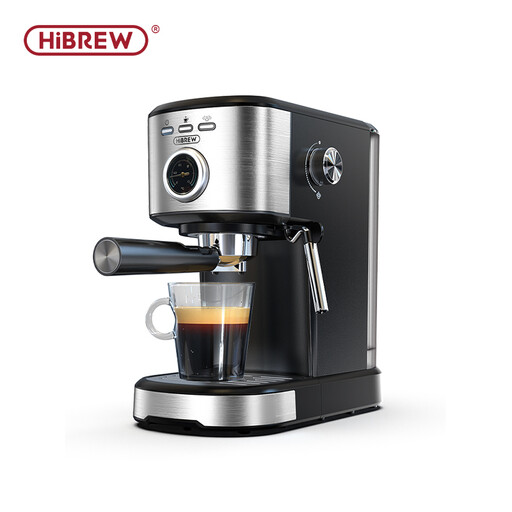
Why This Fits Their Persona: Its 1.2-litre removable tank and beginner-friendly controls suit first-time users who want to learn espresso preparation without choosing a large appliance.
The built-in temperature meter gives more useful feedback than pressure alone, while the removable drip tray supports routine cleaning.
15-bar pump, one-touch extraction, real-time temperature meter and a dual-mode milk frothing function.
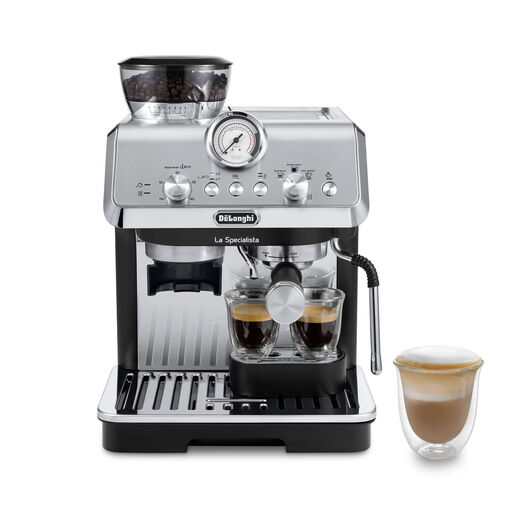
Why This Fits Their Persona: This bean-to-cup coffee machine combines grinding, dosing and manual steaming for users who want an integrated coffee routine with room for adjustment.
The eight grind settings and three infusion temperatures provide more meaningful control than simply selecting a higher bar rating.
Integrated burr grinder, 1.7-litre water tank, 15-bar pump and a dedicated steam wand with included barista accessories.
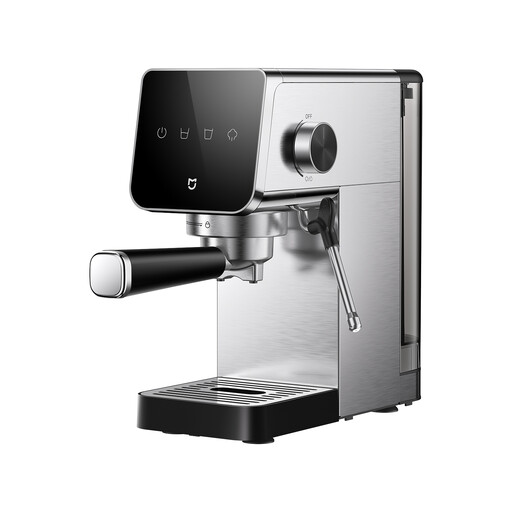
Why This Fits Their Persona: The approximately 13.7cm width is suited to restricted worktops, flats and coffee corners where every centimetre matters.
Its slim dimensions are clearly specified, helping buyers assess worktop space before ordering rather than judging from product photographs.
20-bar pump, low-pressure pre-infusion, NTC temperature control and a rotary steam wand in a stainless steel finish.

Why This Fits Their Persona: The 1.5-litre water capacity and dual temperature control are practical for households preparing several espresso or milk-based drinks.
The removable tank and drip tray address frequent refilling and cleaning needs, while separate thermostats distinguish brewing from steaming.
20-bar pump, 1.5-litre removable water tank, stainless steel housing and manual milk steaming.
We have compiled a complete, real-time list of products that fully satisfy these strict selection criteria and UK safety regulations.
The ongoing cost of a semi-automatic machine includes coffee, milk, water and electricity. Using ground coffee allows you to choose different roasts and compare prices, while an integrated grinder can reduce the need for a separate appliance. Some machines also accept ESE pods, which can be convenient but may cost more per serving.
For lower maintenance costs:
Yes, provided you are comfortable measuring ground coffee, tamping and cleaning after use. Models with one-touch extraction, temperature displays or simpler filter baskets can shorten the learning process. A manual steam wand still requires practice to create consistent milk texture.
Lifespan depends on frequency of use, water quality, cleaning and component quality. Regular descaling, correct handling of the portafilter and prompt steam-wand cleaning can help maintain performance. Always follow the product manual rather than assuming a particular lifespan from the pump rating.
It can be, particularly when buying ground coffee or beans in larger packs. However, the total cost depends on your coffee choice, milk use, electricity tariff and maintenance products. A capsule system may offer simpler preparation, while a semi-automatic model provides more choice over coffee and drink size.