
24/7 Customer Support

Free returns

Same-day & Next-day Delivery

Quality Guaranteed

Unlock Your Welcome Offers: FREE Delivery | Up to 80% OFF | Free 30-day JoyPlus trial
Download the APP
As our feline companions enter their golden years, their playful pounces may become a little less energetic and their naps a bit longer. These changes are often accompanied by a shift in their nutritional needs. Noticing that your cat is slowing down or becoming pickier with their food can be a sign that it’s time to transition to a diet specifically designed for their age.
Choosing the right senior cat food can feel overwhelming with so many options available. This guide is designed to help you understand what to look for and provide some clear, practical recommendations to support your cat's health and vitality as they age.
As cats age, their metabolism slows and they can become prone to issues like joint stiffness, dental problems and digestive sensitivity. A well-formulated senior diet addresses these changes. Here are a few key things to consider when making your choice.
Cat food for cats over 7 years is formulated differently from standard adult food. It typically contains fewer calories to help prevent weight gain in less active cats, but with high-quality, easily digestible protein to maintain muscle mass. Look for foods that clearly state they are for 'senior', 'mature' or '7+' cats to ensure the nutritional balance is appropriate.
Many senior formulas include beneficial additives to address common age-related concerns. For senior cat food for joint health, ingredients like glucosamine and chondroitin are often added to support cartilage and mobility. For digestive health, look for prebiotics and a good source of fibre. Omega-3 and -6 fatty acids are also excellent for maintaining a healthy coat and skin, as well as supporting cognitive function.
A high-quality animal protein should be one of the first ingredients listed. Chicken senior cat food is a popular choice as it is a lean, highly digestible protein source that helps older cats maintain their strength without excess fat. Checking the composition list will give you a clear idea of the food's quality.
Here are a few standout options that cater to the specific needs of older cats, based on their formulation and features.
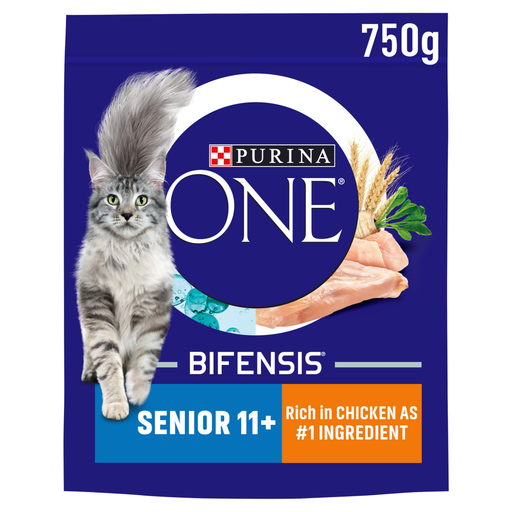
Why It Stands Out: This food is specifically formulated for cats aged 11 and over, addressing the needs of the truly geriatric feline. Its key feature is the Bifensis formula, which, according to Purina, contains a beneficial functional bacteria scientifically proven to help strengthen a cat's natural defences. It also has an adapted protein-to-fat ratio to help prevent the excessive weight loss that can affect very old cats.
Pros:
Who is it for: This is an excellent choice for owners of very senior cats who are primarily concerned with supporting digestive health, immunity and maintaining a healthy body condition.

Why It Stands Out: Whiskas 7+ offers a balanced and accessible diet for cats just entering their senior years. It provides all-round support, with balanced minerals to help maintain urinary tract health, taurine for heart function and vitamin E for natural defences. The crunchy texture of the kibble also provides a mild abrasive action to help clean teeth.
Pros:
Who is it for: A solid, reliable option for owners looking for a complete dry cat food for older cats that covers the fundamental health needs of a newly senior cat without focusing on a single specialised issue.
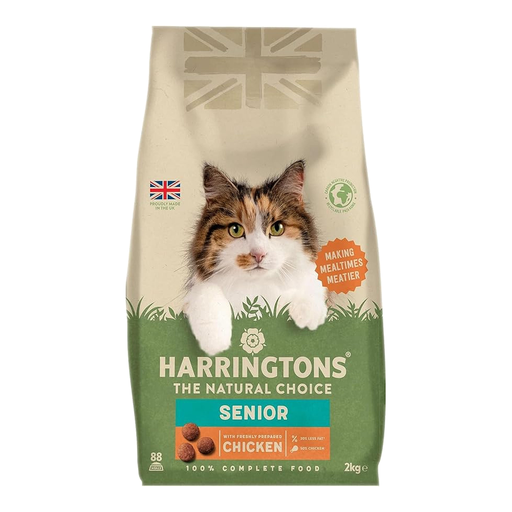
Why It Stands Out: This food from Harringtons stands out for its focus on joint support and natural ingredients. It is a grain-free recipe, which may be suitable for cats with digestive sensitivities. Crucially, it contains glucosamine and chondroitin sulphate to help support joint structure and mobility. The formula also includes chamomile, an ingredient noted for its calming properties.
Pros:
Who is it for: This is a great fit for owners of senior cats showing signs of joint stiffness or those who prefer to feed their pet a grain-free diet.
Every cat is an individual, and the right food depends on their specific health, tastes and dietary history. If these recommendations aren't quite what you're looking for, there are many other excellent choices available.
Explore our full range of senior cat food to discover more options tailored to different needs and preferences.
1. At what age is a cat considered a senior? Generally, cats are considered 'senior' when they reach 7 to 10 years of age. From 11 years onwards, they are often referred to as 'geriatric'. This is the period when their nutritional requirements begin to change, making it a good time to consider switching to a senior-specific diet.
2. Can I just feed my senior cat less of their adult food? While reducing portion sizes can help manage weight, it is not an ideal long-term solution. Senior cat foods are specifically formulated with a different balance of nutrients—often with fewer calories but higher-quality, easily digestible protein and added supplements for joints and immunity. A smaller portion of standard adult food may not provide this targeted support.
3. What is the difference between wet and dry senior cat food?Dry cat food for older cats is convenient, has a long shelf life and its crunchy texture can help reduce tartar build-up on teeth. Wet food has a much higher moisture content, which is excellent for keeping your cat hydrated and supporting urinary health. It can also be more palatable for fussy eaters or cats with dental sensitivities. Many owners find that a mixed-feeding approach, offering both wet and dry food, works well.