
24/7 Customer Support

Free returns

Same-day & Next-day Delivery

Quality Guaranteed

Unlock Your Welcome Offers: FREE Delivery | Up to 80% OFF | Free 30-day JoyPlus trial
Download the APP
By the Joybuy Product Recommendation Officer
Choosing senior dog food is not simply a matter of picking a bag labelled “7+”. Older dogs may become less active, gain weight more easily, chew less comfortably or develop changing digestive preferences. The right food should match your dog’s age, body condition, activity level and any dietary guidance from your vet.
Whether you are comparing dry senior dog food, wet senior dog food or a senior dog food multipack, look beyond front-of-pack promises. The following guide highlights common buying traps, essential label checks and suitable options for different households.
Terms such as “chicken recipe” or “with beef” do not necessarily mean that the food contains a high proportion of that meat. Check the composition list and the percentage attached to the named ingredient. For example, some recipes specify 4% chicken in the food or in a particular chunk, while others disclose a larger total meat-meal percentage.
A low-fat senior dog food may suit an overweight or less active dog, but an underweight, highly active or fussy dog may need a different energy density. Compare the feeding guide with your dog’s current body condition rather than reducing portions without checking nutritional suitability.
Grain-free senior dog food can be useful for some dogs with specific ingredient sensitivities, but it is not automatically more suitable. Grain-free recipes may still contain other ingredients your dog cannot tolerate. If your dog has recurring digestive problems, allergies or a diagnosed condition, ask your vet for tailored advice.
For everyday feeding, look for wording such as “complete pet food for senior dogs” or a clear statement that the recipe provides complete and balanced nutrition. Complementary products, including some raw-food mixers, should not replace a complete meal unless the overall diet has been properly formulated.
A suitable complete senior dog food should include feeding guidance based on body weight and activity. You should also see nutritional additives such as vitamins and minerals on the label.
Analytical constituents help you compare products, although figures can vary between dry and wet formats because wet food contains much more moisture.
For dry senior dog food, check:
For wet senior dog food, the moisture level can be around 78–83%, so the protein and fat percentages may look lower than those of kibble. Compare like with like and follow the manufacturer’s feeding guide.
For weight management, look for a clearly stated lower-fat or lower-calorie formulation and measure portions accurately. For sensitive digestion, consider limited-ingredient or cereal-free recipes, but check for possible allergens. For joint health, some senior recipes include ingredients such as glucosamine, chondroitin or salmon oil. These are nutritional features, not a substitute for veterinary assessment where mobility changes are present.
Also consider the format. Dry food is convenient to measure and store, while wet food may be easier for dogs that prefer softer textures. A mixed feeding routine can work, but adjust portions so that total daily calories remain appropriate.
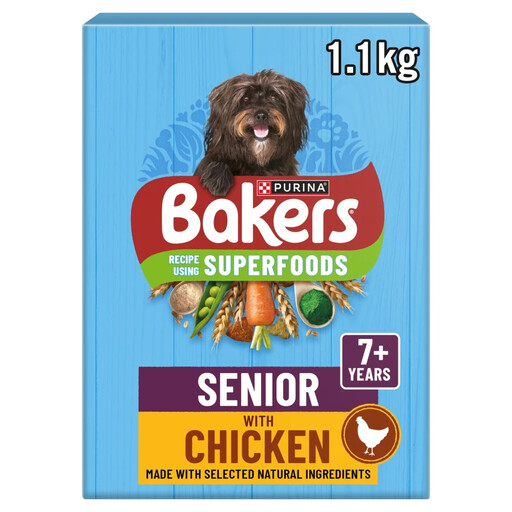
Why This Suits Their Persona: The smaller 1.1kg bag gives new senior-dog owners a practical way to introduce a recipe without committing to a large value-sized bag.
The label identifies it as complete food for dogs aged 7+ and provides a lower-fat profile, rather than relying only on general “senior vitality” wording.
Dry recipe with 24% protein and 8% fat; includes wholegrains, chicken and vegetables.
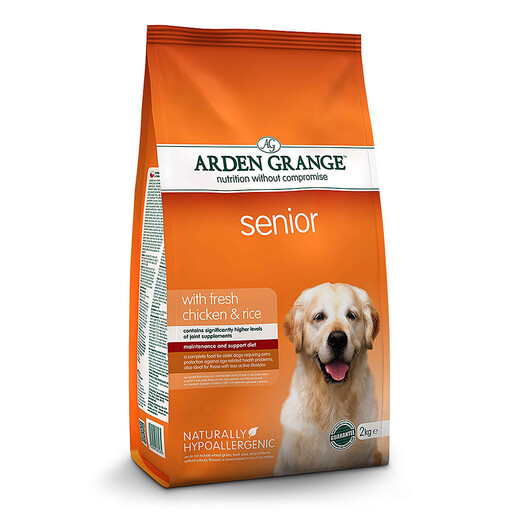
Why This Suits Their Persona: Suits owners who want a senior-specific recipe with clearly listed functional ingredients and a defined feeding guide for dogs aged 7+.
The composition lists the proportions of chicken and rice, while the recipe avoids wheat gluten, beef, soya and dairy.
Contains chicken meal, fresh chicken, rice, FOS and MOS prebiotics, plus listed glucosamine, MSM and chondroitin.
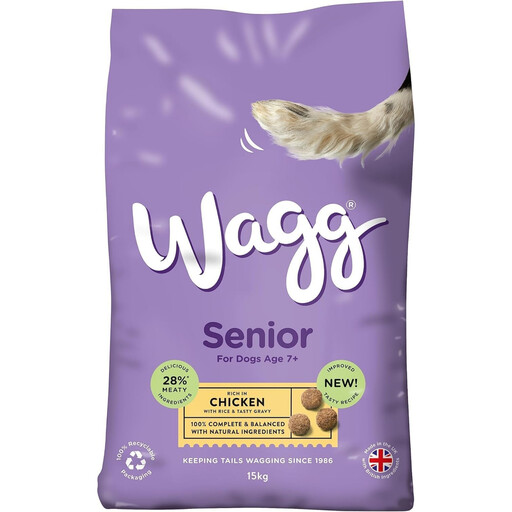
Why This Suits Their Persona: A 15kg bag is practical for multi-dog homes or owners who want fewer repeat purchases and have suitable dry storage space.
The label gives a complete-food status, pack size and analytical values, helping shoppers assess value instead of judging by claims alone.
Contains 20% protein, 7% fat, L-carnitine, salmon oil, glucosamine and chondroitin.
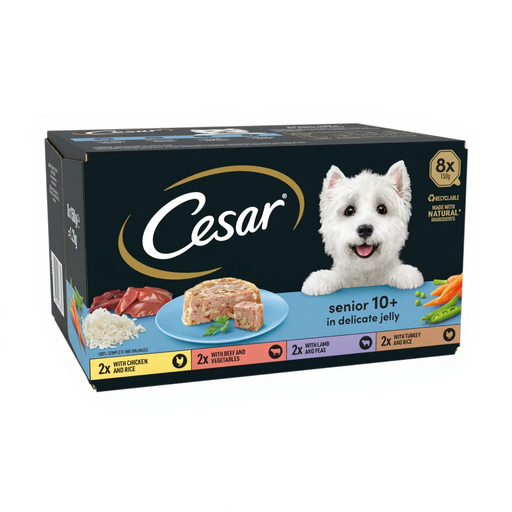
Why This Suits Their Persona: Individually portioned trays are convenient for smaller dogs, occasional wet feeding or households managing several flavours.
It is identified as complete food for senior dogs and provides clear storage guidance for opened portions.
Eight 150g trays across chicken, beef, lamb and turkey recipes; 83% moisture and 4.5% fat listed across the recipes.
We have compiled a complete, real-time list of products that fully satisfy these strict selection criteria and UK safety regulations.
Many products are labelled for dogs aged 7 years and over, but ageing varies by breed and individual. Smaller breeds may mature later than larger breeds. Discuss the timing with your vet if your dog has changing weight, appetite, teeth or mobility.
Dry food usually offers more food per pack and is easier to store, particularly in larger bags such as 12kg or 15kg. Wet food is sold with a higher moisture content and convenient portions, but the daily cost can be higher depending on the feeding guide. Mixed feeding may balance convenience and texture, provided total portions are adjusted.