
24/7 Customer Support

Free returns

Same-day & Next-day Delivery

Quality Guaranteed

Unlock Your Welcome Offers: FREE Delivery | Up to 80% OFF | Free 30-day JoyPlus trial
Download the APP
As our cherished companions enter their golden years, their nutritional needs change. Navigating the world of senior pet food can feel overwhelming, with countless brands making bold claims. As a pet owner, you want to provide the right support for their health, but it's easy to fall into common purchasing traps. This guide will help you understand what truly matters when selecting food for your ageing cat or dog, ensuring you make a choice that supports their vitality and well-being.
Many products are marketed with appealing buzzwords that don't always translate to better health for your pet. Here are two common pitfalls to watch out for:
To make an informed decision, focus on the objective details on the label. Here are three key parameters to analyse.
As pets age, their ability to digest and absorb nutrients can decline. Maintaining lean muscle mass is crucial, and this requires high-quality, easily digestible protein. When you read the ingredients list, look for named meat or fish sources (e.g., "Chicken," "Turkey," "Salmon") listed first. Vague terms like "meat and animal derivatives" can indicate a mix of lower-quality protein sources that are harder for a senior pet's system to process. A good senior dog food or senior cat food will prioritise identifiable, high-quality protein.
Beyond basic nutrition, senior formulas should contain ingredients that address common age-related issues.
A senior pet's metabolism slows down, and their activity levels often decrease. Continuing to feed them a standard adult diet can easily lead to obesity. Check the "Analytical Constituents" on the packaging for the Fat Content. A well-formulated food for older dogs and cats will typically have a lower fat and calorie density to help manage weight effectively, reducing stress on their heart and joints.
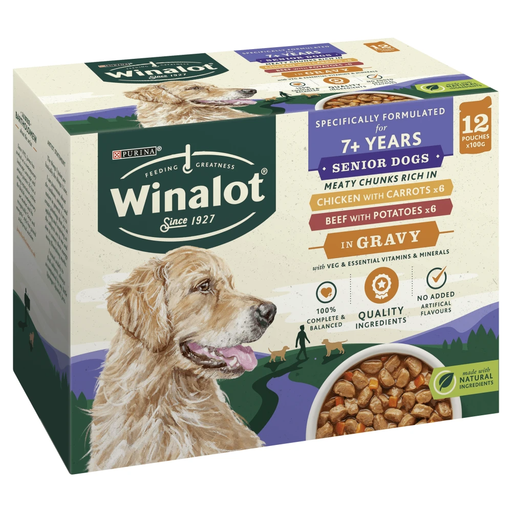
Why This Fits Their Persona: This option provides a complete and balanced diet from a trusted UK brand without a premium price tag. The convenient pouches are ideal for ensuring portion control and freshness at every meal, making it a practical choice for daily feeding.
It is specifically formulated for dogs aged 7+, with adjusted nutritional levels appropriate for senior vitality and digestion, rather than being a generic adult food that could lead to weight gain.
Formulated to support healthy digestion and vitality in older dogs. Contains no artificial colours, flavours or preservatives.
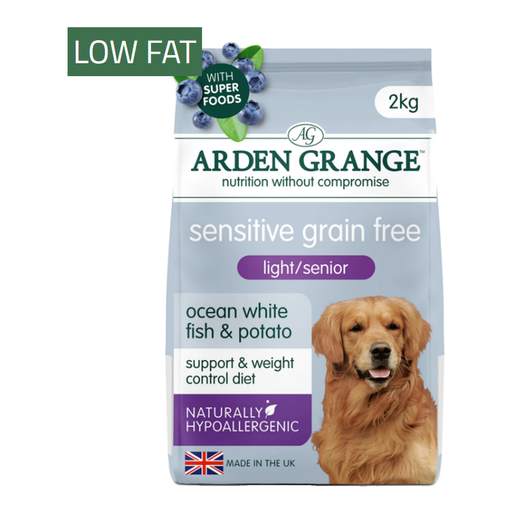
Why This Fits Their Persona: This is an excellent choice for senior or overweight dogs with delicate digestion or skin. The recipe is built around easily digestible ocean white fish and potato, making it suitable for those who may react to common grains or poultry.
It moves beyond vague "joint support" claims by including significantly higher levels of glucosamine and chondroitin compared to standard adult diets, providing targeted support for mobility.
A grain-free and cereal-free recipe to reduce the risk of dietary intolerances. It is also a lower-calorie formula to help with weight management.

Why This Fits Their Persona: Older cats can become more particular about food. This wet food for senior cats offers a variety of poultry flavours in a soft, palatable jelly that is easy to eat and helps with hydration—a common concern for senior felines.
These 7+ cat food pouches are specifically formulated to be 100% complete and balanced for a senior cat's needs, ensuring they get the right nutrients in a calorie-controlled portion, unlike standard adult cat food.
High moisture content supports hydration. The soft texture is gentle on ageing teeth and gums and the multi-pack offers variety to keep mealtimes interesting.
We have compiled a complete, real-time list of products that fully satisfy these strict selection criteria and UK safety regulations.
For most cats and small-to-medium dogs, the senior stage begins around 7 years of age. However, large and giant breed dogs are often considered senior as early as 5 or 6. The transition should be gradual, mixing the new food with their old food over a week to avoid digestive upset. Consulting your vet can provide a personalised recommendation.
Both formats offer distinct advantages. Dry kibble is cost-effective and its crunchy texture can help reduce plaque build-up. Wet food, such as wet food for senior cats in pouches or tins, has a high moisture content which is excellent for hydration and is often more palatable for pets with a reduced appetite or dental sensitivity. Many owners find that a combination of both works well.
The correct portion size depends on your pet's weight, breed, activity level and the specific food's calorie content. Always start by following the feeding guide on the packaging. Monitor your pet's body condition—you should be able to feel their ribs but not see them—and adjust the portion size as needed to maintain a healthy, lean weight.