
24/7 Customer Support

Free returns

Same-day & Next-day Delivery

Quality Guaranteed

Unlock Your Welcome Offers: FREE Delivery | Up to 80% OFF | Free 30-day JoyPlus trial
Download the APP
Watching your dog struggle with an upset stomach, constant scratching or dull coat is distressing for any owner. You know something in their diet isn't right, but navigating the world of sensitive dog food can feel like a minefield. With so many brands making bold claims, it's easy to spend a fortune on foods that don't solve the problem.
As the Joybuy Product Recommendation Officer, my role is to help you see past the marketing jargon. Before you make another purchase, let's look at the common pitfalls UK dog owners fall into and how to choose a food that genuinely helps your companion feel their best.
Many well-intentioned owners are led astray by confusing labels and marketing buzzwords. Here are the three most common traps to be aware of:
To find the right food, you need to become a savvy label-reader. Focus on these three non-negotiable factors to find a diet that supports your dog's needs.
The protein source is often the root cause of food sensitivities. Many dogs develop intolerances to proteins they have been exposed to frequently, such as chicken or beef.
Carbohydrates provide energy, but the source matters.
If your dog's sensitivity manifests as dog for itchy skin or a dull coat, pay close attention to the fat content. Omega-3 and Omega-6 fatty acids are crucial for maintaining a healthy skin barrier and reducing inflammation. Look for ingredients like fish oil, linseed (flaxseed) or salmon oil on the label. A good balance of these fats is a cornerstone of any diet aimed at improving dog food for skin allergies.
Instead of a one-size-fits-all approach, the right food depends on your dog's specific issues and your budget. Here are a few options matched to different owner profiles.
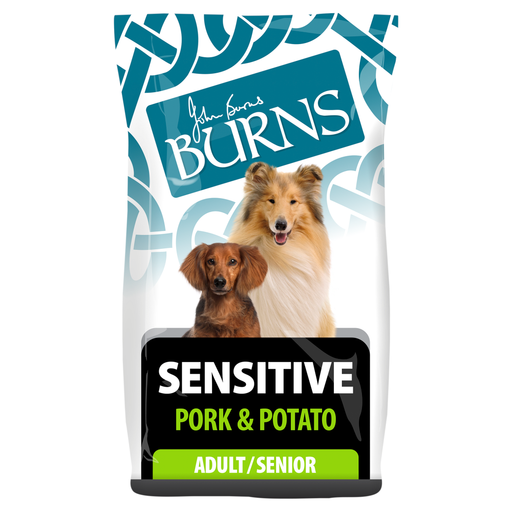
Why This Fits Their Persona: You're just starting to explore sensitive diets and need a reliable, straightforward option from a trusted UK brand. This food is specifically designed for sensitivities without being overly complex or expensive.
It uses a novel protein (pork) and a simple carbohydrate (potato), avoiding common triggers like chicken, beef and wheat.
A highly digestible, limited-ingredient formula that is gentle on the stomach. The use of pork is ideal for dogs with sensitivities to more common poultry or beef proteins.
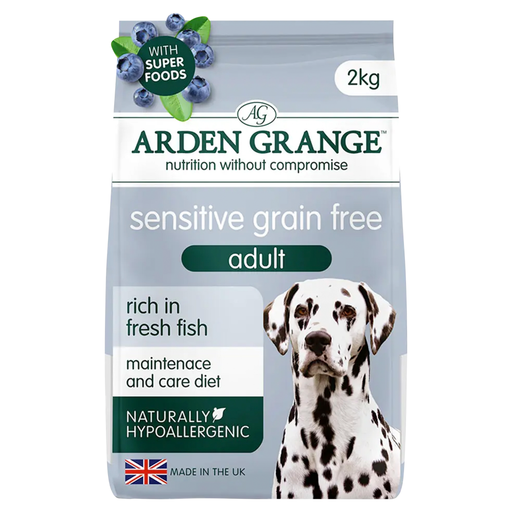
Why This Fits Their Persona: You're looking for a high-performance, grain-free diet to tackle persistent skin or digestive issues and are willing to invest in a formula with added benefits.
It moves beyond just being "grain-free" by using ocean white fish, an excellent novel protein. The ingredients are transparently listed with high percentages of fish and sweet potato.
Rich in Omega-3 from fish and krill for skin and coat health. Includes prebiotics and joint support (glucosamine & chondroitin), offering a comprehensive health solution.
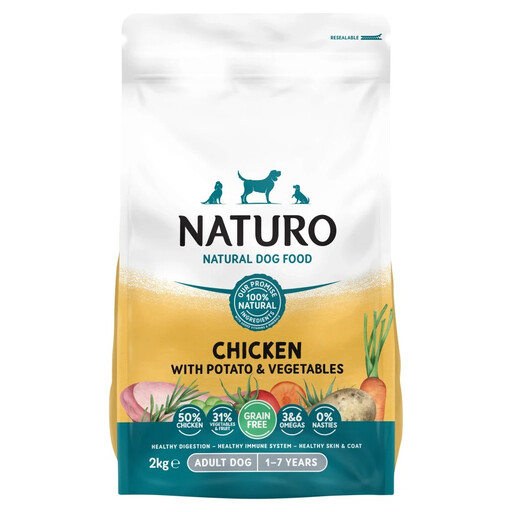
Why This Fits Their Persona: You need an effective, grain-free option that doesn't break the bank. Your dog is sensitive to grains but is fine with chicken, and you want a natural food with no artificial additives.
This food correctly identifies that "sensitive" doesn't always mean "no chicken". It provides a grain-free base with a high, clearly stated meat content (50% chicken).
Excellent value for a 100% natural, grain-free recipe. It includes prebiotics (MOS & FOS) to support gut health, a feature often found in more expensive foods.
We have compiled a complete, real-time list of products that fully satisfy these strict selection criteria and UK safety regulations.
It typically takes between 8 to 12 weeks to see a significant improvement, especially for skin-related issues. Digestive problems like loose stools may resolve more quickly, often within a couple of weeks. It's important to feed the new diet exclusively during this trial period.
Not necessarily. The term "sensitive stomach" is broad. Some dogs thrive on easily digestible grains like rice. The key is to identify the specific ingredient causing the issue. If your dog's sensitivity is to a protein like beef, a grain-free food containing beef will not help. An elimination diet, often guided by a vet, is the most reliable way to pinpoint the trigger.
No, a sudden change in diet can cause digestive upset, even with a high-quality food. You should transition your dog gradually over 7-10 days. Start by mixing a small amount of the new food (around 25%) with their old food (75%) and slowly increase the proportion of the new food each day until you have fully switched over.