
24/7 Customer Support

Free returns

Same-day & Next-day Delivery

Quality Guaranteed

Unlock Your Welcome Offers: FREE Delivery | Up to 80% OFF | Free 30-day JoyPlus trial
Download the APP
As a cat owner, there's nothing more worrying than seeing your companion struggle with digestive upset, a dull coat or a delicate appetite. Navigating the world of sensitive stomach cat food can be a challenge. Shelves are filled with bags boasting complex claims, making it difficult to know what will genuinely help your pet.
My role as Joybuy's Product Recommendation Officer is to help you cut through the clutter. Many well-intentioned owners fall into common traps, often spending money on foods that don't address the root of the problem. Let's look at a couple of frequent pitfalls.
hypoallergenic cat food UK might simply use a less common protein, but it could still contain other ingredients that irritate your cat's system. True relief often comes from identifying and avoiding a specific ingredient, not from a vague marketing label.wheat-free cat food can be an excellent choice, but a completely grain-free diet isn't always necessary and may overlook the real trigger.To make an informed choice, focus on the ingredients list rather than the front-of-pack claims. Here are the core parameters to analyse for a cat food for sensitive digestion.
Many digestive issues stem from a reaction to common proteins. Foods that use a single, high-quality protein source make it easier to identify what your cat can tolerate.
turkey and rice cat food is a classic combination because turkey is a lean, easily digestible protein that is less likely to cause an adverse reaction compared to more common proteins.A healthy gut is the foundation of good digestion and overall well-being. Modern formulas often include specific ingredients to support the beneficial bacteria in your cat's digestive tract.
cat food with prebiotics will often contain sources like chicory root or Fructo-oligosaccharides (FOS). These are types of fibre that feed the good bacteria in the gut, which can help promote a balanced digestive system and contribute to achieving the best dry cat food for firm stools.While not all cats are sensitive to them, certain ingredients are more frequently associated with digestive upset.
Based on these practical criteria, here is a standout option that aligns with the needs of many UK cat owners dealing with digestive sensitivity.
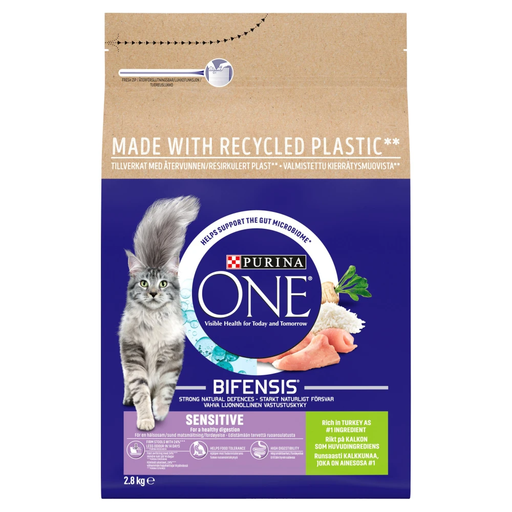
Why This Fits Their Persona: This food is ideal for the owner who wants a formula grounded in nutritional science. It directly targets the key issues of digestive sensitivity with a carefully selected blend of ingredients, moving beyond simple marketing terms to offer a functional diet for adult cats.
Instead of a vague "hypoallergenic" claim, this Purina ONE sensitive cat food specifies its approach: it uses high-quality turkey as the primary protein and is formulated with no added wheat, addressing two common triggers directly.
It contains prebiotic chicory to help improve gut microbiome balance. It is also enriched with Omega 3 & 6 fatty acids to support healthy skin and a shiny coat, which are often affected by digestive issues.
We have compiled a complete, real-time list of products that fully satisfy these strict selection criteria and UK safety regulations.
When transitioning to a new food for sensitive digestion, it's important to do so gradually over 7-10 days to avoid further upset. You may begin to notice improvements, such as firmer stools or a better appetite, within two to four weeks as your cat's system adjusts to the new diet. Improvements in skin and coat condition can take a bit longer, often six to eight weeks.
Not necessarily. As mentioned, "hypoallergenic" is a marketing term. It usually implies the food is made with ingredients less likely to cause an allergic reaction, such as a novel protein. "Sensitive digestion" formulas, on the other hand, are specifically formulated with highly digestible ingredients and often include additives like prebiotics to actively support gut health. A food can be both, but a sensitive digestion formula is often more targeted for issues like vomiting or loose stools.
A slow and steady transition is crucial. Abrupt changes can worsen digestive problems. Follow this general 7-day guide:
Always monitor your cat during this period and ensure fresh water is always available. If any digestive upset occurs, slow the transition process down.