
24/7 Customer Support

Free returns

Same-day & Next-day Delivery

Quality Guaranteed

Unlock Your Welcome Offers: FREE Delivery | Up to 80% OFF | Free 30-day JoyPlus trial
Download the APP
Tooth sensitivity often appears when hot tea, cold drinks, sweet foods or acidic meals trigger a sharp sensation. Many shoppers then search for sensitive teeth enamel strengthening toothpaste that can provide daily sensitivity care while supporting enamel protection, cavity prevention and stain removal.
However, packaging language can make similar tubes appear very different. A toothpaste labelled “repair”, “shield” or “whitening” may not be designed for the same priority. Before buying, check the active ingredients, fluoride level and intended age range rather than relying on promotional wording alone.
Toothpaste can help support remineralisation of early, softened enamel surfaces, but it cannot rebuild enamel that has already been permanently lost. If you have visible grooves, chips, persistent pain or significant erosion, a dental assessment is more appropriate than simply changing toothpaste.
Look for practical terms such as remineralising toothpaste, acid wear protection toothpaste and fluoride content. Treat statements about “deep repair” as descriptions of the formula’s intended function, not a guarantee that damaged enamel will be restored.
Some whitening toothpastes focus on removing surface stains from tea, coffee or red wine. That is different from changing the natural colour of teeth. A whitening toothpaste for sensitive teeth should be used gently, with a soft-bristled brush and moderate pressure.
If sensitivity is your main concern, a product with a recognised desensitising ingredient may be more suitable than a heavily abrasive formula. Always check the ingredient list because formulations can change.
For adults, fluoride is a key feature in everyday enamel protection toothpaste and cavity protection toothpaste. Several products listed here contain around 1,450 parts per million (ppm) fluoride, but the source and formulation differ.
Do not assume an adult toothpaste is suitable for young children. Follow the packaging instructions, supervise children where required and keep toothpaste out of reach. Anyone with ongoing pain, swelling or symptoms that worsen should seek dental advice.
A daily fluoride toothpaste should clearly state its fluoride content on the packaging. Sodium fluoride, stannous fluoride and sodium monofluorophosphate are different fluoride sources used in oral-care formulations. The product’s label should guide you on use and age suitability.
For sensitivity, common ingredients include potassium nitrate, which is used in several Sensodyne formulations, and arginine, included in the Colgate Sensitive Instant Relief formula. These products are designed for different approaches, so compare the full ingredient list rather than the front-of-pack claim alone.
Choose according to the problem you are trying to manage:
Toothpaste can support routine care, but it does not replace interdental cleaning, dental appointments or professional treatment.
Most options below contain 75ml, while one Colgate option contains 125ml and the Colgate sensitivity product contains 20ml. A 20ml tube may be useful for travel or trying a formula, but it is less practical as a main household supply.
Before opening, check the seal, ingredient list, storage instructions and expiry or batch information printed on the packaging.
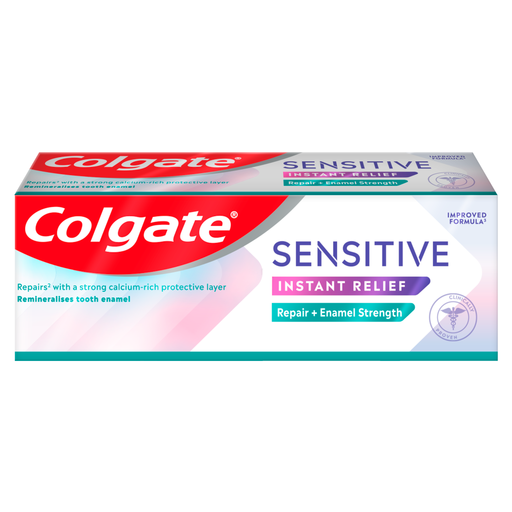
Why This Fits Their Persona: The compact 20ml size suits shoppers who want to try a sensitivity-focused formula or keep a tube in a work bag, suitcase or overnight kit.
The ingredient list identifies 8% arginine and sodium monofluorophosphate, allowing comparison based on formula rather than broad “repair” wording.
Compact format; combines a sensitivity-oriented ingredient with an enamel-care positioning.
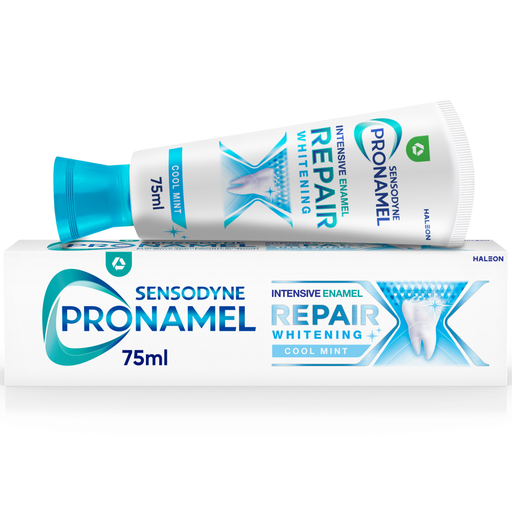
Why This Fits Their Persona: A practical match for adults wanting sensitivity care, enamel protection and gentle surface-stain removal in one 75ml daily toothpaste.
It lists 5% potassium nitrate and 0.25% sodium fluoride, so shoppers can identify the sensitivity and fluoride components behind the product positioning.
75ml tube; combines potassium nitrate, fluoride and gentle whitening features.
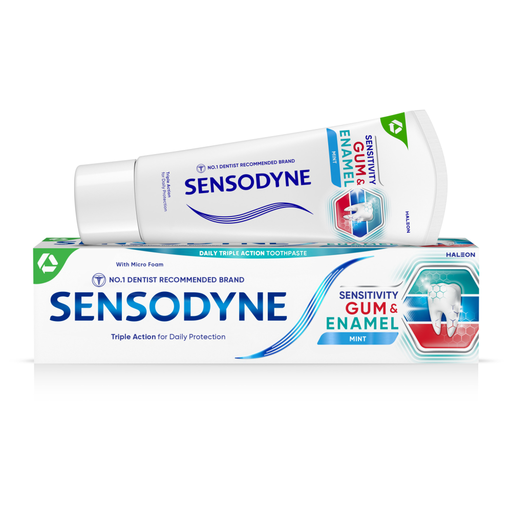
Why This Fits Their Persona: Suitable for shoppers who want one toothpaste focused on sensitive teeth, gumline plaque removal and enamel care in a regular twice-daily routine.
The formula specifies stannous fluoride and sodium fluoride, alongside a Micro Foam description aimed at cleaning around the gumline.
Triple-action positioning; 75ml size for everyday use.
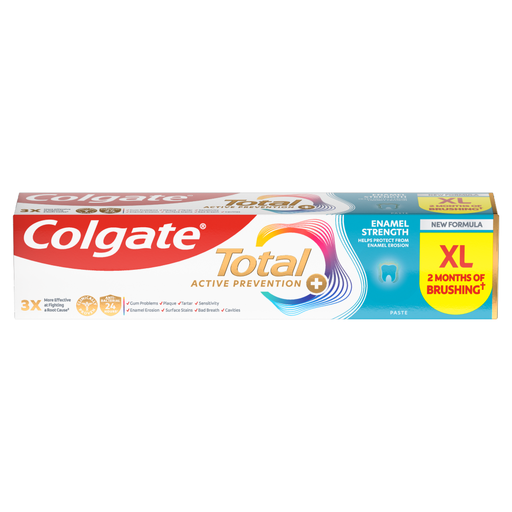
Why This Fits Their Persona: The larger 125ml format can suit households seeking broad daily oral care, including enamel, plaque, gum and cavity-related priorities.
The pack states a total fluoride content of 1,450 ppm and identifies stannous fluoride and sodium fluoride in the ingredients.
125ml household-friendly size; combines enamel-strength positioning with gum and plaque care.
We have compiled a complete, real-time list of products that fully satisfy these strict selection criteria and UK safety regulations.
Use a soft-bristled toothbrush and brush for around two minutes, twice daily, unless your dentist advises differently. Spit out after brushing and avoid swallowing. Applying excessive pressure can contribute to gum irritation and enamel wear, so a gentle technique matters as much as the toothpaste.
For acid wear concerns, wait before brushing immediately after acidic food or drink. Rinsing with water first can be a practical step. Read the product label for specific directions, particularly when using a toothpaste for sensitive teeth with a specialised application instruction.
The timescale varies by formula and by person. Some sensitivity toothpastes are intended for regular twice-daily use, while certain products include directions for applying toothpaste directly to a sensitive area. If sensitivity has not improved after the period stated on the label, or if it becomes worse, arrange a dental appointment.
A whitening toothpaste for sensitive teeth may help remove surface stains, but it will not necessarily change the natural shade of the tooth. Choose a product that states it is suitable for sensitivity, use a soft brush and avoid vigorous scrubbing. Stop using it if irritation develops.
Many adult enamel-care products are not recommended for children under 12 unless advised by a dental professional, while other formulations have different age limits. Check the tube and carton before purchase. Children should use an age-appropriate fluoride toothpaste and avoid swallowing it.