
24/7 Customer Support

Free returns

Same-day & Next-day Delivery

Quality Guaranteed

Unlock Your Welcome Offers: FREE Delivery | Up to 80% OFF | Free 30-day JoyPlus trial
Download the APP
Tooth sensitivity can make ordinary moments—hot tea, cold water or a spoonful of ice cream—uncomfortable. However, choosing a suitable sensitive teeth toothpaste is not simply a matter of picking the most prominent claim on the front of the tube. Ingredients, fluoride levels, brushing instructions and your particular oral-care needs all matter.
This guide explains the main buying pitfalls and compares practical options for adults and teenagers aged 12 and over, including toothpaste for sensitive teeth, enamel care, gum support and gentle whitening.
A whitening toothpaste usually removes surface stains caused by drinks such as tea, coffee and red wine. It does not necessarily change the natural colour of the tooth or reverse deeper discolouration.
Some abrasive ingredients can also feel uncomfortable if your enamel is already weakened. If you want a whitening toothpaste for sensitive teeth, look for wording such as “gentle” or “surface stain removal”, and avoid brushing aggressively.
An enamel repair toothpaste or enamel strengthening toothpaste can support daily cleaning and fluoride exposure. Early enamel changes may benefit from remineralising ingredients, but toothpaste cannot rebuild large areas of lost tooth structure or resolve decay, cracks or advanced erosion.
Be cautious with phrases such as “instant repair” or “permanent protection”. Check the active ingredients and use the product consistently rather than relying on a single brushing session.
Sensitivity may be linked to exposed dentine, enamel wear, brushing pressure or acidic foods and drinks. Bleeding, swollen or persistently sore gums may indicate a separate concern. A sensitivity relief toothpaste may not be the right sole solution for ongoing gum symptoms.
If pain continues or worsens, or if you experience swelling of the mouth or face, seek dental advice. Stop using a product if it causes irritation.
For most adults and teenagers aged 12 and over, a daily fluoride toothpaste is a sensible starting point. Many of the products below list 1,450 ppm fluoride, a commonly seen level for everyday cavity protection in UK oral-care products.
Check the packaging because formulations can change. Spit out after brushing and avoid swallowing toothpaste. If you use other fluoride products or have specific dental concerns, ask a dentist or pharmacist for individual guidance.
Different formulas use different approaches:
The ingredient alone does not determine whether a toothpaste suits you. Consider flavour, texture, whitening particles, fluoride level and whether you can use it comfortably twice daily.
A 75ml toothpaste is convenient for a bathroom cabinet, gym bag or travel. A 125ml tube may offer more product for regular household use, although value depends on price and the amount used each time.
Most products recommend brushing twice daily for around two minutes, using a soft-bristled toothbrush. Follow the instructions printed on the tube, particularly where the product gives different guidance for direct application to a sensitive tooth.
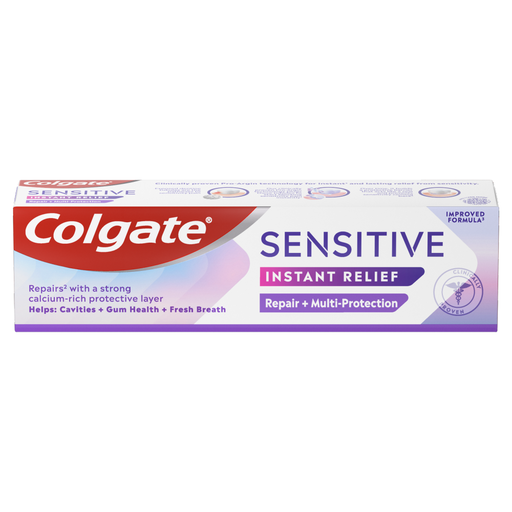
Why This Fits Their Persona: A practical 75ml option for shoppers wanting sensitivity care, enamel support and cavity protection in one daily toothpaste.
Its listed Pro-Argin technology and sodium monofluorophosphate provide specific formulation details instead of relying only on broad “repair” wording.
Designed for twice-daily use; combines sensitivity relief, fresh breath and cavity-focused care in a 75ml tube.
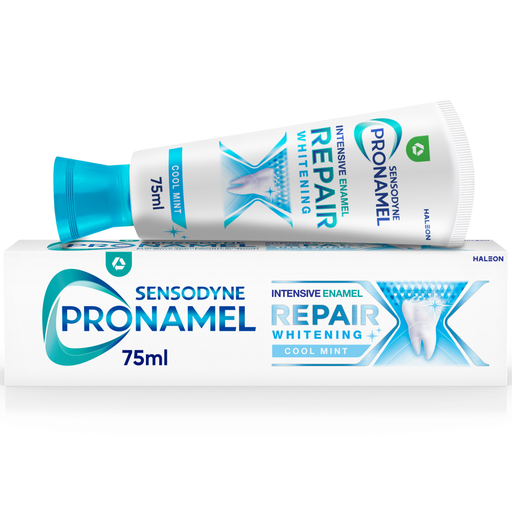
Why This Fits Their Persona: Suits shoppers prioritising acid erosion care alongside sensitivity relief and gentle removal of everyday surface stains.
The product lists 5% potassium nitrate and sodium fluoride, helping buyers assess the formula rather than judge it by whitening language alone.
Contains sensitivity and fluoride actives; designed to remove common surface stains without positioning whitening as a change to natural tooth colour.
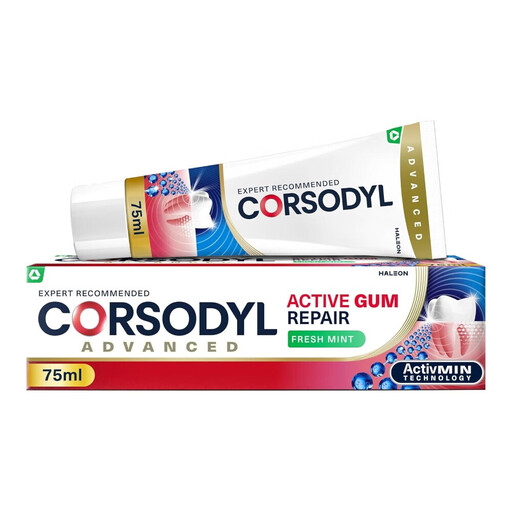
Why This Fits Their Persona: A focused choice for adults concerned about plaque around the gumline, bleeding or swollen gums, rather than sensitivity alone.
It is positioned around gum care and lists sodium fluoride, making its intended use clearer than a general-purpose whitening toothpaste.
Fresh mint flavour; recyclable tube, carton and cap are listed in the product information.
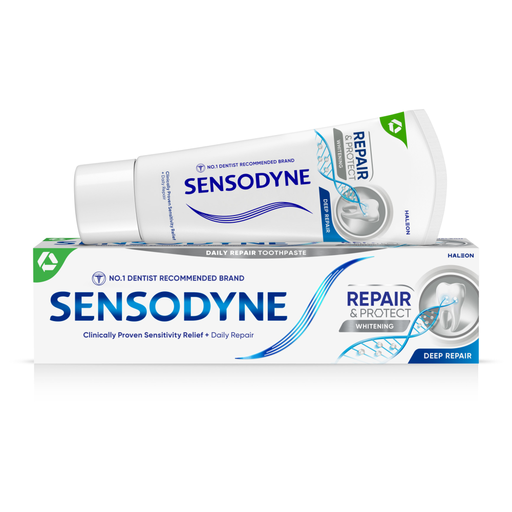
Why This Fits Their Persona: Suitable for shoppers who want a sensitivity toothpaste with a whitening function for surface marks.
The description identifies calcium sodium phosphosilicate and 1,450 ppm fluoride, while the whitening benefit is described as restoring natural whiteness.
Combines a mineral-layer approach with fluoride cavity protection in a compact 75ml format.
We have compiled a complete, real-time list of products that fully satisfy these strict selection criteria and UK safety regulations.
Some products are designed to provide a temporary feeling of relief, while ongoing sensitivity care generally depends on consistent use. Follow the instructions for at least the stated period on the packaging. If sensitivity has not improved after two to four weeks, or becomes more severe, arrange a dental appointment.
Many whitening formulations are intended for daily use, but suitability depends on the individual formula and your tolerance. Choose a product that describes its action as gentle surface-stain removal, use a soft brush and avoid pressing firmly. Check the label before making it part of your regular routine.
A 75ml tube is suitable for personal daily use and is convenient for travel. The lifespan depends on how much toothpaste is applied and how often you brush. Using a pea-sized amount and keeping the cap closed can help prevent unnecessary waste.