
24/7 Customer Support

Free returns

Same-day & Next-day Delivery

Quality Guaranteed

Unlock Your Welcome Offers: FREE Delivery | Up to 80% OFF | Free 30-day JoyPlus trial
Download the APP
Navigating the world of sensory toys for babies can feel overwhelming. Shelves are filled with brightly coloured objects, all promising to support your child's development. Yet, many parents find themselves with a collection of toys that are quickly ignored, difficult to clean or simply not fit for purpose. As a Joybuy Product Recommendation Officer, my role is to help you see past the marketing and focus on what truly matters.
Before you make your next purchase, be aware of these common pitfalls that often lead to disappointment:
To ensure you are choosing safe and effective developmental baby toys, focus on a few core parameters rather than flashy features.
A baby's primary method of exploration is their mouth, making material safety non-negotiable. While "BPA-free" is a good start, look for more specific assurances.
A toy's effectiveness is tied to a child's developmental stage.
A good toy should be easy to clean and able to withstand daily use. For bath toys, look for hole-free designs or toys that can be opened for thorough drying. For electronic toys, check if the electronic module can be removed, allowing the fabric portion to be washed properly.
To help you find the right fit, we have matched some well-designed products to common parenting needs.
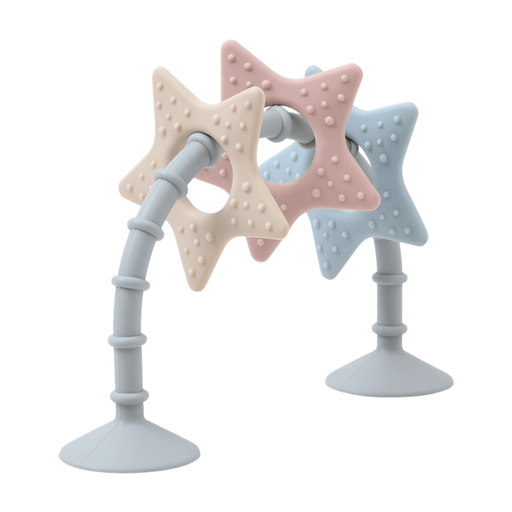
Why This Fits Their Persona: This parent needs a single, reliable toy that works for mealtimes, travel and bath time. Its compact design fits easily in a changing bag, providing familiar entertainment wherever they are, from a highchair at a café to an aeroplane tray table.
It directly counters the "suction cup let-down" with a strong, reliable base that adheres firmly to smooth, non-porous surfaces, keeping it off the floor.
Made from 100% food-grade silicone, it doubles as a safe teether. The multi-textured stars encourage fine motor skill development.
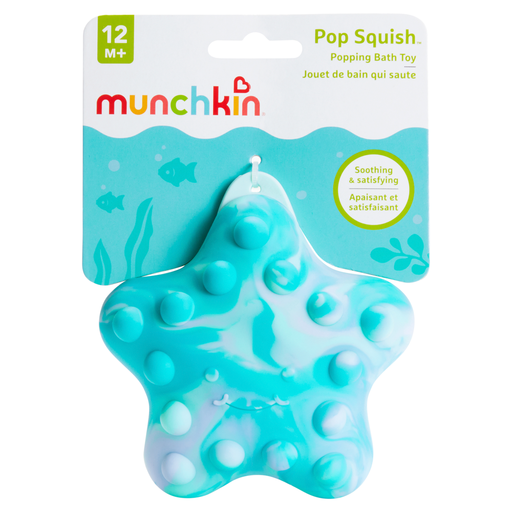
Why This Fits Their Persona: This parent is looking for a hygienic, engaging and long-lasting bath toy. They are concerned about mould and want something that provides sensory feedback without the mess of traditional squirters.
Its innovative hole-free, airtight design completely prevents water from getting trapped inside, eliminating the risk of hidden mould growth and solving a major hygiene concern.
The satisfying "pop" sensation engages tactile and auditory senses, promoting fine motor skills. It is made from soft, 100% food-grade silicone, making it safe for teething toddlers.
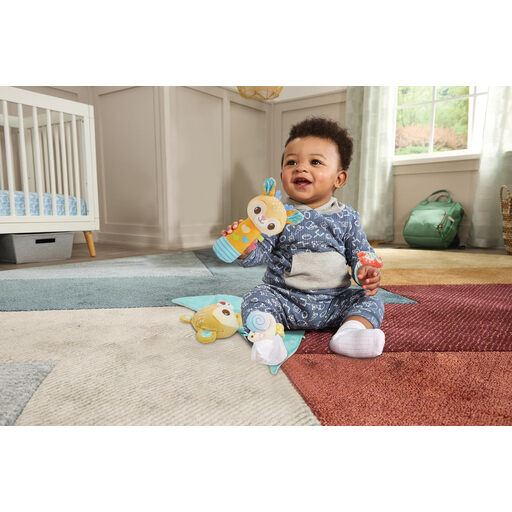
Why This Fits Their Persona: This person wants a beautiful and safe gift set for a newborn. They are looking for something gentle, developmentally appropriate for 0 months+ and free from electronics to provide a calming first play experience.
This set avoids the "overstimulation overload" by being completely battery-free. It provides sensory input through soft fabrics, crinkle sounds and gentle rattle effects that the baby controls.
The set includes a soft comforter and three different rattles, offering a variety of textures and sounds for tactile exploration and helping to develop grasping skills from birth.
We have compiled a complete, real-time list of products that fully satisfy these strict selection criteria and UK safety regulations.
For toys that are frequently put in a baby's mouth, such as teethers and rattles, it is good practice to clean them daily with warm, soapy water. For bath toys, it is crucial to squeeze out all water and let them air dry completely after every use to prevent mould. Toys that are only used for tactile play can be wiped down a few times a week or whenever they appear dirty.
Not necessarily, but moderation and appropriate design are key. Toys that offer a gentle, responsive experience—where the lights or music activate when the baby interacts with them—are more beneficial for teaching cause and effect. Avoid toys with constant, non-stop electronic output, especially for newborns, as this can be overwhelming. Look for options with volume control and an automatic shut-off feature.
You can introduce sensory toys from birth. For newborns, the focus should be on simple, high-contrast visual toys, soft comforters and gentle baby rattles. As they grow and their senses develop, you can introduce a wider variety of textures, sounds and more interactive toys that encourage grasping, reaching and problem-solving. Always follow the age guidance provided by the manufacturer.