
24/7 Customer Support

Free returns

Same-day & Next-day Delivery

Quality Guaranteed

Unlock Your Welcome Offers: FREE Delivery | Up to 80% OFF | Free 30-day JoyPlus trial
Download the APP
Choosing serving platters and trays involves more than picking a colour or attractive shape. The right option needs to suit the food being served, the number of guests, how it will be transported and the amount of cleaning you are prepared to do afterwards.
For UK households, hosts, caterers and event organisers, several common buying traps can turn an apparently convenient purchase into an impractical one.
A shallow platter may look refined but can be unsuitable for sauces, layered dishes or foods that need to stay separated. Check the usable dimensions and depth rather than relying on product photographs. A 14-inch foil platter, for example, offers a different layout from a compact fruit plate or a divided dinner tray.
Wooden serving platters and acacia wood serving dishes bring natural texture to a table, but they generally require hand washing and prompt drying. They should not automatically be treated like dishwasher-safe ceramic or stainless steel.
Similarly, foil serving platters can reduce washing up, but their handling requirements differ from rigid reusable trays. Heavier foods may need support underneath when carried.
A serving dish that works on a dining table may be inconvenient for a buffet, picnic or workplace event. Without a lid, dips and moist foods can spill during transport. Without stackable dimensions, multiple trays can take up considerable cupboard space.
Before buying, consider whether you need presentation only, food transport, refrigerated storage, or all three.
A divided serving tray can prevent sauces, snacks or side dishes from mixing. Five sections may suit organised family meals, packed lunches or catering portions, while four deeper compartments can work well for dips, olives, nuts and nibbles.
A chip and dip platter usually combines a central bowl with an outer area for crisps, crackers or vegetables. This reduces the need to carry a separate bowl and tray. For desserts, a dessert serving stand or two-tier shelf can create vertical display space where table area is limited.
For batch cooking or food transport, check whether the product includes a lid and whether the lid should be fitted only after hot food has cooled slightly. The Caroline foil tray with lid is listed as ovenable, but placing foil trays on a baking sheet can provide additional stability when moving them in and out of an oven.
Also check measurements in millimetres, not only broad descriptions such as “large” or “family-sized”. This is particularly important when fitting trays into a fridge, freezer, catering box or cupboard.
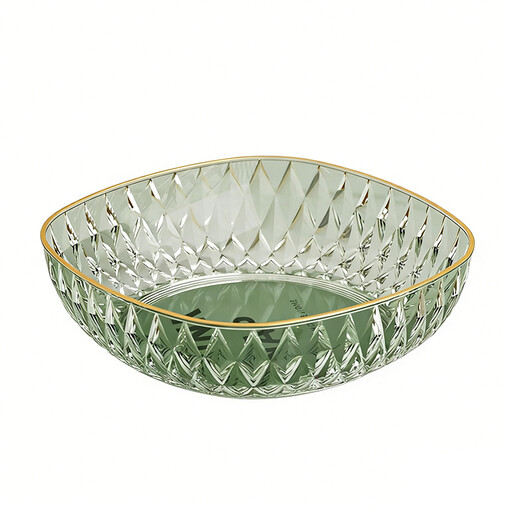
Why This Fits Their Persona: A compact 24 cm format can suit smaller households, occasional hosts or shoppers building a servingware collection gradually.
Its stated size gives a clearer expectation than vague “large platter” wording. Buyers should still confirm cleaning and material details before ordering.
Square profile; green finish with a gold-coloured rim; suitable for fruit or light snacks.
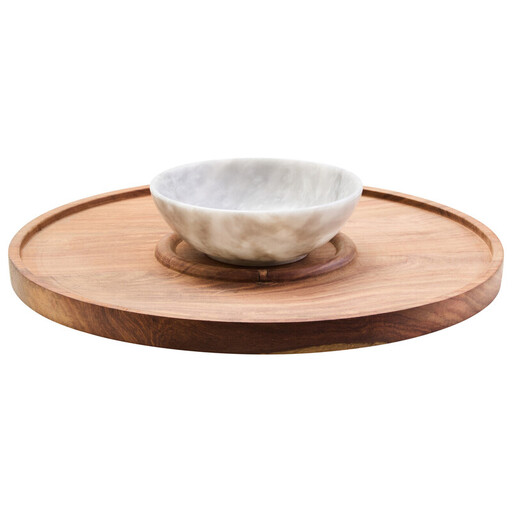
Why This Fits Their Persona: Suitable for hosts who want a coordinated centrepiece for drinks parties, dinner gatherings or relaxed weekend entertaining.
The central marble bowl and surrounding wood area have defined roles, avoiding the inconvenience of balancing a separate dip bowl on a flat platter.
Acacia wood and white marble construction; dedicated central bowl; suitable for chips, crackers and dips.
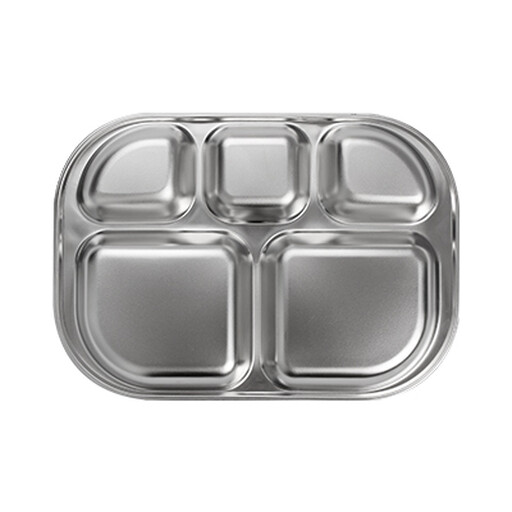
Why This Fits Their Persona: A practical match for families, campers, meal-preppers, nurseries and catering environments where separated portions and straightforward cleaning matter.
Five independent sections address food mixing, while the stated dishwasher-safe design avoids the hand-washing requirement associated with many wooden dishes.
Food-grade 304 stainless steel; five compartments; listed as shatter-resistant, scratch-resistant and dishwasher safe.
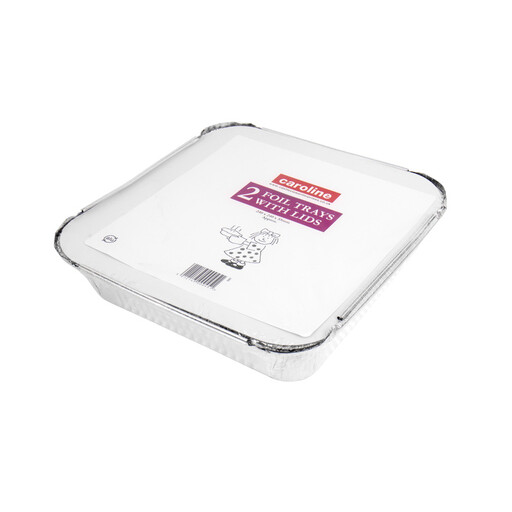
Why This Fits Their Persona: Useful for batch cooking, office lunches, community events and transporting prepared food between home and venue.
The matching lids address the transport and storage problem. The listed 239 x 239mm size also makes cupboard and fridge planning easier.
Pack of two; 35mm depth stated in the product name; lid included; listed as ovenable and recyclable.
We have compiled a complete, real-time list of products that fully satisfy these strict selection criteria and UK safety regulations.
Yes, depending on the material and cleaning instructions. Stainless steel divided trays are suited to repeated everyday use, while acacia wood dishes are more appropriate when you are comfortable with hand washing and careful drying. Foil options are convenient for events, reheating and transport.
Choose a divided serving tray with sections of suitable depth. Five-section stainless steel trays can separate several foods, while a chip and dip platter keeps the dip in a central bowl and the accompanying snacks around it.
Clean foil is commonly accepted by many local recycling schemes, but collection rules vary between councils. Remove food residue where practical and check your local authority’s guidance. If a tray is described as reusable, inspect it after use and recycle it when it is no longer suitable for serving.