
24/7 Customer Support

Free returns

Same-day & Next-day Delivery

Quality Guaranteed

Unlock Your Welcome Offers: FREE Delivery | Up to 80% OFF | Free 30-day JoyPlus trial
Download the APP
Serving trays need to do more than look presentable. In a UK kitchen, the right tray may need to separate flavours, tolerate oven heat, protect food during transport or reduce washing up after a gathering. Choosing based on appearance or pack size alone can lead to wasted money and inconvenient substitutions.
This guide explains the practical details to check before buying serving trays, from divided plates and snack dishes to foil food trays and buffet platters.
A tray can look spacious but have limited usable capacity because of its depth, raised edges or internal compartments. Always check the stated dimensions, depth and capacity. A shallow disposable serving platter may suit sandwiches and pastries, but it may not contain a saucy curry or casserole during transport.
“Ovenable” generally refers to use inside an oven, but aluminium trays should not be placed directly on an open flame, hob ring or exposed heating element. A filled foil food tray can also flex when carried. Place it on a baking sheet for stability and follow the product’s usage instructions.
Recyclable aluminium is a useful material choice, but acceptance varies between UK councils. Foil usually needs to be reasonably clean and free from food residue before recycling. Check your local authority’s guidance rather than assuming a recyclable food tray belongs in every household recycling bin.
The material should match the job:
A divided serving tray or compartment plate is useful when foods should remain separate. Three sections can accommodate a main food, side dish and fruit, while five sections may suit children’s meals, packed lunches or organised meal preparation.
For parents, a kids’ divided plate can help present different foods without mixing sauces. However, check the material, edge height and handling instructions. Stainless steel can become hot when serving warm food, so children should be supervised.
A four-section snack dish is more appropriate for shared appetisers than individual meals. It can separate dips, olives, crisps and vegetable sticks in one serving piece.
Match the tray to the occasion:
Pack quantity matters for events. A two-pack may suit a family gathering, while a six-pack or larger selection of catering trays may be more practical for batch cooking, schools, nurseries or commercial service.
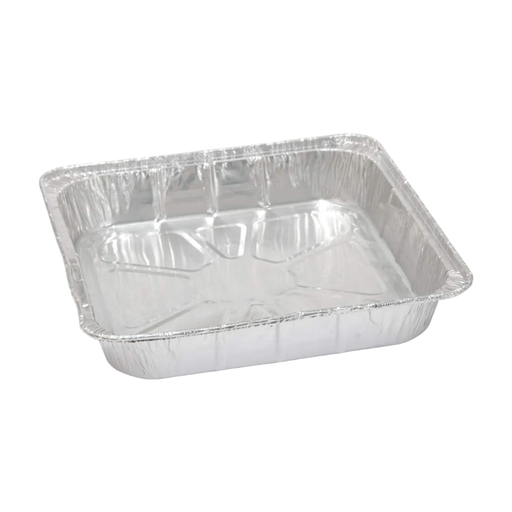
Why This Fits Their Persona: A two-pack gives occasional hosts and home cooks a straightforward way to prepare, serve or reheat shared dishes without buying a large catering supply.
The listed 60oz capacity, 227 x 227mm size and 38mm depth make the available space clearer than judging by a product photograph. It is specified as ovenable and recyclable, subject to local recycling rules.
Square format for neat presentation; suitable for cooking and reheating in the oven when used according to instructions.
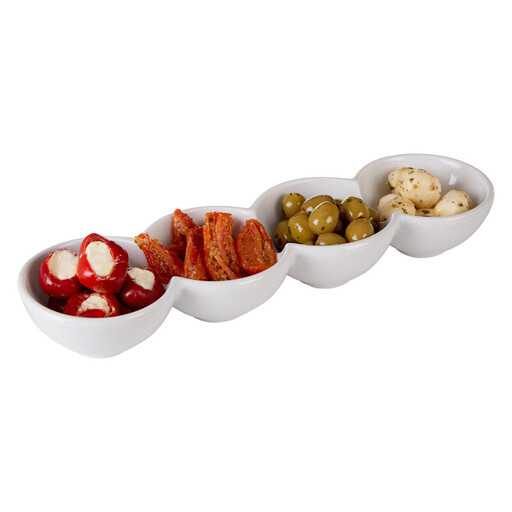
Why This Fits Their Persona: This white porcelain snack dish suits hosts who want organised serving with a more permanent, table-ready presentation for parties, playdates and casual entertaining.
The four distinct sections address the common problem of dips and snacks mixing together. Its dishwasher-safe specification also makes post-party cleaning more manageable.
Four separate sections; white porcelain construction; dishwasher-safe maintenance.
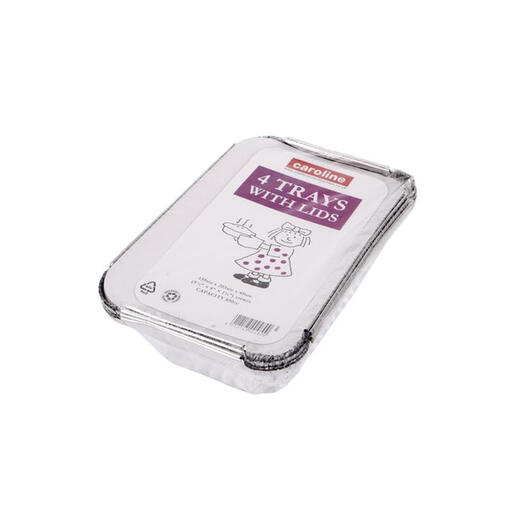
Why This Fits Their Persona: The four-tray pack is suited to meal-prep customers, caterers, takeaway services and households preparing several portions for storage or transport.
The stated 30oz capacity and 139 x 203 x 45mm dimensions help set realistic expectations. Matching lids address the storage and transport problems that affect uncovered catering trays.
Ovenable aluminium trays; four included lids; suitable for cooking, reheating, refrigeration and food transport when handled correctly.
We have compiled a complete, real-time list of products that fully satisfy these strict selection criteria and UK safety regulations.
Before placing an order, confirm:
Some are specifically described as ovenable, but not all disposable trays have the same specification. Use an ovenable food tray on a baking sheet, keep it away from direct flames and exposed heating elements, and follow the supplied instructions.
Ovenable aluminium trays with lids can be practical for batch cooking, leftovers and food transport. Allow food to cool appropriately before fitting the lid, and check whether the tray and lid are suitable for refrigeration or freezer storage.
Stainless steel plates should not be placed in a microwave unless the manufacturer explicitly states otherwise. They may become hot when holding warm food, so supervise children and use a stable, flat surface.