
24/7 Customer Support

Free returns

Same-day & Next-day Delivery

Quality Guaranteed

Unlock Your Welcome Offers: FREE Delivery | Up to 80% OFF | Free 30-day JoyPlus trial
Download the APP
Choosing serving trays is not simply a matter of picking the largest option or the most attractive finish. A tray may look suitable online but prove awkward to carry, difficult to clean or too shallow for the food you plan to serve.
Whether you are hosting a family gathering, preparing party food, organising a buffet or supplying a community event, the right servingware should match the food, transport requirements and cleaning routine. This guide explains the common buying traps, the specifications worth checking and a selection of practical options for different UK households and events.
A wooden serving tray can look appealing for breakfast, drinks or home presentation, but not every decorative tray is suitable for hot food, moisture or frequent washing. Check the care instructions carefully. For example, paulownia wood should be kept away from direct heat and prolonged moisture, while acacia wood serving dishes generally require hand cleaning rather than dishwasher use.
A wide food serving platter can hold more food, but it may also flex when loaded with roast meat, sandwiches or desserts. Large foil platters are easier to carry when supported from underneath with both hands or placed on a rigid board. Dimensions matter just as much as capacity, particularly if the tray must fit inside a fridge, catering box or car.
Disposable foil trays can reduce washing up, but recycling depends on local facilities. Remove food residue and check your council’s guidance before placing foil in household recycling. Reusable serving trays may create less waste across repeated events, although they require storage and cleaning. Consider the full routine rather than relying on a single sustainability label.
For ovenable foil trays, confirm that the product is specifically described as suitable for cooking or reheating. Do not place foil directly on an open flame or heating element. A baking sheet can provide extra support when moving a filled tray in and out of the oven.
Wood is more suitable for presentation, cold food and drinks unless the product instructions state otherwise. Stainless steel is useful for durable everyday serving, but check whether the design is intended for oven use, refrigeration or serving only.
Match the dimensions to the food rather than choosing by appearance alone:
Also measure your storage space. A 22-inch platter may be useful for a wedding buffet but impractical for a small kitchen cupboard.
A tray with a lid is useful for meal preparation, transport and storage, but hot food should be allowed to cool slightly before the lid is fitted. Stainless-steel divided plates are generally straightforward to rinse or place in a dishwasher when the product instructions allow it. Wooden dishes need gentler handling: avoid soaking, abrasive tools and dishwasher cleaning.
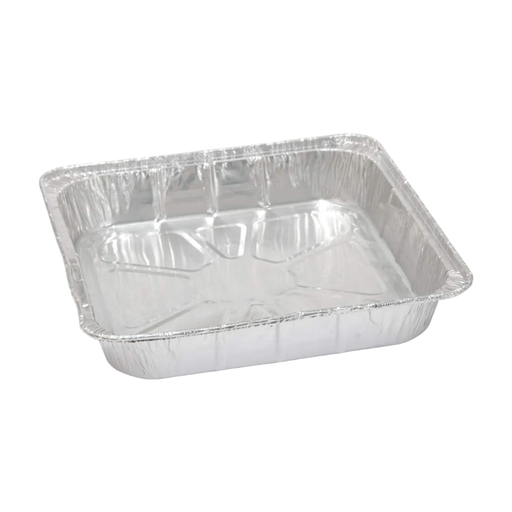
Why This Fits Their Persona: The two-pack gives occasional hosts, families and bake-sale organisers a practical starting point for cooking, reheating and presenting hot dishes without purchasing a large collection of servingware.
Its stated 38mm depth and 60oz capacity provide more room than a shallow platter, while the ovenable specification is clearer than relying on appearance alone.
Pack of two; suitable for cooking and reheating; recyclable foil where local facilities accept it.
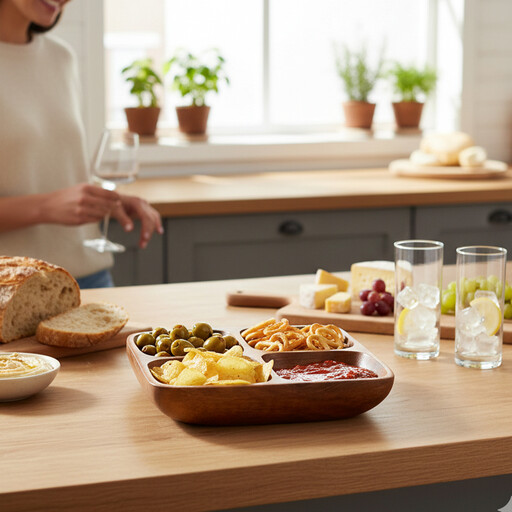
Why This Fits Their Persona: This acacia wood divided serving dish suits hosts who want natural table presentation for nibbles, cheese, fruit, dips and other cold appetisers.
The four deep sections are designed for separation, while the hand-wash-only care guidance makes its maintenance requirements clear.
Solid acacia wood; four compartments; rounded base for stable placement.
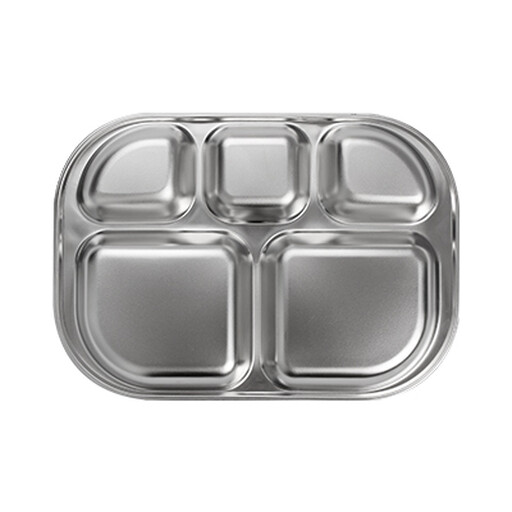
Why This Fits Their Persona: Five separate sections make this compartment dinner plate suitable for families, cafeterias, schools, camping and meal-preparation routines where foods need to remain organised.
The listed 304 stainless-steel construction avoids the fragility associated with some disposable or breakable tableware and clearly identifies the five-section format.
Food-grade 304 stainless steel; dishwasher-safe specification; five independent compartments.

Why This Fits Their Persona: The round 28cm tray works for drinks, breakfast, small desserts and light party serving where a decorative, lightweight option is more useful than a large catering platter.
The product details specify indoor use, dry-cloth cleaning and protection from heat and excess moisture, helping buyers avoid unsuitable use.
Lightweight 181g construction; curved edges; distressed white-washed finish.
We have compiled a complete, real-time list of products that fully satisfy these strict selection criteria and UK safety regulations.
Only use trays specifically listed as ovenable, and follow the product instructions. Place the tray on a baking sheet for stability, never directly on an open flame or heating element. Allow hot food to cool before adding a lid.
They can be practical for repeated events because they reduce the need to buy replacements, but the value depends on cleaning time, storage space and frequency of use. For a single large gathering, catering trays or disposable foil trays may reduce washing up. Compare pack quantity, dimensions and intended reuse rather than price alone.
For everyday snacks and small meals, a compact tray around 28cm may be sufficient. Medium platters suit sandwiches, pastries and side dishes, while 17- or 22-inch foil platters are designed for larger buffets and events. Measure your table, storage area and transport space before ordering.