
24/7 Customer Support

Free returns

Same-day & Next-day Delivery

Quality Guaranteed

Unlock Your Welcome Offers: FREE Delivery | Up to 80% OFF | Free 30-day JoyPlus trial
Download the APP
Choosing serving trays seems straightforward until a tray arrives too shallow for a family meal, bends during transport or cannot be cleaned as easily as advertised. The right option depends on more than colour and price: material, compartment layout, capacity and intended temperature use all affect whether it works in a UK kitchen, café, takeaway service or outdoor setting.
A rustic wooden serving tray can look appealing on a coffee table or breakfast-in-bed setup, but wood generally needs more careful maintenance than stainless steel or aluminium. Prolonged moisture, direct heat and rough cleaning may cause warping, staining or surface damage. Check whether the tray is intended for food service, decoration or both.
A 3-compartment plate and a 5-section dinner tray can help separate foods, but the size and depth of each section matter. Small compartments may suit children’s meals or side dishes but be unsuitable for larger portions. A product described as a portion control plate should still be checked for its overall dimensions and layout.
A tray suitable for serving at home may not be appropriate for oven use, freezing or takeaway transport. Disposable food trays with lids can simplify batch cooking and delivery, while reusable dinner trays may be more suitable for repeated household use. Also check whether lids must be removed before heating; aluminium lids or covers should not be placed in an oven unless the manufacturer specifically permits it.
304 stainless steel is commonly selected for divided dinnerware because it is durable, resistant to rust under normal use and easy to wipe or wash. Stainless steel food trays are practical for families, cafés, camping tableware and meal preparation. However, avoid abrasive scouring pads if maintaining a polished finish is important.
Wooden trays provide a warmer visual style and are often lighter than metal alternatives. They should be kept away from open flames, direct heat and prolonged moisture. A soft, dry cloth is usually more appropriate than soaking.
Aluminium foil trays are lightweight and conduct heat efficiently. They are useful for cooking, reheating, storage and transport, but they are generally disposable or intended for limited reuse. Check the pack size and whether the included lids are designed for refrigeration, stacking or carrying.
Choose the number of sections based on the meal pattern:
Compartment walls may reduce spills, but they do not make a tray leakproof. For takeaway or packed meals, select a product with a secure lid or use a suitable food container.
Dimensions are often more useful than attractive product photographs. A tray measuring around 28 cm across may work for snacks and drinks but have less usable space than a rectangular catering tray. For meal prep trays, compare the internal capacity with your usual portion size.
For transport, consider:
For UK food businesses, also review the supplier’s food-contact information and care instructions. Product descriptions may refer to overseas standards, but businesses remain responsible for selecting food-contact products appropriate for their intended use and complying with applicable UK requirements.

Why This Fits Their Persona: A single lightweight tray offers a simple option for breakfasts, drinks, snacks and occasional celebrations without committing to a larger set.
The listed dimensions are clear at 28 x 28 x 3 cm, and the care guidance sets expectations: wipe clean, avoid soaking and keep away from high heat.
Paulownia wood; approximately 181 g; raised curved edges and a distressed white-washed finish.
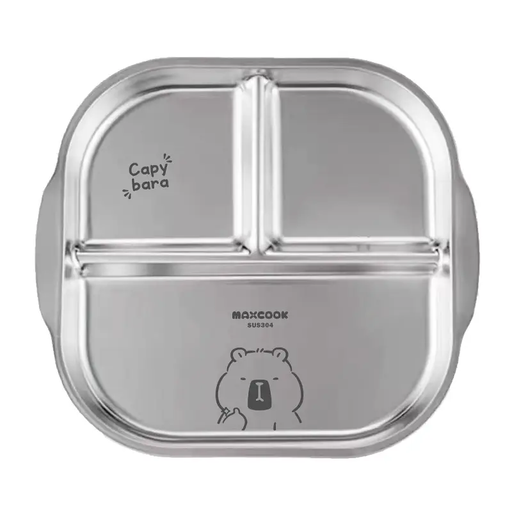
Why This Fits Their Persona: Its square format and three separate areas suit diners who want neat presentation and less mixing between main dishes, sides and desserts.
The 304 stainless steel construction is specified clearly, avoiding vague descriptions that do not identify the material grade.
Three compartments; smooth polished surface; listed as dishwasher suitable.
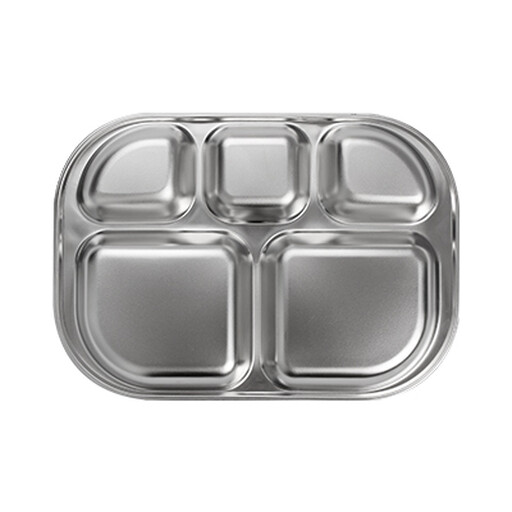
Why This Fits Their Persona: Five sections suit families, nurseries, meal-prep routines, camping tableware and diners who need several foods kept apart.
The product specifies five independent sections and gives cleaning instructions, helping buyers assess separation and maintenance rather than relying on photographs alone.
Food-grade 304 stainless steel; five compartments; listed as dishwasher safe and suitable for refrigeration or freezing.
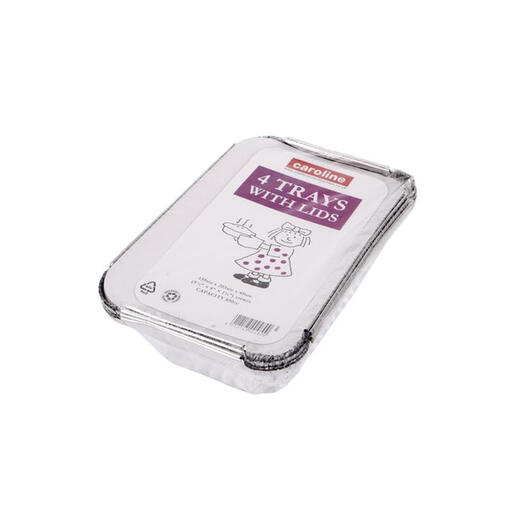
Why This Fits Their Persona: The four-pack format is practical for batch cooking, takeaway portions, events and transporting prepared meals.
The capacity, measurements and pack quantity are stated: 30 oz, 139 x 203 mm, 45 mm deep and four trays per pack.
Ovenable aluminium construction; fitted lids; suitable for cooking, storage and food transport when used according to the instructions.
We have compiled a complete, real-time list of products that fully satisfy these strict selection criteria and UK safety regulations.
They can be suitable for regular serving when the product’s care instructions are followed. Stainless steel dinnerware is generally straightforward to wash, but abrasive cleaners and sharp utensils may mark the surface. Check whether the specific item is dishwasher suitable before placing it in a machine.
The tray may be described as ovenable, but the lid often has different limitations. Remove the lid unless its instructions specifically permit oven use, and handle the tray carefully after heating. Confirm that the size and capacity suit the food being prepared.
Lifespan depends on material, frequency of use, cleaning method and storage. Stainless steel trays can support repeated use when protected from harsh abrasion and bending. Wooden trays may remain presentable for longer when kept dry and away from heat, while disposable food trays are intended for convenient, limited-use cooking, storage or transport.