
24/7 Customer Support

Free returns

Same-day & Next-day Delivery

Quality Guaranteed

Unlock Your Welcome Offers: FREE Delivery | Up to 80% OFF | Free 30-day JoyPlus trial
Download the APP
Choosing serving trays and platters can seem straightforward until a tray bends under a roast, a decorative dish proves too small or a supposedly reusable option becomes difficult to clean. For UK households, caterers and event organisers, the right choice depends on more than appearance.
The most useful comparison points are material, dimensions, capacity, cleaning requirements and intended use. Whether you need foil serving platters for a buffet, reusable food trays for family meals or divided dinner trays for children, checking these details before buying can prevent wasted money.
Product photographs can make a platter appear more spacious than it is. Always check the stated measurements, including depth. A 14-inch platter measuring 348 x 248 x 26mm is suitable for many buffet foods, while a 17-inch option measuring 430 x 286mm with a 30mm depth offers more room for larger portions and food that needs containing.
For very large gatherings, check whether the product is genuinely wide enough for the number of guests, rather than relying on the word “catering” in the description.
Lightweight construction is convenient for transport, but it does not remove the need for support. Foil and aluminium platters can be practical for sandwiches, pastries, fruit and prepared buffet dishes, but heavier foods such as roast meat should be carried with both hands and supported underneath.
For frequent use or food that needs to be moved while hot, stainless steel plates may offer a more rigid solution. Check the manufacturer’s handling guidance and use a flat board or secondary tray where appropriate.
“Reusable” does not always mean suitable for repeated heavy-duty washing, and “recyclable” depends on local collection rules. Food residue may need to be removed before aluminium is accepted for recycling. Wooden serving trays may require dry wiping rather than soaking, while porcelain snack dishes and stainless steel trays are generally more convenient for routine cleaning when the listing confirms dishwasher suitability.
Before buying, consider how much washing up your event will create and whether you have enough cupboard space to store larger platters.
Measure the table, cupboard or catering box where the tray will be used. Rectangular catering platters often make efficient use of buffet space, while round or square dishes may suit centrepieces and small tables.
For snacks, divided compartments help separate crisps, nuts, olives and dips. This can be useful at children’s parties or when serving foods with different flavours. However, compartments reduce the space available for larger items, so a single-surface platter may be more suitable for sandwiches, pastries or sliced meat.
Look for raised or curved edges when serving food that may slide or spill. Confirm whether the product is dishwasher safe rather than assuming it. For hot food, check the temperature guidance and allow products to cool before handling if specified.
Food-contact claims should be read carefully. A statement referring to standards such as GB 4806.9 or US FDA requirements is not the same as a blanket guarantee that every use is suitable in the UK. Follow the product instructions and use only for the stated purpose.
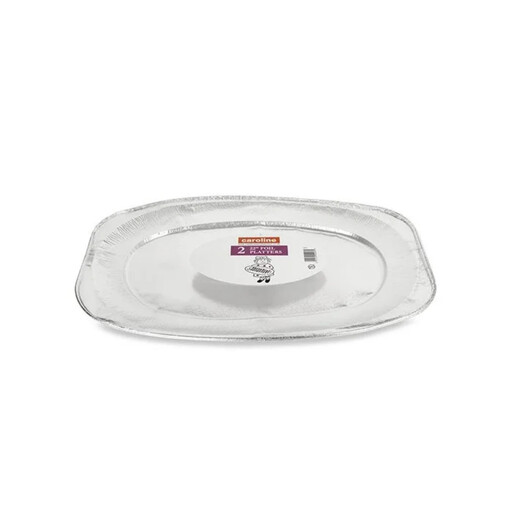
Why This Fits Their Persona: A two-piece pack gives first-time hosts a practical starting point for family gatherings, office lunches and smaller buffet setups without committing to a large collection of tableware.
The stated 348 x 248 x 26mm dimensions make capacity easier to judge, while the rectangular shape supports tidy buffet presentation.
Pack of two; listed as reusable and recyclable; suitable for hot or cold food presentation.
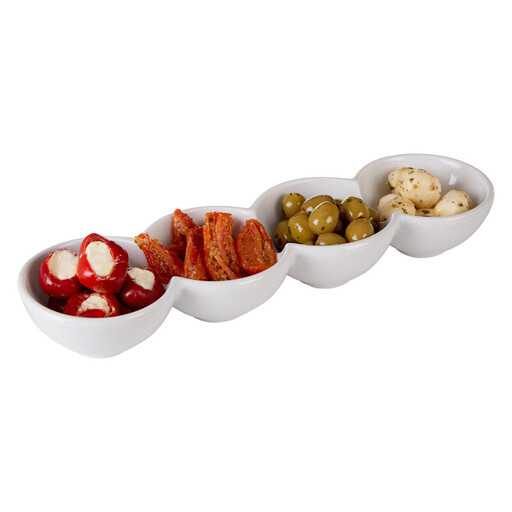
Why This Fits Their Persona: The white porcelain finish suits hosts who want party serving dishes that move easily from casual snacks to a more formal table setting.
Four separate sections remove uncertainty around snack layout and help prevent dips, nuts and finger foods from mixing.
Four compartments; dishwasher safe according to the listing; suitable for snacks and dips.
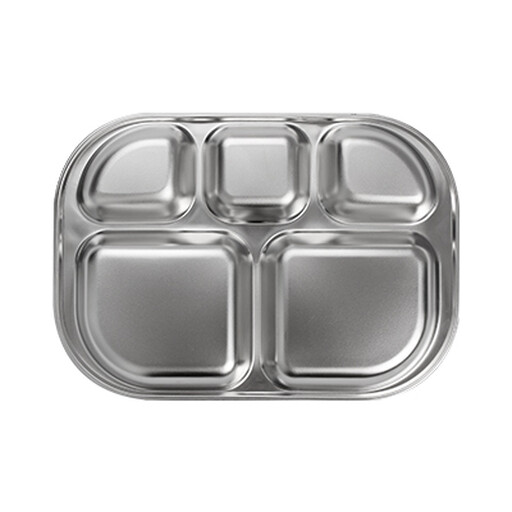
Why This Fits Their Persona: Five sections suit families, nurseries, campers and caterers who need separate portions and a durable alternative to breakable tableware.
The single-piece stainless steel construction avoids relying on fragile ceramic sections, while the divided layout limits odour and flavour mixing.
Food-grade 304 stainless steel; five independent compartments; dishwasher safe according to the listing.
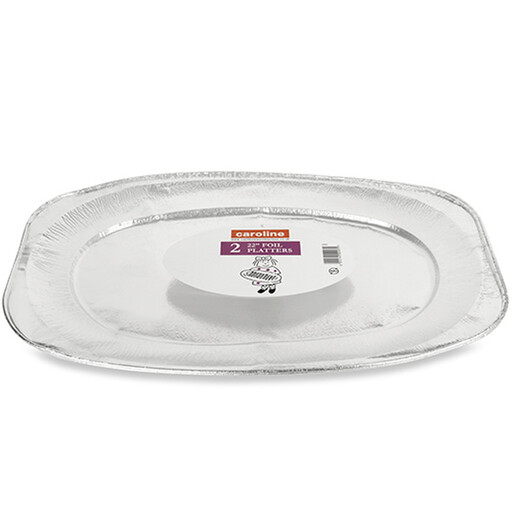
Why This Fits Their Persona: The large format is intended for buffets, parties, events and food displays where a broad serving surface can reduce the number of separate dishes needed.
The published 22-inch size and 28mm depth provide clearer capacity information, while the handling guidance highlights the need for underneath support.
Pack of two; recyclable aluminium foil construction; suitable for hot and cold buffet food.
We have compiled a complete, real-time list of products that fully satisfy these strict selection criteria and UK safety regulations.
There is no universal size because it depends on the food and guest numbers. Medium platters around 14 inches can suit snacks, sandwiches and family gatherings. For larger buffets, a 17-inch or 22-inch platter offers more surface area, but measure your table and consider how safely it can be carried when full.
They can be useful when used repeatedly, particularly for regular family meals, school events or catering. However, compare the purchase price, storage space and cleaning time. Foil platters described as reusable and recyclable may reduce washing up, while stainless steel and porcelain are more appropriate when you want long-term tableware and have suitable cleaning facilities.
Divided dinner trays can help keep portions and flavours separate, making them useful for children’s meals, nurseries and packed lunches. Choose a stable, easy-to-clean material and supervise younger children around hot food or dishes that could tip. Always check the product’s stated use and safety instructions before serving.