
24/7 Customer Support

Free returns

Same-day & Next-day Delivery

Quality Guaranteed

Unlock Your Welcome Offers: FREE Delivery | Up to 80% OFF | Free 30-day JoyPlus trial
Download the APP
A serving tray can make hosting easier, but the wrong one may become awkward to carry, difficult to clean or unsuitable for the food you plan to serve. UK shoppers often compare appearance and pack price first, while overlooking capacity, heat tolerance and whether a lid is included.
Before choosing between food serving trays, catering trays and decorative serving platters, watch for these common buying pitfalls:
Porcelain snack dishes suit tabletop presentation, dips and finger foods. They offer a polished appearance but should still be handled carefully to reduce the risk of chips or breakage.
Stainless steel food trays are practical for everyday meals, outdoor use and divided portions. Food-grade 304 stainless steel is commonly selected for its corrosion resistance and easy-clean surface. It is also shatter-resistant compared with ceramic, making it useful for families, camping and busy kitchens.
Aluminium foil trays are lightweight and convenient for cooking, reheating, transport and storage. Look for clear wording such as ovenable, and check whether the product includes lids. Aluminium conducts heat efficiently, but a filled tray can flex, so placing it on a baking sheet can provide extra support.
A wooden serving tray is mainly suited to room-temperature food, drinks or decorative display. Wood should be kept away from direct heat and prolonged moisture to help prevent warping.
For individual meals, packed lunches and desserts, a capacity of around 500–700 ml may be suitable. For family dishes or catering portions, look towards 30–60 oz formats and compare the depth as well as the length and width.
Always compare the stated internal capacity with your usual portion sizes. A 22-inch platter, for example, may be ideal for a buffet but unnecessarily large for a small dining table.
A tray intended for transport should have enough rigidity to remain stable when full. Lids help protect food and make stacking easier, but they should not usually be fitted while contents are still very hot unless the product instructions specifically allow it.
For cleaning, check whether the tray is dishwasher safe. Stainless steel and porcelain options often offer straightforward washing, while decorative iron and wooden trays may require wiping with a soft cloth. Avoid abrasive pads on finished surfaces.
For foil food trays, “recyclable” does not guarantee acceptance in every council collection. Remove food residue and follow local guidance. Reusing a tray may be practical for light-duty applications, but inspect it for sharp edges, dents or damage before each use.
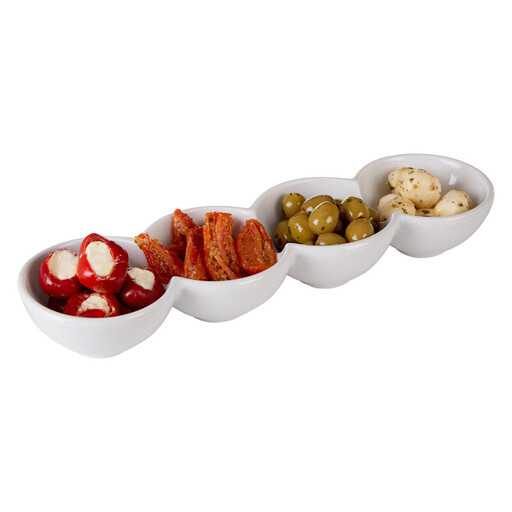
Why This Fits Their Persona: A practical option for households hosting children’s parties, playdates or casual gatherings without buying several separate bowls.
The four separate sections avoid the clutter of loosely arranged snack bowls and help prevent dips or flavours from mixing.
White porcelain construction; dishwasher safe; suitable for crisps, nuts, olives, vegetable sticks and dips.
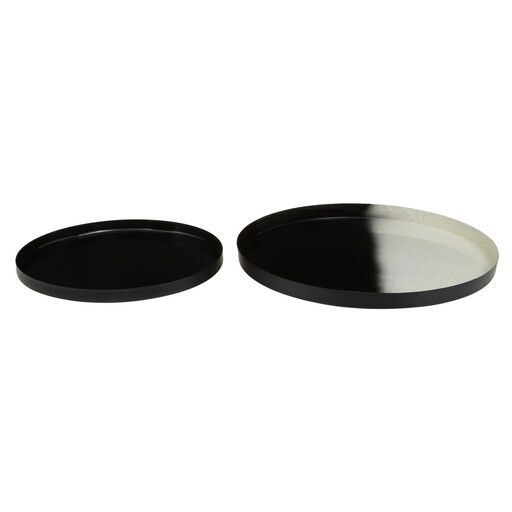
Why This Fits Their Persona: Designed for shoppers who want serving platters that also contribute to a modern home display.
The stated iron construction provides a sturdier alternative to lightweight decorative boards, while care instructions clearly limit use to indoor display.
Set of two; iron construction; 45 × 45 cm footprint; suitable for candles, vases and ornaments.
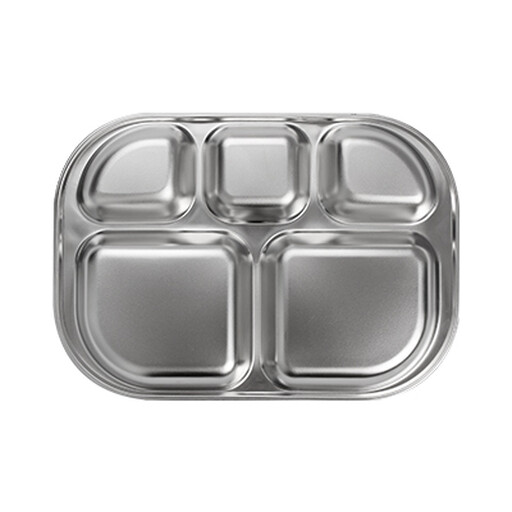
Why This Fits Their Persona: Suitable for families, campers, nurseries and catering users who need separated portions and a robust single-piece design.
Five independent compartments address mixed flavours and portion separation, while stainless steel avoids the breakage associated with ceramic.
Food-grade 304 stainless steel; five sections; dishwasher safe; suitable for refrigeration and freezing according to the product information.
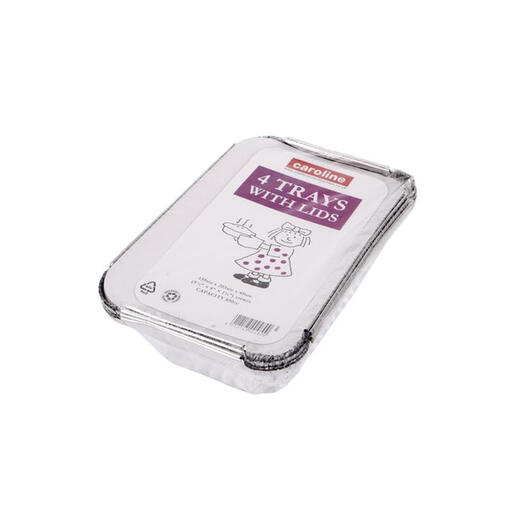
Why This Fits Their Persona: A useful format for batch cooking, takeaway portions, buffets, food delivery and organised home meal preparation.
The 30 oz capacity and fitted lids address two frequent problems: unclear portion sizing and uncovered food during transport.
Four trays per pack; 139 × 203 × 45 mm size; ovenable aluminium; lids included; recyclable where facilities accept the material.
We have compiled a complete, real-time list of products that fully satisfy these strict selection criteria and UK safety regulations.
Ovenable foil trays are designed for cooking or reheating in an oven, but they should be placed on a stable baking sheet. Do not use them on an open flame or direct heating element, and follow the individual product instructions.
Yes. Trays with lids can simplify portioning, refrigeration, transport and serving. Choose the capacity and dimensions around your usual meals, and allow food to cool appropriately before sealing.
Acceptance varies between local authorities. Empty and clean the tray as far as practical, check your council’s guidance and avoid assuming that every foil product is collected. Reuse may be suitable when the tray remains clean, stable and undamaged.