
24/7 Customer Support

Free returns

Same-day & Next-day Delivery

Quality Guaranteed

Unlock Your Welcome Offers: FREE Delivery | Up to 80% OFF | Free 30-day JoyPlus trial
Download the APP
Choosing serving trays seems straightforward until a crowded table, a leaking lid or a difficult clean-up exposes the wrong purchase. A tray that looks attractive online may be too shallow for saucy food, too delicate for regular handling or unsuitable for transporting prepared dishes.
This guide explains the practical details worth checking before buying serving trays, whether you are organising a children’s party, preparing a buffet, planning meals or looking for decorative home accessories.
A decorative tray can look impressive in product photography but offer limited usable space. Check the internal dimensions, not just the outside measurement. Raised edges and curved sides may reduce the area available for food, while a shallow design may not contain sauces, fruit or layered dishes securely.
For larger gatherings, compare the tray’s dimensions with the number of guests and the type of food being served. A wide platter suits sandwiches and roast meats, whereas a deeper container is more suitable for pasta bakes, curries or desserts.
Different materials have different care requirements. Porcelain provides a traditional table setting but can chip or break if dropped. Wood adds warmth and texture but usually needs protection from prolonged moisture. Foil catering platters are convenient for events, but they may need support when carrying heavy food.
A product described as reusable or recyclable should still be checked against the manufacturer’s care instructions and your local council’s recycling guidance. Recycling facilities and accepted materials vary across the UK.
A serving tray without a lid may be perfectly suitable for table presentation but less practical for transport or storage. Likewise, a lightweight tray can be convenient until it flexes under the weight of food.
Before purchasing, look for details such as dishwasher safety, compatible lids, stackability, edge height and whether the tray should be placed on a baking sheet or larger board for support.
A divided serving tray is useful when you want to keep dips, snacks or meal components separate. Four sections may be enough for a children’s party or casual nibbles, while five compartments can offer more flexibility for balanced meals or ingredient organisation.
Compartment size matters as much as the number of sections. Small sections are suitable for sauces and toppings but may not hold a substantial portion of fruit or salad.
For party serving trays, record the available table or buffet space before ordering. A 430 x 286mm platter, for example, needs a stable surface and sufficient room for guests to serve themselves.
Depth is equally important. A 30mm platter can help contain food during presentation, while a 35mm foil tray with a lid may be more suitable for storage and transport. When moving hot or heavy contents, placing the tray on a baking sheet or firm board can improve stability.
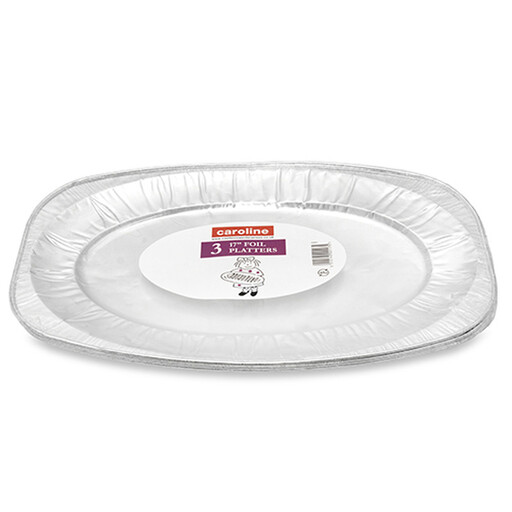
Why This Fits Their Persona: A three-pack gives hosts several large platters for buffets, family celebrations or BBQ food without requiring a full collection of heavy tableware.
The 430 x 286mm size and 30mm depth are stated clearly, helping shoppers judge capacity rather than relying on photographs.
Pack of three; broad surface; listed as reusable and recyclable, subject to local recycling acceptance.
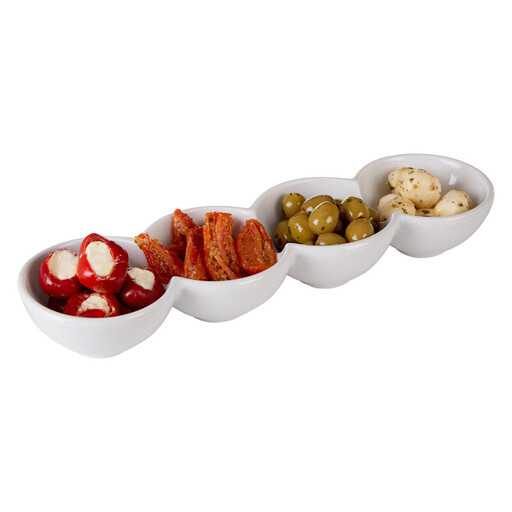
Why This Fits Their Persona: The white porcelain finish suits shoppers who want a reusable snack serving dish that works for both casual gatherings and more polished table settings.
Four separate sections reduce the need for several small bowls and help prevent dips and snacks from mixing.
Four-compartment layout; porcelain construction; listed as dishwasher safe.
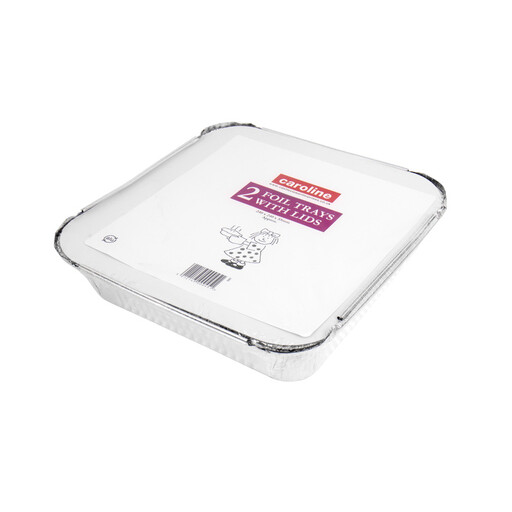
Why This Fits Their Persona: Meal-prep users, caterers and event organisers can cook, store and transport portions in the same container.
The matching lid addresses the common storage and transport problem. The listed 35mm depth also provides more containment than a flat platter.
Ovenable design; lids included; pack of two; listed capacity of 67.6oz.
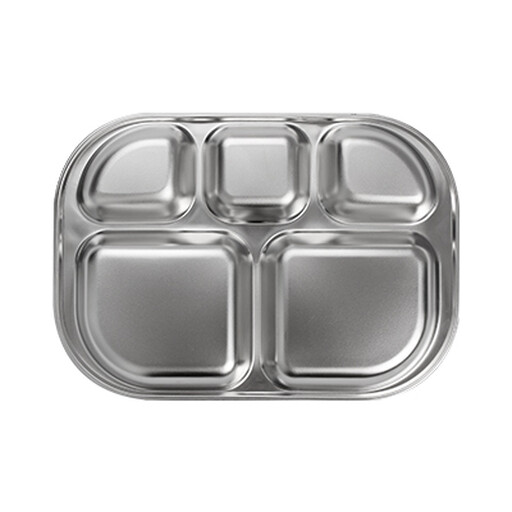
Why This Fits Their Persona: Five compartments suit households separating meal components, packed lunches, children’s portions or food for outdoor activities.
The listed 304 stainless steel construction avoids the uncertainty of vague material descriptions, while the five-section layout is stated clearly.
Food-grade 304 stainless steel; five independent sections; listed as dishwasher safe and suitable for hot or cold conditions.
For wine, crackers, fruit and sliced meats, a bamboo cheese board or charcuterie board creates a structured centrepiece. The Zimatic option includes a cheese knife set according to its product title, making it suitable for informal hosting and gifting.
If your priority is home styling rather than food contact, the Fifty Five South Rasmus set provides two iron decorative trays in a black-and-white ombré finish. The listed dimensions are 45 x 45cm with a 2cm height. These are intended for indoor use and should be wiped clean rather than immersed in water.
A rustic wooden serving tray can add a softer look to breakfast-in-bed setups, drinks or coffee-table displays. The White Label round tray measures 28 x 28 x 3cm and has curved edges. It is not intended as a cutting board and should be kept away from direct heat and prolonged moisture.
We have compiled a complete, real-time list of products that fully satisfy these strict selection criteria and UK safety regulations.
It depends on the material and product instructions. Foil trays specifically listed as ovenable can be used for cooking or reheating, but they should be placed on a baking sheet for extra support. Porcelain and stainless steel products may tolerate heat differently, so always follow the supplied care guidance.
Measure the available table space, then select a combination of shallow platters for sandwiches and cold foods and deeper trays for saucy or layered dishes. For larger groups, packs of multiple foil catering platters can simplify service and reduce washing up.
They can help separate foods and make portions easier to organise. Choose a stable design with suitable edges, supervise young children around breakable porcelain and allow hot food to cool before serving.