
24/7 Customer Support

Free returns

Same-day & Next-day Delivery

Quality Guaranteed

Unlock Your Welcome Offers: FREE Delivery | Up to 80% OFF | Free 30-day JoyPlus trial
Download the APP
Choosing nutritional supplements can seem straightforward until you compare fish-oil strength, vitamin content, age suitability and daily dosage. Marketing often highlights the total oil in a capsule, while leaving the actual omega-3 EPA and DHA amounts less visible.
This guide helps UK shoppers compare Seven Seas omega-3 supplements, multivitamins, pregnancy vitamins, joint care supplements and digestive support products. It focuses on label information, practical suitability and common buying pitfalls rather than broad health promises.
A capsule may contain 1,000 mg of fish oil, but that does not mean it provides 1,000 mg of omega-3. For example, some Seven Seas fish oil capsules provide 300 mg of omega-3, including 160 mg EPA and 100 mg DHA per capsule. Other formulations provide different amounts.
Compare:
This is particularly important when comparing standard products with extra-strength omega-3 options.
A general multivitamin may not match your age, sex or life stage. Seven Seas pregnancy vitamins contain folate, DHA, iron and vitamin D in a dual-dose format. By contrast, products for men over 50 or women over 50 contain different vitamin and mineral profiles.
Avoid buying based only on the number of nutrients. Check whether the formula includes ingredients relevant to your requirements and whether it contains nutrients you already take through other daily health supplements.
Many omega-3 products contain fish and gelatine. Joint formulas may also contain crustaceans, while some multivitamins include soya or sulphites. Always read the current packaging, especially if you have allergies or take prescription medicines.
Vitamin A, vitamin D, iron and iodine can appear in more than one supplement. Adding a cod liver oil product to a multivitamin without checking the combined intake can be an avoidable purchasing mistake.
EPA and DHA are the two omega-3 fatty acids most commonly listed on supplement labels. A product with a higher total oil weight is not automatically a higher-strength omega-3 product. Compare the actual milligrams per daily serving.
For example:
These are materially different formulations, so choose according to your intended intake rather than the front-of-pack wording.
Check the percentage of the Nutrient Reference Value (NRV) shown on the label. Some products contain 200% or 500% NRV of vitamin D, while others contain lower amounts alongside a wider multivitamin profile.
Vitamin D supplements may be useful for people specifically seeking vitamin D, but combining them with multivitamins, cod liver oil or immune-support products may increase total intake. Follow the stated serving and ask a pharmacist or healthcare professional if you take other products or medicines.
A one-capsule formula may be easier to maintain than a tablet-and-capsule duo, but a dual pack can combine omega-3 with targeted vitamins or minerals. Confirm:
For joint products, compare glucosamine and chondroitin quantities rather than relying on phrases such as “advanced” or “maximum”. Turmeric joint supplements should also be checked for turmeric quantity, additional omega-3 and interactions with existing medicines.
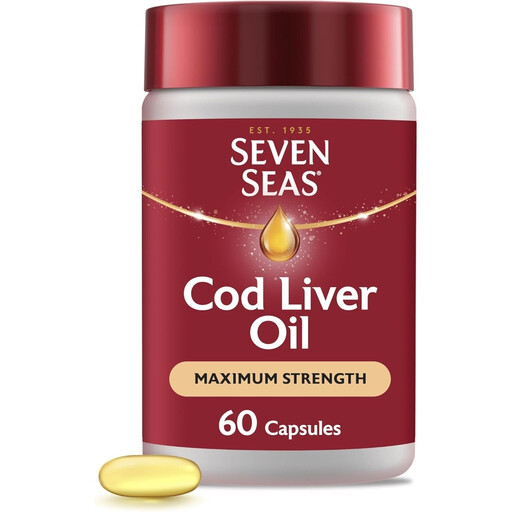
Why This Fits Their Persona: A straightforward one-capsule-a-day option for adults and teenagers over 12 seeking omega-3 alongside vitamins A and D.
The label lists combined omega-3, EPA and DHA separately, rather than presenting fish-oil weight alone.
One capsule daily; provides 308 mg combined omega-3 and 10 µg vitamin D per capsule.
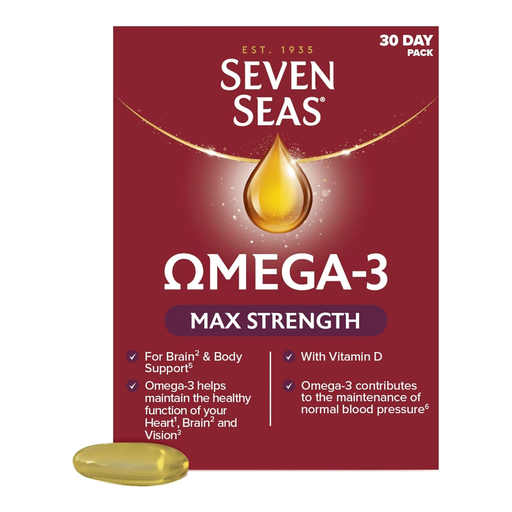
Why This Fits Their Persona: Suitable for over-12s and adults comparing concentrated omega-3 values with a compact 30-day format.
Its EPA and DHA figures are clearly stated, making comparison with standard Seven Seas fish oil capsules more practical.
Provides 1,063 mg omega-3, including 688 mg EPA and 313 mg DHA, plus 10 µg vitamin D.

Why This Fits Their Persona: Designed for pregnant women seeking a clearly defined daily combination of an omega-3 capsule and multivitamin tablet.
It states 200 mg DHA and 400 µg total folate, including folic acid and L-methylfolate, on the product information.
Includes iron, vitamin D, magnesium and B vitamins; gluten-free and lactose-free according to the supplied product details.
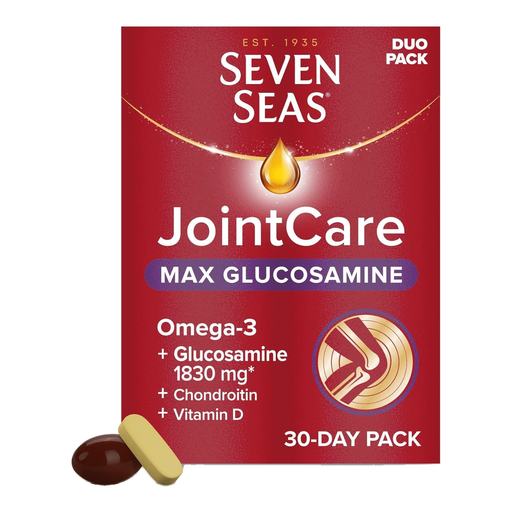
Why This Fits Their Persona: Intended for adults specifically comparing higher-strength joint formulas rather than general omega-3 products.
The serving combines one capsule and one tablet, with the glucosamine quantities shown separately rather than hidden behind a blend.
Provides 1,830 mg glucosamine sulphate 2KCl per serving, plus 184 mg omega-3 and 13.5 mg chondroitin.
For men over 50, the Seven Seas Omega-3 & Multivitamins for Men duo provides 22 vitamins and minerals, 300 mg omega-3, 25 µg vitamin D and 130 mg calcium per daily serving. The corresponding omega-3 for women over 50 formula also provides 300 mg omega-3, with 35 µg vitamin B12 and 150 mg calcium.
Those seeking digestive support may compare probiotic supplements such as the Omega-3 & Gut Friendly Bacteria product, which lists Bacillus subtilis DE111 at 1 × 10⁹ CFU per capsule, alongside 292 mg omega-3. This is a combined formula, so it may not suit shoppers who want to manage probiotic and fish-oil intake separately.
For lighter joint-care needs, JointCare Essential combines glucosamine, chondroitin, omega-3, vitamin C, vitamin D, zinc and manganese. A turmeric-based alternative includes turmeric extract with omega-3 and glucosamine. Check the full ingredient list before combining either with separate turmeric joint supplements or other joint products.
Some products are labelled for teenagers over 12, including selected fish oil and cod liver oil capsules. Others are intended only for adults, so check the individual product label. Do not assume that a stronger adult formula is suitable for a teenager.
A 30-day pack generally lasts 30 days when used at the stated daily serving. Duo packs may require one tablet and one capsule each day, while one-a-day products contain 30 capsules for a month. Follow the label rather than increasing the serving.
Some products are specifically combined, but stacking several supplements can duplicate vitamin D, vitamin A, fish oil or minerals. Check each label and ask a pharmacist or healthcare professional if you take medication, have a health condition, are pregnant or breastfeeding. All supplements should complement a varied, balanced diet rather than replace it.