
24/7 Customer Support

Free returns

Same-day & Next-day Delivery

Quality Guaranteed

Unlock Your Welcome Offers: FREE Delivery | Up to 80% OFF | Free 30-day JoyPlus trial
Download the APP
A loose button on a work shirt, a small tear in a child's favourite trousers or a hem that has come undone just before you leave the house—these minor wardrobe malfunctions can be a real nuisance. Having a well-stocked sewing kit on hand transforms these small emergencies into quick, simple fixes.
Whether you are a student heading off to university, a frequent traveller or simply someone who wants to be prepared for everyday repairs, finding the right kit can feel overwhelming. This guide is designed to help you understand what to look for in a hand sewing kit and to highlight a couple of practical options available.
Before you make a choice, consider these key points. A little thought now can ensure you get a kit that serves you well for years to come.
Your ideal kit depends on its primary use. Are you looking for a compact travel sewing kit to tuck into your luggage for on-the-go fixes? Or do you need a more substantial sewing kit for beginners to keep at home for small craft projects and more involved repairs? A smaller emergency mending kit will prioritise essentials in a tiny case, while a larger kit will offer a wider variety of thread colours, needles and accessories.
Regardless of size, any good sewing repair kit should contain a core set of tools. Look for a kit that includes:
The best kits are those where you can find what you need instantly. Look for a case that holds each item securely, often with elasticated loops or dedicated compartments. A case that zips open fully allows you to see all your tools at a glance, preventing you from having to rummage through a jumble of loose items. This makes a portable sewing kit far more practical to use.
Based on our review of available options, here are a couple of kits that offer a great balance of function, organisation and value.
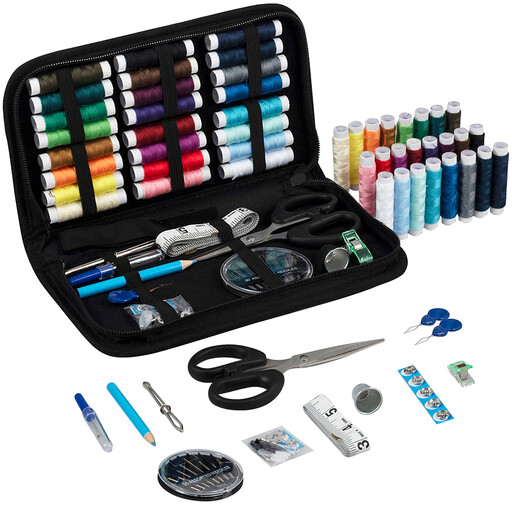
Why It Stands Out: This kit strikes an excellent balance between being comprehensive and portable. It contains a wide array of tools, including embroidery scissors, a 150cm tape measure, 30 hand needles and 24 spools of polyester thread. Everything is neatly arranged within a smart fabric case with elasticated loops, ensuring your tools stay organised whether at home or in your suitcase. The full-length zip allows it to open flat for easy access.
Pros:
Who is it for? This is a fantastic option for students, travellers or anyone needing a reliable kit for everyday mending. It’s also a great starter set for those new to sewing.
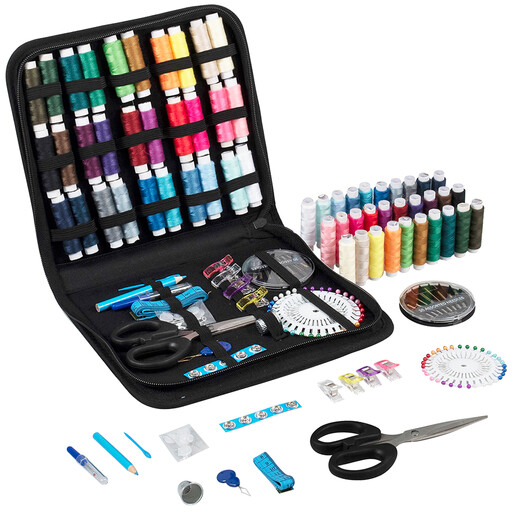
Why It Stands Out: For those who want a bit more from their kit, this premium option delivers. It builds on the essentials by including more supplies, such as 30 polyester threads, 32 pins, 4 wonder clips and a yarn needle for work with heavier materials. The fabric case is slightly larger but maintains a slim profile, opening fully to a width of 41.5cm to display its impressive contents. It’s a robust kit for handling a wider range of repairs and small creative projects.
Pros:
Who is it for? This kit is well-suited for keen sewers who appreciate having a broader toolkit. It also serves as an excellent and thoughtful gift for sewers or for beginners who want a comprehensive set that they can grow into.
While these kits are excellent all-rounders, your creative needs might call for something different. From embroidery to quilting and other textile crafts, having the right tools is the first step.
If you're interested in exploring a wider variety of creative tools and projects, browse our full collection of home craft kits.
A good basic sewing kit should contain needles in various sizes, a selection of threads in neutral colours (black, white, grey, navy), small scissors, a tape measure, a seam ripper, a thimble, safety pins and a needle threader. These sewing essentials will cover most common repair jobs.
Absolutely. A sewing kit is a practical and thoughtful gift for sewers of all levels. It's particularly useful for students moving into halls, new homeowners or anyone who enjoys crafts. It’s a gift that provides self-sufficiency for handling life's little clothing mishaps.
For a travel sewing kit, prioritise a compact size and a durable, secure case that won’t pop open in your luggage. Ensure it contains the bare essentials for emergency repairs: a few needles, small spools of black and white thread, a mini pair of scissors, a few buttons and safety pins.