
24/7 Customer Support

Free returns

Same-day & Next-day Delivery

Quality Guaranteed

Unlock Your Welcome Offers: FREE Delivery | Up to 80% OFF | Free 30-day JoyPlus trial
Download the APP
A sewing kit can be a practical solution for replacing a button, repairing a loose hem or handling a small craft project. However, many kits look comprehensive in photographs while offering limited practical value once opened. The key is to compare the actual contents, case design and intended use rather than relying on impressive piece counts.
This guide explains what UK shoppers should check before buying a sewing kit, whether they need a travel sewing kit, a home set or a complete sewing kit for regular mending.
An “80-piece” or “100-piece” sewing kit may count every pin, needle and thread spool separately. That number does not necessarily indicate a wider range of useful tools. A smaller kit with scissors, a tape measure, a seam ripper, needle threader, buttons and several thread colours may be more practical for everyday repairs.
Check whether the set includes the tools you will actually use, not simply how many individual items are listed.
A soft pouch or unstructured box can allow needles, pins and buttons to move around. This makes the kit harder to use and increases the chance of losing small items. Look for elasticated loops, compartments or a secure closure that keeps everything visible and in place.
Some cases are compact but too bulky for a handbag or suitcase. Others contain scissors or accessories that are unnecessary for occasional emergency repairs. Check the closed dimensions and think about where the kit will be stored. A portable sewing kit should be easy to carry without sacrificing essential tools.
For basic clothing repairs, a useful sewing kit with thread and needles should normally include:
If you are starting from scratch, a complete sewing kit containing these basics can be more convenient than buying individual sewing supplies for beginners.
Polyester thread is commonly included in general-purpose sewing kits because it is suitable for many everyday repairs and small projects. However, the amount supplied varies significantly. Some kits include compact thread cards, while others provide multiple spools.
For machine sewing, check whether the thread is intended for hand sewing, a standard sewing machine or both. A large thread collection can be useful for frequent sewing, but it may be unnecessary if you only expect to mend occasional tears or replace buttons.
Compare the packed size rather than only the open layout. For example, a case measuring around 12cm square may suit a handbag, student room or suitcase. A larger case around 22.5 x 20 x 3.5cm can offer more tools while remaining suitable for a drawer or craft caddy.
Also consider whether the case opens fully. A full-length zip or opening layout makes it easier to find a particular needle, button or thread colour without emptying the whole kit.
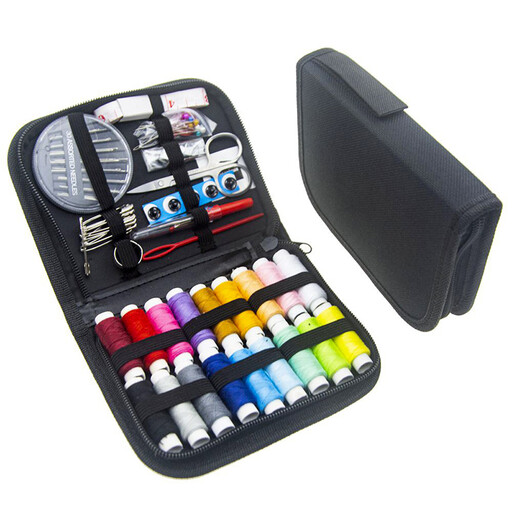
Why This Fits Their Persona: The named contents cover thread, needles, buttons and repair tools, making this a straightforward starting point for students, new tenants and households that need occasional mending supplies.
It focuses on named repair essentials rather than relying only on a headline piece count. Check the full listing before purchase for the exact colour range and storage format.
86-piece format; includes thread, needles, buttons and repair tools according to the product title.
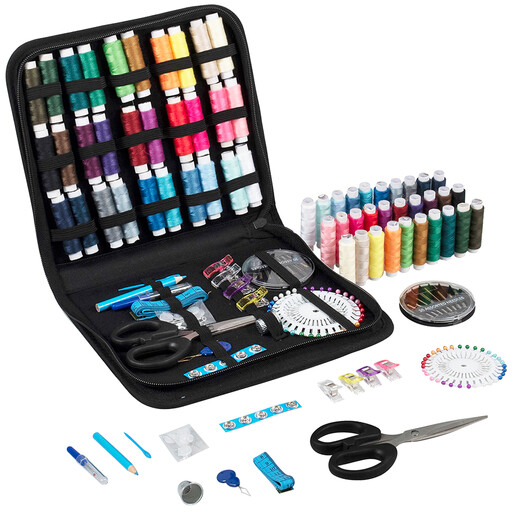
Why This Fits Their Persona: Home sewists and crafters who want a broad selection of organised tools may prefer its larger fabric case and clearly specified contents.
The contents are itemised, including scissors, seam ripper, needle threader, 30 hand needles, 30 polyester threads and fasteners. Elasticated loops reduce loose-item clutter.
Full-length opening; 64cm tape measure; includes wonder clips, snaps, pins and a thimble.
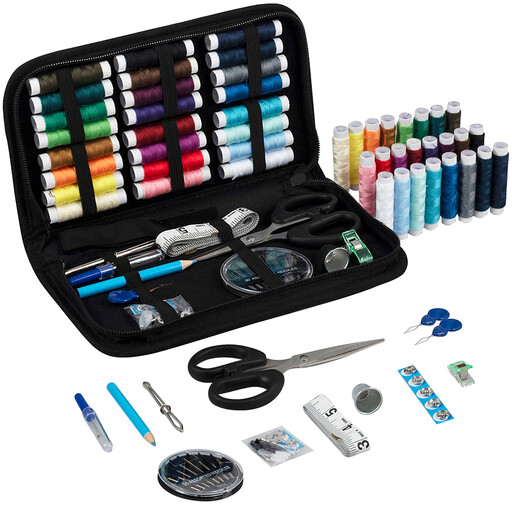
Why This Fits Their Persona: Regular home users, dressmakers and craft-class attendees receive a wide selection of repair and sewing accessories in a case designed for repeated access.
The specification lists 24 polyester threads, 30 hand needles, a seam ripper, bodkin, fabric pencil and 150cm tape measure, rather than leaving the contents vague.
Includes eight spare buttons, hook and bar, snaps, safety pins and a full-length opening.
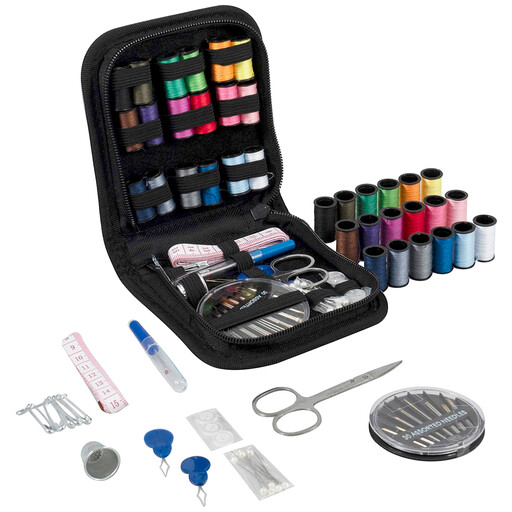
Why This Fits Their Persona: Its compact packed dimensions suit a suitcase, handbag, student room or sewing class where storage space is limited.
The closed size is 12 x 12.5 x 3cm, while the case opens to 27 x 12 x 2cm. This gives useful access without presenting it as a full-sized home sewing box.
Includes 30 hand needles, 18 polyester threads, a 150cm tape measure, scissors and six safety pins.
Keep needles, pins and scissors secured inside the case, particularly in homes with children or pets. Store the kit somewhere dry to help reduce corrosion on metal tools. For fabric work, use a suitable needle and thread rather than forcing a fine needle through thick material, as this can cause breakage or injury.
Scissors supplied in compact kits are generally intended for light cutting. For heavier fabrics, larger dressmaking scissors may be more suitable. Always check the product listing for dimensions and intended use before ordering.
A beginner’s sewing kit should include several needles, thread, small scissors, a tape measure, needle threader, seam ripper, spare buttons and safety pins. A case with labelled sections or elastic loops can make learning easier because each item has a clear storage place.
Yes, a travel sewing kit can handle common tasks such as replacing buttons, repairing small tears and securing loose hems. Its compact size may mean fewer thread colours or accessories than a larger home sewing kit, so frequent sewers may prefer a more comprehensive set.
The case and metal tools can remain useful for a long time when stored dry and handled carefully. Thread, needles and buttons are consumable supplies and will need replacing as they are used. Before buying, check whether replacement thread or additional sewing supplies are readily available in the required colours and formats.