
24/7 Customer Support

Free returns

Same-day & Next-day Delivery

Quality Guaranteed

Unlock Your Welcome Offers: FREE Delivery | Up to 80% OFF | Free 30-day JoyPlus trial
Download the APP
A sewing kit can be a practical solution for replacing buttons, repairing hems and handling small craft projects. However, not every compact case offers the same usefulness. Some sets look well stocked in product photos but contain very little thread, while others include tools that are difficult to store or unsuitable for the fabrics you use.
Before buying a travel sewing kit, portable sewing kit or general sewing repair kit, check what is genuinely included, how the contents are organised and whether the case suits your routine. The following guide highlights common buying traps and the specifications worth prioritising.
A listing may advertise dozens of pieces, but the total can include many small pins, duplicate needles or limited-length thread. For everyday repairs, the essential combination is more important than the headline number.
Look for a practical spread of hand needles, thread, scissors, pins, a tape measure and a seam ripper. Spare buttons, a thimble and a needle threader are useful additions, particularly in a beginner sewing kit.
Loose contents quickly become frustrating. A pouch without compartments may leave sharp tools mixed together, while a rigid case may take up more room than expected in a handbag, student accommodation drawer or suitcase.
Elasticated loops, a zip closure and a case that opens flat make tools easier to identify. For a compact sewing kit, check both the closed and open dimensions if they are provided.
A hand sewing kit is designed for manual mending and small projects. It will not usually include bobbins, machine needles or sufficient thread for regular machine work. Conversely, a machine-focused set may not contain a tape measure, thimble or hand-sewing needles.
Decide whether you need a sewing kit with thread, needles and scissors for hand repairs, or additional supplies for a sewing machine.
For occasional repairs, several thread colours are more useful than one large spool. Black, white, navy and neutral shades cover many common garments, although colour matching will depend on the fabric.
Check whether the thread is polyester, cotton or another material. Polyester thread is commonly used for general repairs because it is versatile, but the appropriate choice depends on the fabric and project. Also check whether “threads included” means full spools, thread cards or short pre-cut lengths.
A sewing essentials kit should ideally include:
For a sewing kit for travel, closed dimensions matter. A slim case around 3cm thick is easier to place in luggage or a drawer than a deep box. However, very small cases may limit the number of tools and thread colours.
A full-length opening can be useful because it displays the contents at once. This is especially helpful for students attending classes or hobby sewists moving between rooms. Always store sharp items securely and follow any included safety guidance.
A hand sewing kit is generally suitable for quick repairs, button replacement and small decorative tasks. An electric sewing machine may be more appropriate for repeated seams, hems or larger DIY projects, but it requires power, setup space and safe handling around the needle mechanism.
Mini machines with dual power options can be convenient, but check whether batteries are included, what stitch functions are available and whether the machine supports the fabric types you intend to use.
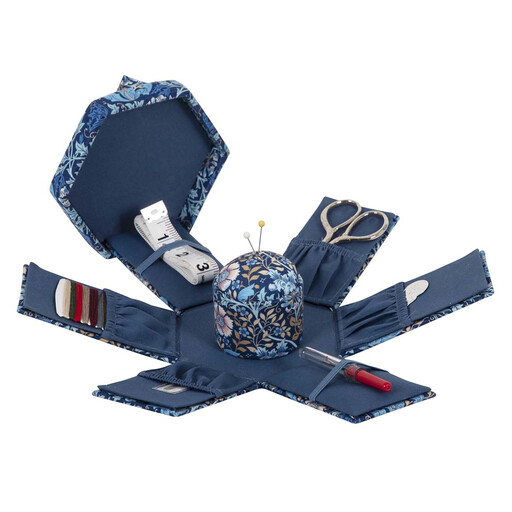
Why This Fits Their Persona: A small option for someone starting with basic repairs, keeping tools in a drawer, craft bag or sewing class kit.
The listed contents are clearly specified: scissors, three needles, pins, thread card, needle threader, tape measure and seam ripper.
Compact 11 x 11 x 12.3cm hexagonal cotton case with a decorative floral print; includes core hand-sewing tools.
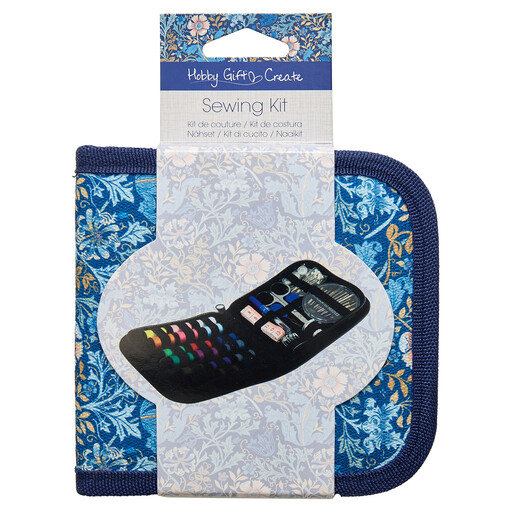
Why This Fits Their Persona: Suits households wanting a broader selection for clothing maintenance, creative details and regular mending.
The contents list gives specific quantities rather than relying only on a general piece count.
Includes 18 thread spools, 30 needles, scissors, tape measure, safety pins, seam ripper, thimble and needle threaders in a zipped case.
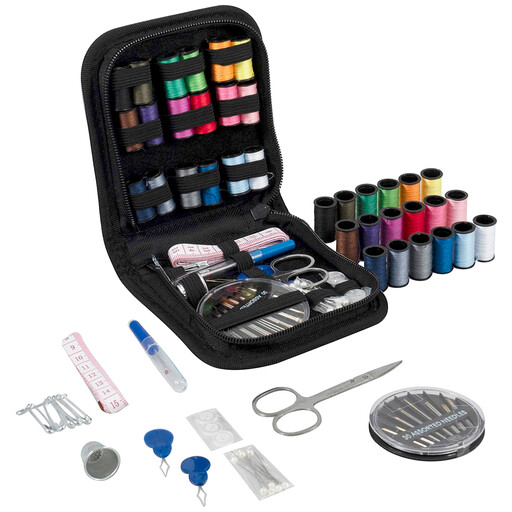
Why This Fits Their Persona: Its slim case is suited to suitcases, handbags, craft caddies, halls of residence and sewing classes.
Elasticated loops keep tools in place, while the full-length opening makes the contents visible instead of buried in a pouch.
Closed size is 12 x 12.5 x 3cm and the set includes 30 hand needles, 18 polyester threads, buttons, pins, scissors and tape measure.
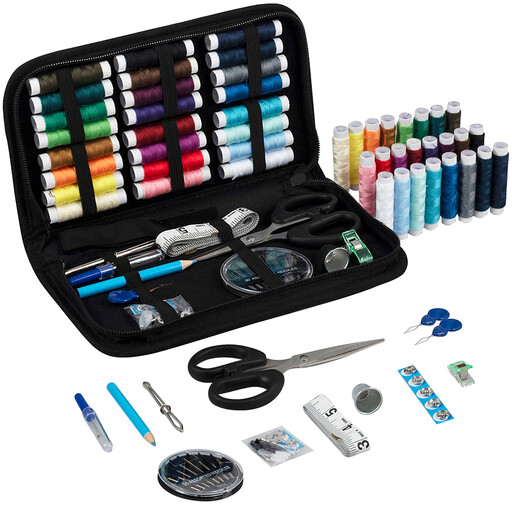
Why This Fits Their Persona: A wider tool selection works for frequent mending, garment alterations and small projects requiring different fasteners.
The specification identifies specialist additions such as a bodkin, fabric pencil, wonder clip, snaps and hook and bar.
Includes 24 polyester threads, 30 hand needles, 150cm tape measure and multiple repair fasteners in a 23.5 x 13 x 3.5cm case.
We have compiled a complete, real-time list of products that fully satisfy these strict selection criteria and UK safety regulations.
Keep thread dry and away from direct heat, and return needles and scissors to their holders after use. Fabric cases should only be spot-cleaned where the product instructions specify this; the hexagonal cotton case, for example, is listed as spot-clean only.
Replace bent needles, blunt scissors and thread that has become weak or tangled. If you use a kit frequently, record which colours and fasteners need replenishing so that a small repair does not require buying a new set.
A useful sewing kit for beginners should contain several hand needles, basic thread colours, scissors, pins, a tape measure, seam ripper and needle threader. A thimble and spare buttons are practical extras. Choose a case with visible compartments so you can learn where each item is stored.
Rules can vary by carrier and destination, particularly for sharp scissors and needles in hand luggage. Check the latest airline and airport guidance before flying. A zipped case that secures sharp items is preferable, but it does not override airline restrictions.
The case and tools may remain usable for a long time when stored properly, but consumables such as thread, needles and spare buttons will need replacing as they are used. Lifespan depends on frequency, storage conditions and the type of repairs undertaken. A kit with clearly replaceable contents can be more practical than one with unusual or difficult-to-match supplies.