
24/7 Customer Support

Free returns

Same-day & Next-day Delivery

Quality Guaranteed

Unlock Your Welcome Offers: FREE Delivery | Up to 80% OFF | Free 30-day JoyPlus trial
Download the APP
A sewing kit can be a useful household essential, but a low-cost box filled with loosely packed accessories may not deliver much practical value. Whether you are learning to sew, repairing clothing, attending a class or preparing for a journey, the right kit should make basic tasks easier rather than create another storage problem.
Before buying, watch for three common pitfalls:
A practical hand sewing kit for clothing repairs should generally include:
A sewing kit for beginners does not need every possible sewing tool. It should, however, cover common tasks such as replacing a button, closing a split seam, shortening a loose thread or making a small hem repair. For dressmaking or more detailed crafting, look for additions such as a fabric pencil, bodkin, wonder clips, snaps and a yarn needle.
A compact sewing kit is only useful if its contents remain accessible. Check both the closed and open dimensions. A case measuring around 12cm square can fit comfortably in a handbag or suitcase, while a larger set may offer more sewing supplies without becoming unwieldy.
Elasticated loops help keep needles, scissors and thread in position. A full-length opening can also be valuable because it allows you to see the complete contents at once. For a portable sewing kit, consider whether the closure is secure enough for travel and whether sharp tools are covered or held firmly in place.
The thread type and quantity matter more than decorative packaging. Polyester thread is commonly used for everyday mending because it is suitable for many general sewing tasks. Check the number of spools, thread length and colour selection before purchasing.
Scissors should be appropriately sized for the work. Embroidery scissors are convenient for trimming threads, while larger fabric scissors may be preferable for cutting cloth. Needles should be suitable for hand sewing and stored safely. A metal tape measure, secure thimble and clearly separated pins can improve usability.
Do not assume that a high piece count means a complete sewing kit. A well-selected set with fewer, relevant tools may be more useful than one containing accessories you are unlikely to use.
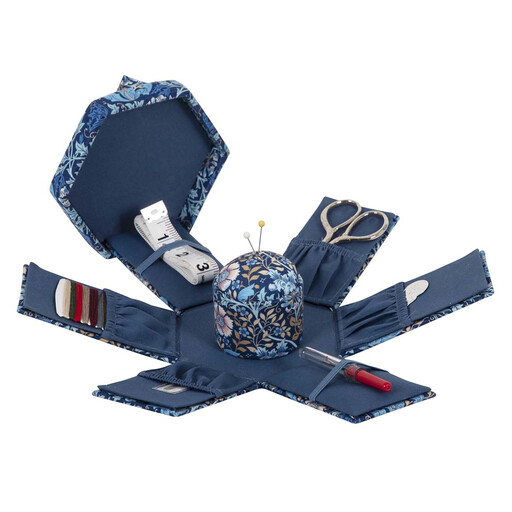
Why This Fits Their Persona: Its compact 11 x 11 x 12.3cm case provides a straightforward starting point for students, occasional menders and people building their first sewing supplies collection.
The listed contents are clear: scissors, seam ripper, needles, pins, thread card, tape measure and needle threader, rather than an unexplained piece count.
Cotton Victorian-style case; includes a seam ripper, scissors, tape measure and thread card.
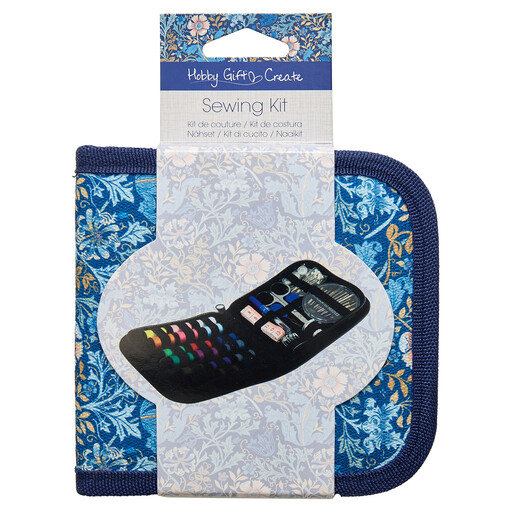
Why This Fits Their Persona: This organised fabric case suits keen sewists and crafters who want a broader selection of hand sewing tools in one home or workshop set.
The product description specifies 18 thread spools, 30 needles, scissors, tape measure, safety pins, a seam ripper, thimble and needle threaders.
Zippered cotton case; compact 2.5 x 12 x 12.5cm format; suitable for home use, travel and small projects.
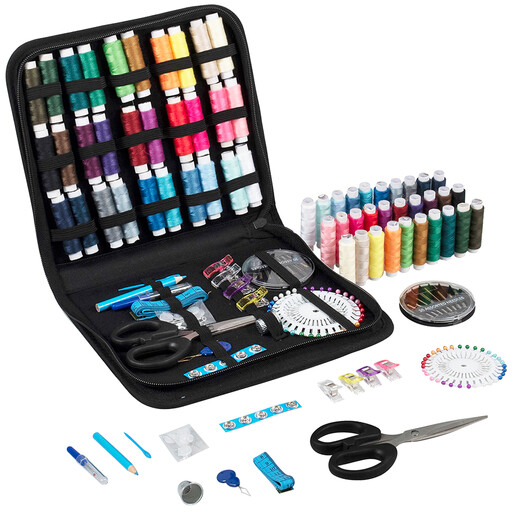
Why This Fits Their Persona: Its wider contents list is suited to frequent mending, sewing classes and small creative projects where basic kits may run short of useful accessories.
The contents are itemised, including 30 hand needles, 32 pins, four wonder clips, four snaps, a yarn needle, fabric pencil and 30 polyester threads.
Full-length opening; elasticated loops; closed size of 22.5 x 20 x 3.5cm for storage in a craft bag or suitcase.
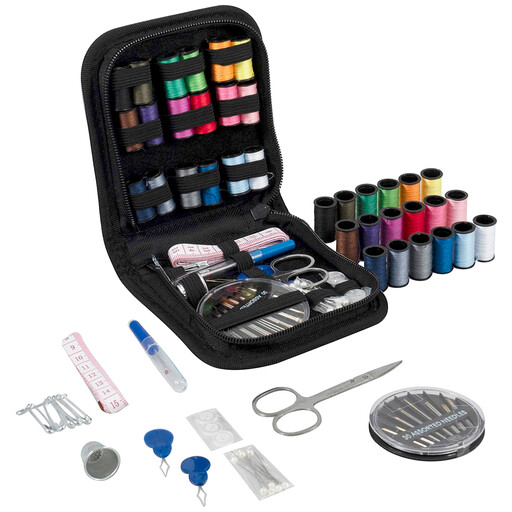
Why This Fits Their Persona: This travel sewing kit is sized for a handbag, craft caddy or suitcase, making it suitable for holidays, students and quick clothing repairs away from home.
The small case still lists scissors, a seam ripper, 30 hand needles, 18 polyester threads, pins, buttons, a thimble and a 150cm tape measure.
Elasticated storage loops; full-length opening; closed dimensions of 12 x 12.5 x 3cm.
We have compiled a complete, real-time list of products that fully satisfy these strict selection criteria and UK safety regulations.
Store needles and pins in their designated loops or a secure container. Keep scissors closed or covered when not in use, and avoid using sewing scissors on wire, plastic or other hard materials. Wipe metal tools dry if they become damp, particularly after being carried in a bag.
Thread can weaken through heat, moisture and prolonged exposure to sunlight. Keep spare spools in a dry drawer or closed case. Replace bent needles, rusty pins or damaged scissors rather than forcing them through fabric. A seam ripper should also be handled carefully and returned to its storage position after use.
If you are buying a sewing repair kit as a gift, prioritise clearly listed contents and a case that opens fully. For a regular sewist, compare the quantity of thread, needle variety and additional sewing tools instead of choosing solely by appearance.
A basic kit should contain hand needles, thread, sewing scissors, pins, safety pins, a tape measure and a seam ripper. A needle threader, thimble and spare buttons are useful additions for clothing repairs.
Yes, a travel sewing kit can handle small tasks such as replacing buttons, repairing hems and securing loose threads. Its compact size may mean fewer thread colours or accessories than a larger home sewing kit, so frequent sewists may prefer a wider set.
Keep sharp tools secured inside their case and store the kit in a dry place away from children. Close scissors, cover pointed tools where possible and check needles and pins periodically for rust or damage.