
24/7 Customer Support

Free returns

Same-day & Next-day Delivery

Quality Guaranteed

Unlock Your Welcome Offers: FREE Delivery | Up to 80% OFF | Free 30-day JoyPlus trial
Download the APP
Choosing between sewing kits and sewing machines depends on what you want to make, where you will use it and how much setup you are prepared to manage. A hand sewing kit may be enough for replacing buttons, while a portable sewing machine can make repeated hems and craft projects quicker.
The difficulty is separating useful features from persuasive packaging. Before buying, consider these common pitfalls.
An “86-piece” home sewing kit may sound extensive, but piece counts can include several thread colours, duplicate needles or small accessories. Check whether the set contains the tools you will actually use: scissors, needles, thread, a tape measure, a seam ripper, pins and a needle threader.
For occasional clothing repairs, a smaller sewing repair kit with well-organised contents may be more convenient than a bulky box filled with items you rarely need.
A mini electric sewing machine is convenient for light repairs and creative work, but compact designs vary in stitch control, fabric clearance and feeding strength. Product descriptions may mention denim or multiple fabric types, yet this does not mean every thickness or layered seam will feed smoothly.
Check the stated stitch options, power supply, speed controls and whether reverse sewing is available. For occasional hemming, simple operation may matter more than a long list of decorative stitches.
A portable sewing machine still needs a stable, well-lit surface and suitable power access. Battery operation can help in a student room, campervan or holiday accommodation, but batteries may not be included and can add to running costs.
Likewise, a hand sewing kit for travel must fit inside your luggage without loose needles or scissors causing inconvenience. A secure case and elasticated tool holders are practical details worth prioritising.
For a home sewing kit, look for a balanced selection rather than the highest stated quantity. Thread colours should match the repairs you commonly make, and needles should cover basic hand sewing. Useful additions include a thimble, safety pins, spare buttons, a seam ripper and a tape measure.
A clothing repair kit is more useful when its contents remain easy to find. Elasticated loops, a zipped case or a storage box can prevent needles, thread and clips from becoming scattered in a drawer or craft bag.
A beginner sewing machine should have clear threading instructions, accessible speed controls and a straightforward power switch. Dual-speed operation is useful when learning, as a slower setting allows more deliberate fabric handling.
Machines with several built-in stitches may support hems, seams and decorative work. However, stitch quantity should be assessed alongside practical controls such as:
Always check the product instructions for compatible fabrics, needle installation and safe operation. Keep fingers away from the needle area, unplug the machine before threading or maintenance, and follow the manufacturer’s guidance for children. A child-friendly craft activity should still be supervised.
For travel or small homes, compare the closed dimensions and weight rather than relying only on the word “portable”. A compact hand sewing kit may fit in a handbag, whereas a mini electric sewing machine generally needs room for its base and power cable.
Battery-powered models offer flexibility, but confirm the battery type and whether batteries are supplied. Use only the stated adapter or battery arrangement, and do not operate both power sources at the same time where the instructions prohibit it.
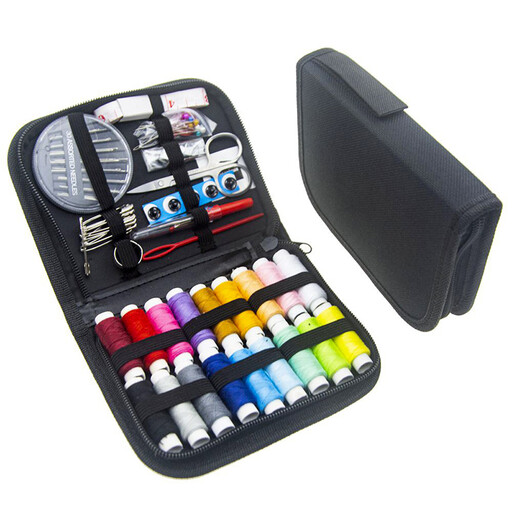
Why This Fits Their Persona: A practical starting point for students, parents and households that need basic sewing supplies for occasional repairs without buying a machine.
The listed contents include thread, needles, buttons and repair tools, making it easier to check what is included rather than relying on the piece count alone.
Broad selection for basic hand sewing; suitable for keeping at home as an everyday repair kit.
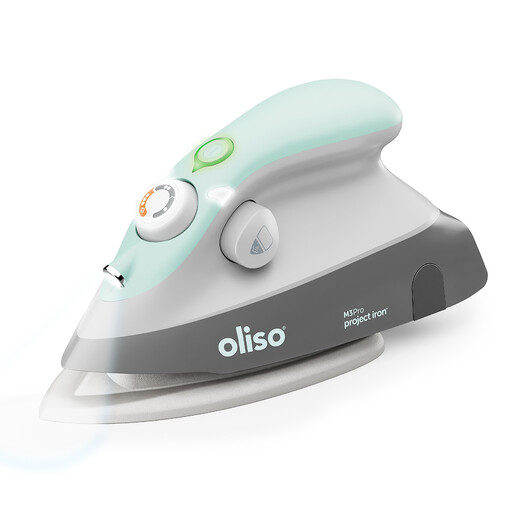
Why This Fits Their Persona: Suitable for sewists who already have core tools and want a compact pressing accessory for quilting, garment making or craft sessions.
Its compact size is specified for placement beside a sewing machine or inside a travel bag, rather than leaving portability as an undefined marketing phrase.
Detailer tip, dual steam and illuminated ProLight feature; includes automatic safety shutoff modes.
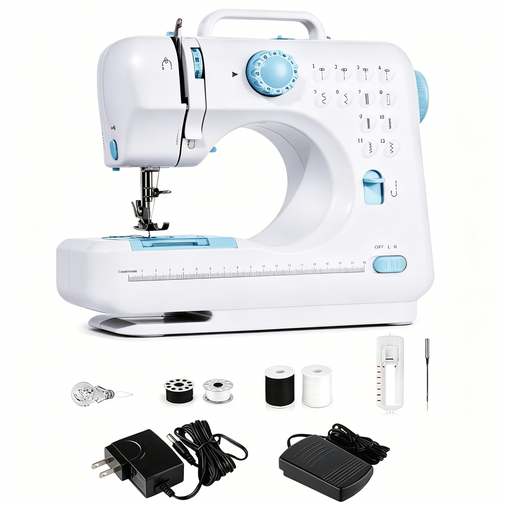
Why This Fits Their Persona: A practical match for hobby makers handling recurring hems, clothing mending, home DIY and children’s supervised craft activities.
The specification lists 12 stitch patterns, adjustable high and low speeds, dual-thread operation and reverse sewing, giving clearer information than a general “powerful” claim.
Supports an adapter or four AA batteries; includes an LED light, thread cutter, foot pedal and built-in storage compartment.
It can be suitable when it has clear threading guidance, adjustable speed and simple controls. Start with scrap cotton, practise straight lines and check the needle and thread tension before moving on to clothing. A hand sewing kit may be easier for one-off repairs.
A fabric case and tools can remain usable for years when stored dry and kept away from excessive heat. Thread is more likely to deteriorate first, particularly if exposed to sunlight or damp. Replace blunt needles, rusty pins and damaged scissors rather than forcing them through fabric.
Plug-in operation generally avoids regular battery purchases. Battery mode is useful when travelling or working away from a socket, but check whether the required batteries are included. Electricity use also depends on how long the machine operates and the adapter supplied.