Who is this for?

Layered-sleeve makers

If your sleeves combine an outer fabric, lining and wadding or interfacing, focus on keeping those layers aligned through seams and corners. Check the feeding options on the exact machine rather than choosing by decorative stitch count.

Shared-workshop regulars

If you carry a machine between sessions, its size, storage arrangements and setup matter alongside its sewing controls. Ask the venue about personal electrical equipment before choosing a machine to bring in.

Small-batch sleeve makers

If you sew sleeves repeatedly, room to guide the fabric and controlled speed may matter more than portability. A larger machine also needs somewhere practical to stay or be stored between sessions.

What matters when choosing?

Start with a sample of your intended fabric layers, then weigh workshop handling against the space and controls you need for your sewing frequency.

ConcernWhat to checkWho this matters to
Even feeding Test your thickest sleeve stack; check whether the exact model includes an even-feed foot, has adjustable presser-foot pressure or accepts a compatible feeding accessory. When my outer fabric, lining and padding shift against each other, I need their edges to stay aligned at seams and corners. Around 40% of consumers put control of layered feeding first.
Workshop handling Check carrying and storage arrangements, the intended power supply and the venue’s rules for personal machines. If I have to bring a machine to each session, I need one I can move, set up and use under the workshop’s rules. For around 30% of consumers, workshop handling is the primary concern.
Repeated sewing Consider usable space beside the needle and speed control in light of how many sleeves you plan to make per session. Making sleeves repeatedly means I need room to guide panels without choosing a machine that is impractical to store. Repeat-production needs come first for around 30% of consumers.

Mistakes to avoid

  • Assuming “heavy duty” settles the question of layered seams

    A machine described for thicker fabrics will not necessarily feed your particular combination of outer fabric, lining and padding evenly.

    Try straight seams, corners and any zipper-adjacent seams on a sample of the thickest stack you intend to use. Check compatible feet before buying.

    A suitable feeding foot or different needles may need to be obtained separately.

  • Assuming a walking foot comes in the box

    Janome lists an even-feed foot with the 5060QDC, but accessory compatibility and supplied contents differ between machines.

    Check the exact model and variant’s included-accessory list, and match any separately chosen foot to that machine.

  • Choosing a mini machine for its size alone

    Compact dimensions and a stitch count do not establish how a machine will handle a padded book-sleeve stack.

    If you need to carry a mini machine to the workshop, test your intended layers before relying on it for repeated sleeves.

  • Overlooking the workshop’s equipment procedures

    For equipment used at work, the Health and Safety Executive advises checking that it is suitable for its intended use and in good condition. The venue may also have its own arrangements for personal machines.

    Ask whether you may bring a mains-powered machine, where it can be stored and what checks or induction the venue requires. Inspect the machine, plug and cable before use.

    Venue procedures may take time before you can use your machine there.

Brands to consider for book-sleeve projects

Janome

Its UK range includes portable computerised machines and larger flat-bed models, giving buyers different ways to balance layered-work controls against carrying and storage.

  • Janome UK lists an extension table, adjustable foot pressure, speed control and an even-feed foot with guide for the 5060QDC.
  • The larger Memory Craft 6700P is listed at 11.5 kg, a consideration if you carry a machine to every session. Janome also links its after-sales care and warranty guidance to buying through an official UK retailer.

SINGER

Its mechanical Heavy Duty range is a route to consider for straightforward seams in firmer fabrics.

  • SINGER UK lists a full metal frame and stainless-steel bed plate for the Heavy Duty 4411.
  • Do not assume an even-feed foot is supplied or compatible with every model; check the machine series and the exact accessory.

PFAFF

Models equipped with Original IDT offer an integrated dual-feed option for buyers concerned about shifting layers.

  • PFAFF describes Original IDT as feeding fabric from above and below.
  • That is the manufacturer’s description, not a result for your sleeve materials. Confirm that the shortlisted model has IDT and test the intended stack.

BERNINA

The compact 3 Series is worth examining when working space, foot-pressure controls and dealer support are part of the decision.

  • BERNINA lists 6.3 inches of working space for the series and adjustable presser-foot pressure on the B 335.
  • Check the precise model and supplied feet rather than assuming those details apply to every machine in the range.

Joybuy products for compact setups

These portable machines are options to examine if moving or storing a machine between workshop sessions matters. Test your intended book-sleeve layers before deciding whether either suits the seams you need to sew.
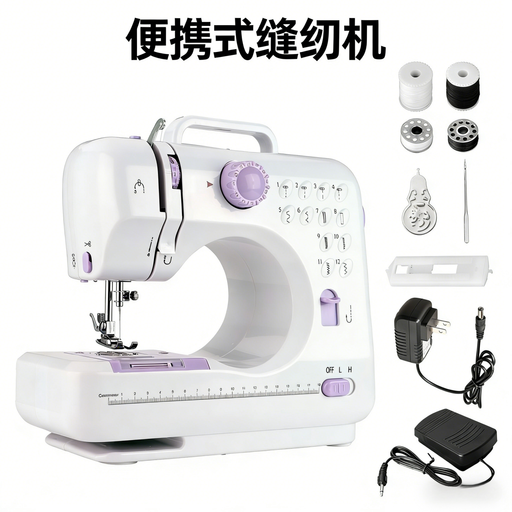
Purple IAGREEA Mini Portable Electric Sewing Machine, 12 Stitches

IAGREEA Mini Portable Electric Sewing Machine, 12 Stitches, Purple

Consider this portable machine for straightforward sleeve seams only if a test on your intended layers is satisfactory.

The purple variant lists 12 stitches, dual power and an LED light. Check feeding-foot compatibility and the workshop’s power and equipment requirements before use.

View on Joybuy
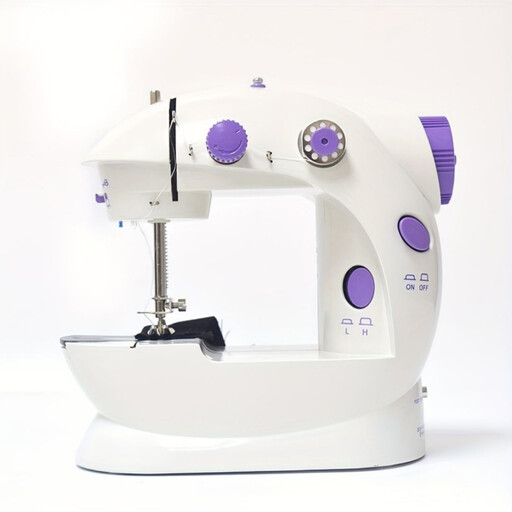
IAGREEA Portable Mechanical Electric Sewing Machine with pedal

IAGREEA Portable Mechanical Electric Sewing Machine with Pedal, 6V 1A

This portable model may suit simple sleeve seams if its stitch controls and performance on your full fabric stack meet your needs.

Its title specifies pedal operation, 6V 1A, and battery or plug-in power, using four AA batteries for battery operation. It lists thread shuttle cores, a spare needle and a threading device. Check the stitch options, power arrangement and workshop rules before relying on it.

View on Joybuy

Common questions

Which feature should I prioritise for padded book sleeves?

Prioritise control of the complete material stack if its layers tend to shift while you sew. Check whether the exact machine has an even-feed foot, an integrated dual-feed system or adjustable presser-foot pressure, then test a sample with your intended materials.

Can a heavy-duty mechanical machine sew book sleeves?

It can suit straightforward sleeves if it makes satisfactory seams on your actual layered sample. SINGER describes its Heavy Duty range as intended for thicker fabrics and long seams, but the label alone does not establish even feeding or the contents of a particular model’s accessory box.

What should I check before taking my own machine to a shared workshop?

Ask whether the venue permits personal machines and what it requires for setup, inspection, induction and storage. If the machine is used for work, Health and Safety Executive guidance says to check that electrical equipment is suitable for its use and in good condition; inspect the machine, plug and cable, and confirm the intended power supply.

How should I plan for servicing a machine used at a workshop?

Check the chosen brand’s service route and the warranty terms for your intended use, and keep proof of purchase. Janome advises buying through an official UK retailer for its after-sales care and warranty; that advice is specific to Janome, not a rule for every brand.