For ordinary cotton or linen napkins, start with a machine that volunteers can thread and set for a straight stitch, adjustable stitch length and reverse sewing; a large stitch selection is less important. Consider a sturdier mechanical machine for frequent shared sessions, or a heavy-duty model if the group also plans to sew thicker fabrics or several layers. Check those functions and the included accessories on the exact machine before buying.
Who is the machine for?
Beginner volunteer coordinators
If different volunteers will take turns, look for controls they can return to the same straight-stitch setting. Janome UK & Ireland describes its J3-18 as a starter machine for occasional use, with two dials, variable stitch length and a built-in needle threader.
Regular shared-workshop organisers
Repeated sessions make straightforward handovers, storage and a repair route important. Janome UK & Ireland positions its metal-bodied 423S and HD2200 for school or heavier-use settings; that positioning is not a durability guarantee for a particular project.
Mixed-project sewing groups
If the group will also make items from thicker fabric or sew long seams, assess those materials as well as the napkins. SINGER describes its Heavy Duty range for thicker fabrics and long seams, rather than as a requirement for ordinary hems.
What matters when choosing?
Choose according to how often volunteers will share the machine and what else they will sew, then check the controls and setup on the exact model.
Simple mechanical starter
Choose when: Sessions are occasional, volunteers are mostly beginners and the work is limited to ordinary woven napkins.
Trade-off: Straightforward controls suit handovers, but do not establish suitability for sustained shared use.
Sturdier mechanical machine
Choose when: Several volunteers will use one machine in regular sessions. Janome UK & Ireland positions its metal-bodied 423S and HD2200 for heavier-use settings.
Trade-off: Check whether the group can move and store the particular machine conveniently.
Heavy-duty machine
Choose when: Napkins are part of a wider project involving thicker fabrics, several layers or long seams, the uses SINGER names for its Heavy Duty range.
Trade-off: The label alone cannot tell you how the machine will stitch the intended napkin fabric; test a sample hem.
| Concern |
What to check |
Who this matters to |
| Repeatable operation |
Check straight-stitch and reverse controls, adjustable stitch length and how the machine is threaded. |
If volunteers change between sessions, I want each person to reproduce the same hem without working through unfamiliar settings. Around 31% of consumers put repeatable operation first. |
| Regular shared use |
Check the stated construction, accessible controls and the retailer’s service and repair arrangements for the exact model. |
For frequent group sessions, I need a machine we can hand over and maintain over time. Roughly 31% of consumers prioritise regular shared use. |
| Fabric flexibility |
Check suitability for the intended fabrics and layers, then try the hem with an appropriate needle, thread and presser foot. |
Our group may sew thicker items as well as napkins, so those other materials could determine which machine we choose. Around 23% of consumers make fabric flexibility their main concern. |
| Storage and transport |
Check the machine’s weight, what comes with it for storage and whether the venue has a suitable table and socket. |
When equipment must be carried in and put away after each session, I need a machine the group can handle and store. About 15% of consumers put this practical need first. |
Mistakes to avoid
-
Choosing by stitch count
More decorative stitches do not show whether volunteers can set up and repeat a straight napkin hem.
Check the basic seam controls and ask to test the intended fabric before treating a larger stitch selection as useful.
-
Buying heavy-duty for napkins alone
SINGER positions its Heavy Duty range for thicker fabrics and long seams. That does not establish a need for one when the project involves only ordinary woven napkins.
Decide whether thicker or layered materials are genuinely part of the project, and compare a sample hem on the machines under consideration.
-
Treating a PAT label as the whole safety plan
The Health and Safety Executive says annual portable appliance testing is not a universal legal requirement. For equipment used in a work activity or under an organisation’s control, maintenance to prevent danger remains the relevant duty.
Check the plug, cable and machine condition before sessions and take faulty equipment out of use. Arrange inspection, maintenance and competent testing as appropriate to the equipment and setting.
Brands to consider
Janome
Janome UK & Ireland describes the J3-18 for occasional starter use and its metal-bodied 423S and HD2200 for more demanding settings.
- The J3-18 listing includes variable stitch length and a built-in needle threader.
- Check the exact model’s controls, included accessories and service arrangements against the group’s intended use.
Brother
Brother provides UK documentation for the FS60x, a computerised option for groups considering guided sewing functions.
- Brother’s FS60x support material includes a manual, sewing guide, quick-reference guide and stitch chart.
- Check the exact machine’s retail configuration and controls before deciding whether those functions help with volunteer handovers.
SINGER
SINGER presents its Heavy Duty range for thicker fabrics and long seams that might feature in projects beyond napkins.
- SINGER describes the Heavy Duty 4423 as having a metal frame and adjustable presser-foot pressure.
- Confirm the exact UK model configuration and retailer support, and assess its stitching on the project’s fabric.
Joybuy machines for basic projects
These compact IAGREEA machines are relevant to groups considering a portable machine for basic napkin sewing. Before choosing either one, confirm its straight-stitch settings, adjustable stitch length, reverse function and suitability for the intended fabric and venue.
 No image available
IAGREEA Mini Portable Electric Sewing Machine, purple
A compact option to assess for occasional napkin-sewing sessions; confirm that its seam controls meet the group’s needs.
The product name lists 12 stitches, dual power and an LED light. Check electrical-supply suitability, instructions and seller support for the exact item.
View on Joybuy
 No image available
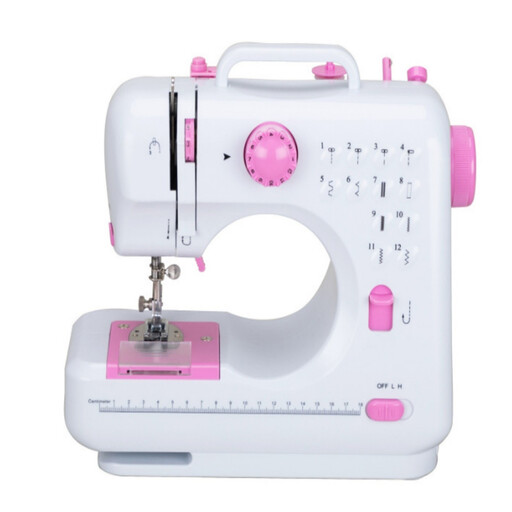
IAGREEA Mini Portable Electric Sewing Machine, pink
A compact option to assess for occasional napkin-sewing sessions; test a hem at the intended fabric thickness.
The product name lists 12 stitches, dual power and an LED light. Confirm straight-stitch and reverse controls, adjustable stitch length, electrical-supply suitability, instructions and seller support for this item.
View on Joybuy
Common questions
Do we need a heavy-duty machine just to hem napkins?
Not for ordinary woven napkins alone: prioritise a repeatable straight stitch and controls volunteers can use. Consider the heavier-fabric route if the group will also sew thick materials, several layers or long seams; SINGER positions its Heavy Duty range for those uses.
What should we check before the first sewing session?
Test a straight stitch on the actual napkin fabric at the intended hem thickness. Check that the presser foot suits the stitch and that the needle and thread suit the material; Brother’s straight-stitch guidance identifies these setup choices as relevant to stitch problems.
Does a community sewing machine need annual PAT testing?
Not automatically: the Health and Safety Executive says the regulations do not prescribe annual portable appliance testing. Where the machine is used in a work activity or under an organisation’s control, it should be maintained to prevent danger, with checks appropriate to the equipment and setting.
What should we check when buying a machine for use in Great Britain?
Confirm that the exact machine is suitable for the local electrical supply and comes with applicable instructions, identifiable model details and a clear seller-support route. Keep its purchase documentation, and do not treat a product marking alone as proof that a particular machine suits the group’s venue.


