What matters when choosing?
Start with a sample of the thickest planned seam: controls and workspace are useful only if the machine can handle the project’s materials as its instructions permit.
Simple mechanical machine
Consider it when: Volunteers mainly need basic seams and controls they can learn and reset easily.
Keep in mind: Simple operation does not establish how the machine will feed bulky seam crossings.
Heavy-duty mechanical machine
Consider it when: Layer handling is the main concern; Singer lists extra-high presser-foot lift and adjustable pressure on the Heavy Duty 4432.
Keep in mind: Those features do not replace a test of the actual stack or the model’s instructions.
Computerised machine with workspace features
Consider it when: Repeated batches make controlled speed or material support particularly useful.
Keep in mind: Volunteers will need to learn and consistently reset the controls they use.
| Concern |
What to check |
Who this matters to |
| Feeding layered seams |
Test the planned fabric-and-wadding stack at a crossed seam. Check the exact manual’s thick-material guidance and compatible presser feet. |
If bulky joins stall or require force, I cannot rely on the machine for our pattern. Around 42% of consumers put feeding the layered stack first. |
| Repeatable batch work |
Check whether speed control, usable workspace or an extension table would help at the shared workstation. |
When several volunteers make the same item, I want a pace and setup they can repeat; around 33% of consumers prioritise that workflow. |
| Ease of training |
Have likely users try threading, bobbin loading, stitch selection and reverse stitching on the exact model. |
I need occasional volunteers to resume work without learning a complicated interface. For around 25% of consumers, straightforward setup is the primary concern. |
Relevant brands to consider
These examples illustrate different controls and workspace features; suitability still depends on the particular machine and the project’s material stack.
Janome
Its cited UK range includes straightforward mechanical models and computerised sewing and quilting machines.
- Janome lists two-dial operation for the 2200XT; the HD2200 has adjustable foot pressure and an automatic needle threader.
- The Atelier 3’s 210 mm arm space and speed control are features of that model, not every Janome machine. Test the chosen model with the planned seams.
Singer
The cited models offer different approaches to layer handling and organised batch work.
- Singer lists extra-high presser-foot lift and adjustable pressure for the Heavy Duty 4432, and an extension table and eight presser feet for the C5655.
- Neither a heavy-duty label nor an included table establishes how the project’s thickest seam will sew.
PFAFF
PFAFF’s UK brand range spans sewing, quilting, embroidery and overlock machines.
- The range may be relevant if the group later considers quilting or specialised accessories.
- Compare the exact model’s controls, approved accessories and thick-material instructions before choosing it for pot holders.
Joybuy product choices
These portable household machines offer options for basic sewing and straightforward setup. For community pot holders, check each model against the planned layered seams before relying on it for the project.
 No image available
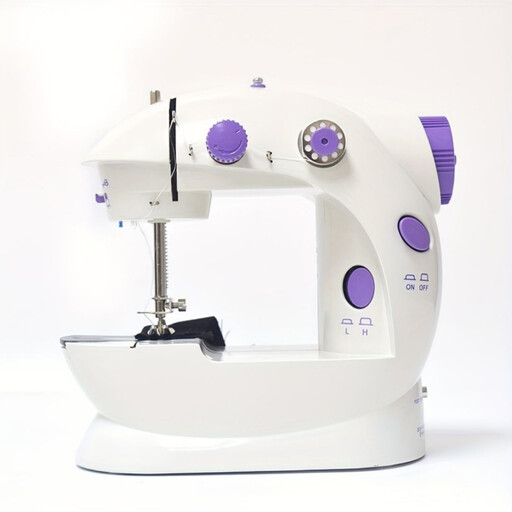
IAGREEA Mini Portable Electric Sewing Machine, 12 stitches, purple
A portable option to assess if volunteers need a machine for basic sewing tasks. The product name specifies 12 stitches, dual power and an LED light.
Check the exact manual and test the planned pot-holder layers and crossed seams without forcing them; confirm the power documentation for the group’s intended use.
Joybuy
 No image available
IAGREEA Portable Mechanical Electric Sewing Machine with pedal, 6V 1A
Consider this model only if its basic stitching suits the group’s pot-holder pattern: its stated limitations include one fixed stitch type and no backstitch function.
The product name specifies pedal control, battery or plug-in power using 4 AA batteries, and included thread shuttle cores, a spare needle and a threading device. Check its instructions, power documentation and ability to sew the actual layered sample.
Joybuy
Common questions
Do community pot holders require an industrial sewing machine?
Not necessarily: a domestic machine may suit the project if it sews the actual layered materials and seam intersections within its instructions. Test a sample and check the exact model’s presser-foot clearance, feeding setup and thick-material guidance.
Will heat-resistant wadding make a pot holder heat-proof?
No. Morris Works says its insulated wadding provides heat resistance rather than heat proofing and suggests an additional cotton or wool wadding layer for pot holders. Follow the chosen material’s instructions and avoid claims about protection beyond them.
What should volunteers try before choosing a shared machine?
Have likely users try threading, bobbin loading, the required stitches, corner turns and the thickest planned seam. Check which feet are included or approved for the exact model and follow its instructions if feeding becomes difficult.
What electrical information should the group check?
Check the exact machine’s plug and voltage information, instructions, seller support and applicable marking documentation. Department for Business and Trade guidance dated 21 August 2026 addresses recognition of CE and UKCA marking in Great Britain under applicable product rules; ask the seller about the relevant arrangements if the machine will be supplied in Northern Ireland.


