Volunteer coordinators introducing new users
When different people use the machine at each session, controls that are easy to demonstrate matter. Compare bobbin access, lighting and speed control with the simplicity of a mechanical dial arrangement.


For a community project making fabric scrunchies, start with a machine that can sew a straightforward seam and secure it with reverse stitching; a large decorative-stitch range is not needed for the basic fabric tube. A mechanical machine suits a group able to demonstrate its controls, while a computerised model with speed control may make sessions easier to manage when novice users rotate through. Consider a mini machine only after checking its exact stitches, instructions and suitability for the planned frequency of shared use.
When different people use the machine at each session, controls that are easy to demonstrate matter. Compare bobbin access, lighting and speed control with the simplicity of a mechanical dial arrangement.
Twinkl describes a fabric tube sewn with a straightforward seam before elastic is inserted. If that is the project's main task, establish that the machine can make and secure the seam before considering decorative stitches.
A machine used across sessions needs a practical routine for instruction, condition checks and maintenance. Where an organisation provides or controls it as work equipment, the Health and Safety Executive's guidance on suitable equipment and adequate instruction may apply.
Choose when: Someone can show each user how to thread the machine and set up a straightforward scrunchie seam.
Trade-off: Users work with direct controls rather than a dedicated speed controller or electronic setup aids.
Choose when: Novice volunteers rotate through sessions and a facilitator wants to control sewing speed while demonstrating the machine.
Trade-off: Additional controls and stitch choices need explaining, even though the basic scrunchie seam does not require them.
Consider when: Storage space is limited and the group expects only occasional sewing.
Trade-off: Check the exact model's seam controls, instructions and arrangements for repeated shared use before relying on it for regular sessions.
Whichever type the group considers, settle the seam-making requirement before weighing convenience features, transport and the arrangements for shared use.
| Concern | What to check | Who this matters to |
|---|---|---|
| Simple shared operation | Try the bobbin setup and controls; check for a work light or speed controller if the group would use one. | When volunteers change between sessions, I need to demonstrate the setup without spending most of the session on it. Around 36% of consumers put simple shared operation first. |
| Dependable repeated use | Check the model's instructions and maintenance arrangements, and plan condition checks before sessions. | If the group will sew regularly, I need a machine we can inspect and keep in suitable condition. For around 29% of consumers, dependable repeated use is the primary concern. |
| Transport and storage | Check the machine's weight, what carrying protection is included and whether each venue has a stable table. | We move equipment between venues, so I need to carry and store the machine without losing a suitable place to sew. Easy transport and storage come first for around 21% of consumers. |
| Essential seam functions | Confirm a straight stitch, reverse function and adjustable stitch length on the exact model. | We are making fabric tubes rather than decorative projects, so I want the required seam controls before extra stitch choices. Around 14% of consumers make essential functions their first priority. |
Twinkl's scrunchie instructions use a straightforward sewn fabric tube followed by elastic insertion. Decorative stitches do not replace the controls needed to sew and secure that seam.
Confirm the exact machine's straight stitch, reverse function and stitch-length control, then decide whether the group has another use for additional stitches.
A compact format and a list of stitch patterns do not establish how an individual model will fit repeated use by different people.
Check its manual, seam controls, included accessories and support arrangements against the group's planned session frequency.
The Health and Safety Executive says annual portable appliance testing is not automatically a legal requirement. It also stresses visual examination as part of keeping electrical equipment safe.
Set checks and any competent inspection or testing according to the equipment and its use; look at the cable, plug and visible machine condition before a session.
Where work-equipment duties apply, the Health and Safety Executive calls for suitable, maintained equipment and adequate information, instruction and training. Its sewing-machine guidance also addresses lighting and switching power off for adjustments and needle changes.
Have a session lead demonstrate the model using its manual, provide a stable, well-lit work area and stop using equipment that appears unsafe.
These models illustrate different control arrangements for the same scrunchie-making task; assess the particular machine rather than assuming that every model from a brand works alike.
The mechanical 224A and computerised 230DC give the group two different ways to approach a straightforward seam and shared-machine setup.
The SH40 is an electronic example to consider when different beginners will use the machine.
The select 4.2 is a model to examine if the group also has sewing plans beyond basic scrunchies.
This compact mini-machine option is most relevant if storage and occasional crafting are priorities. For regular community sessions, check its exact seam controls and shared-use arrangements before choosing it.
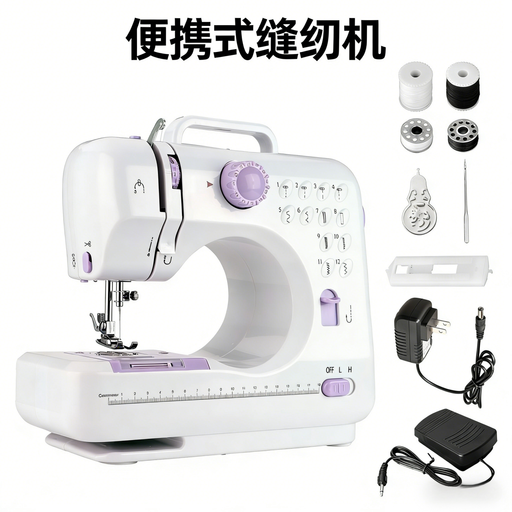 Image unavailable
Consider this compact model for occasional scrunchie-making where storage space matters, after checking that its seam controls meet the project's needs.
The listing names 12 stitch patterns, dual power, an LED work light and forward and reverse stitching. Before using it for regular group sessions, confirm the straight-stitch option, stitch-length control, manual and arrangements for shared use.
No: the scrunchie method described by Twinkl forms a fabric tube with a straightforward sewn seam, then inserts elastic. Check that the chosen machine can sew and secure that seam; embroidery features matter only if the group plans other projects that use them.
The Health and Safety Executive says there is no automatic legal requirement to test portable appliances every year. Electrical equipment must be kept safe, with visual checks and any further inspection or testing chosen according to the equipment and how and where it is used.
If the machine falls within work-equipment duties, the organisation needs to address suitability, safe condition, maintenance and adequate information, instruction and training, as set out by the Health and Safety Executive. Confirm how those duties apply to the particular activity, venue and users rather than assuming the same arrangements suit every community project.
Use the model's instructions to check the machine and work area, including the visible condition of the cable, needle and any guard. The Health and Safety Executive's sewing-machine guidance calls for adequate lighting and switching power off for adjustments and needle changes; adapt the session routine to the equipment and participants.