Small-batch cape maker
You are making repeated seams, hems and closures for several capes. Practical controls and a repeatable construction routine matter more than a large stitch library.


For capes made mainly from single-layer woven fabric, start with a domestic machine whose adjustable stitches and closure options suit your pattern. If your design repeatedly joins layered hems, facings or closures, prioritise a machine you can test on your thickest planned seam; consider computerised controls if approachable stitch selection matters more to you than mechanical dials.
You are making repeated seams, hems and closures for several capes. Practical controls and a repeatable construction routine matter more than a large stitch library.
You switch between lightweight cloth and layered areas such as hems, facings or collars. How the machine feeds your fabric matters more than stitch count alone.
You need manageable threading and stitch selection while learning to make consistent hems and closures across a batch.
Start with the thickest seam in your cape design, then check the stitches and controls you will use throughout the batch.
| Concern | What to check | Who this matters to |
|---|---|---|
| Layered seams | Test the planned fabric and thickest hem or facing; check suitable feet and whether presser-foot pressure is adjustable on the exact model. | If my hems and closures bring several layers together, I need the fabric to feed without losing control at those joins. Around 42% of consumers put reliable handling of layered seams first. |
| Repeatable construction | Check the stitches your pattern uses and the setup steps for threading, bobbins and any buttonholes. | When making a batch, I want to repeat the same seams and closures without a complicated change of setup each time. For around 33% of consumers, repeatable construction is the primary concern. |
| Learning and finishing | Try stitch selection and controlled sewing around a curved neckline or narrow hem; check the instructions for the exact model. | If I am still learning, I need to sew curves and finishes carefully rather than chase maximum speed. Neat, manageable finishing comes first for around 25% of consumers. |
SINGER advertises extra-high speed for the Heavy Duty 4423, but speed alone does not tell you how a machine will handle a thick hem or a curved neckline.
Try your cape fabric, lining and trim at a controllable pace, especially where the most layers meet.
Janome lists adjustable presser-foot pressure for the HD2200; that model-specific feature should not be assumed for the simpler 2200XT or another machine.
Compare the exact model and its compatible feet, then test the seam stack you intend to sew.
GOV.UK guidance covers fibre-content labelling for textile products. The label you need depends on the finished cape and any applicable exceptions.
Record the composition of the shell, lining and relevant animal-origin components, and check the labelling requirements for your finished product before selling it in Great Britain.
Janome UK says buying through an official retailer is important for its aftersales care and warranty.
Before ordering a Janome machine, check the seller's authorised status and the warranty and service terms for the exact purchase.
Janome's UK range includes the dial-operated 2200XT and the HD2200, which Janome lists with adjustable presser-foot pressure.
Brother positions the computerised Innov-is A16 for people learning to sew and provides UK model documentation.
SINGER lists a metal interior frame, stainless-steel bedplate, automatic needle threader and one-step buttonhole for its Heavy Duty 4423.
JUKI's HZL-DX7 offers Box Feed technology and a broad stitch range for makers considering more advanced fabric-feeding controls.
These IAGREEA mini machines are colour variants to consider for basic cape seams and hems. Before planning a repeated batch, check the stitch options your pattern needs and how either machine handles your thickest seam.
 No image available
Consider this variant if straightforward setup matters while learning to make cape seams.
The product name specifies dual power and an LED light. If your pattern uses buttonholes, confirm the exact stitch options; also check stitch adjustments and test the thickest planned seam.
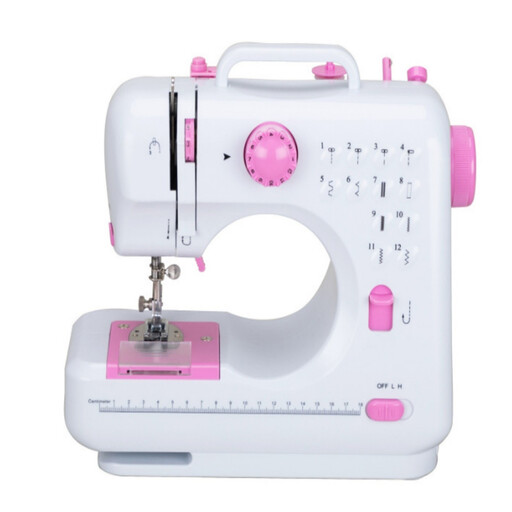 No image available
Consider this variant while learning basic cape seams and hems, provided it suits the fabric and construction you plan to use.
The product name specifies dual power and an LED light. Check whether its exact stitches include any buttonhole your pattern requires, whether stitch width or length can be adjusted, and how it feeds layered joins.
Not necessarily: a domestic machine may suit your capes if it handles the planned seams and closures in a fabric test. Compare a sewn sample at its thickest point before deciding that you need a different type of machine.
Choose a machine with a buttonhole function that suits your pattern, and test it on a sample with the finished fabric layers. Janome lists a four-step buttonhole for the 2200XT, while SINGER lists a one-step buttonhole for the Heavy Duty 4423.
Check the fibre-content information required for your finished textile cape and whether an exception applies. GOV.UK's textile-labelling guidance addresses fibre content, including fur and other animal parts, and components with different fibre compositions.
Yes: assess the finished cape's safety for its intended and reasonably foreseeable use. GOV.UK's manufacturer guidance addresses consumer-product safety; age targeting, materials and how you describe the cape can affect which further requirements you need to check.
Janome UK says purchasing through an official retailer is important for its aftersales care and warranty. Check the seller's status and the terms for the machine you intend to buy.