Who is choosing the machine?

Volunteer coordinators teaching mixed-skill groups

Look for controls that new volunteers can learn without holding up a shared session. Brother lists a needle threader, quick-set bobbin and speed control on the Innov-is A16; check whether the controls on any machine you consider suit the people who will use it.

Small-batch apron makers

If the work is mainly straight seams and hems in woven cotton, concentrate on usable stitch settings rather than a large decorative-stitch selection. Janome describes the 2200XT as a two-dial machine with adjustable stitch length.

High-use community workshops

Repeated sessions and layered hems or strap joins make the thickest planned seam an important test. Janome describes the HD2200’s metal body as intended for schools and heavy users, while the Singer 4423 listing specifies a metal sewing bed plate; neither description establishes how your particular fabric will feed.

What matters when buying?

Basic mechanical machine

Choose it when: Supervised volunteers are making standard cotton aprons and can learn dial-based stitch selection.

Trade-off: Operators need to set stitches and manage threading themselves.

Electronic beginner machine

Choose it when: Several less-experienced volunteers would benefit from simpler setup and a controllable maximum speed.

Trade-off: Convenience controls do not remove the need to practise on the project cotton.

Heavy-duty mechanical machine

Choose it when: Sessions are frequent or the work regularly crosses bulky hems and layered strap joins.

Trade-off: A sturdier frame or higher stated speed does not guarantee neat feeding through lightweight cotton or thick joins.

ConcernWhat to checkWho this matters to
Shared use Check the bobbin access, threading steps and speed controls on the exact model. When volunteers change between sessions, I need a machine newcomers can set up and control without repeatedly stopping the work. Around 40% of consumers would put ease of shared use first.
Seams and hems Confirm straight and zigzag stitches, adjustable stitch settings and a way to secure seam ends; sew a sample in the project cotton. I want long seams and hems to come out consistently, even if I rarely use decorative stitches. Consistent cotton construction would be the first concern for around 40% of consumers.
Frequent use and thick joins Test the thickest planned hem or strap join with a suitable needle and thread, and check service and warranty terms. If our group sews regularly, I need to know how the machine handles layered joins during actual sessions. For around 20% of consumers, that capacity would take priority.

What should you avoid assuming?

  • More stitches automatically make a better apron machine

    Cotton-apron construction centres on seams, hems and basic edge finishing, so a decorative-stitch count does not tell you whether the controls you will use are practical.

    Confirm the exact model’s straight and zigzag stitches, adjustable settings and method of securing seams, then try its threading and feeding.

  • A heavy-duty label removes the need for a seam test

    Frame materials and stated sewing speed do not show how a machine will handle your combination of cotton, folded hems, ties and thread.

    Stitch a sample through the thickest planned intersection with a suitable needle; do not force the fabric through the feed system.

  • A warranty is the same as your rights if the machine is faulty

    Voluntary warranty terms vary. Janome says most of its sewing machines have a two-year parts-and-labour warranty, subject to product details; the cited Singer Machines ten-year offer requires purchase from its website and registration within 30 days. Neither replaces statutory remedies for faulty goods.

    Keep proof of purchase, check who handles repairs under the applicable warranty and contact the seller if the machine is faulty.

Relevant brands for reference

Janome

Its cited UK models offer different approaches to shared apron-making: the dial-operated 2200XT and the HD2200, which Janome positions for schools and heavy users.

  • Janome specifies adjustable stitch length on the 2200XT and describes the HD2200 as having a metal body.
  • Those descriptions apply to the named models; test the model you choose on your planned seams.

Brother

The Innov-is A16 is a reference point for groups considering electronic convenience controls for mixed-skill volunteers.

  • Brother specifies 16 built-in stitches, a needle threader, quick-set bobbin, speed control and needle-position control on the A16.
  • Check how the A16 handles the project cotton and thickest join rather than assuming its controls establish feeding performance.

Singer

The 4423 is a mechanical heavy-duty model to consider when frequent sessions and layered seams are part of the plan.

  • Singer Machines lists a metal sewing bed plate and a maximum stated speed of 1,100 stitches per minute for the 4423.
  • That stated maximum is not a measure of seam quality on your cotton; test fabric handling and check the terms of any warranty offered by your seller.

Joybuy product choices

This compact machine is relevant to volunteers considering simple controls for cotton hemming. Before choosing it for a batch of aprons, confirm the required stitches and test a layered join.
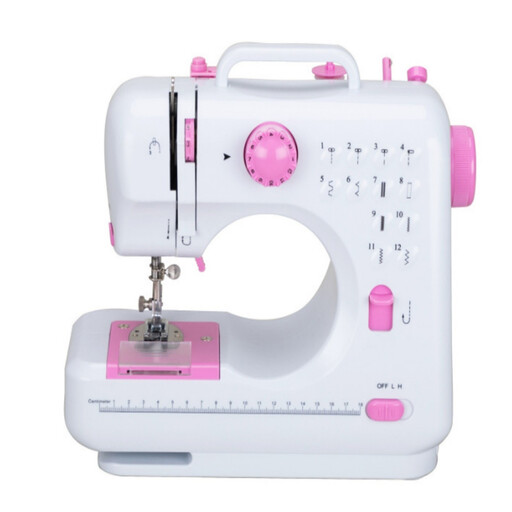
Pink IAGREEA Mini Portable Electric Sewing Machine

IAGREEA Mini Portable Electric Sewing Machine, 12 Stitches, Pink

For volunteers considering a compact machine for cotton hems, try the planned apron fabric before committing to repeated seams.

The listing describes 12 stitches, dual power, an LED light, one-button operation and low/high speed settings.

Confirm that its stitch selection includes the straight and zigzag stitches you need, whether stitch length is adjustable, and how it feeds through the thickest planned hem or tie join.

View on Joybuy

Common questions

Do we need an overlocker to make cotton aprons?

No, an overlocker is not required for many woven-cotton apron patterns: a standard sewing machine can make construction seams and use zigzag stitching for basic edge finishing. An overlocker is a separate option if you want to trim, stitch and neaten raw edges in one operation.

Which controls help when several beginners share a machine?

Straightforward stitch selection, accessible bobbin loading and controllable speed can make shared setup easier. Brother specifies a needle threader, quick-set bobbin and speed control on the Innov-is A16; Janome’s 2200XT offers a simpler two-dial approach, so let volunteers try the controls they would actually use.

What should we test before sewing a batch of aprons?

Sew sample seams in the project cotton, including the thickest planned hem or tie join. Thread the machine according to its manual, use a suitable needle and check the stitch appearance and fabric feed before repeating the seam across the batch.

What if a newly bought sewing machine is faulty in the UK?

The UK Consumer Rights Act 2015 provides statutory remedies for goods that do not conform to the contract. GOV.UK explains that repair or replacement can be available when a fault is discovered more than 30 days after purchase or delivery; contact the seller with proof of purchase. A voluntary warranty may offer additional cover under its own conditions but does not replace those rights.